

You’ve probably experienced it yourself. You reach for that expensive brand-name painkiller when you’re hurting badly, but you hesitate before taking the cheaper generic version sitting right next to it in your medicine cabinet. You tell yourself they are the same thing, yet a small voice in the back of your head whispers that the pricier one will actually work. It turns out, that whisper isn’t just anxiety-it’s hardwired psychology.
The idea that higher price equals better quality is so deeply embedded in our brains that it can literally change how your body responds to a pill. This phenomenon, known as the price-quality heuristic, is a mental shortcut where consumers assume higher-priced products are of superior quality or effectiveness, plays a massive role in healthcare. When we believe a drug is expensive, we expect it to be powerful. That expectation alone can boost its actual performance through the power of belief.
The Science Behind the "Expensive" Expectation
Let’s look at what happens inside your brain when you take a pill. A pivotal study published in 2023 by M Díaz-Lago shed some serious light on this. Researchers set up a scenario where 60 volunteers acted as patients. Here’s the kicker: 72% of these "patients" got better regardless of which pill they took. The outcome was fixed by the computer program running the experiment.
The only variable changed was the price tag attached to the drug in the participants' minds. Half were told the medication was expensive; the other half were told it was cheap. Despite the identical results-people got better at the same rate-those who believed they had taken the expensive drug rated its efficacy significantly higher than those who thought it was cheap. Their brains literally rewrote their experience based on the cost cue.
This aligns with earlier findings from a large German randomized controlled trial involving 804 primary care patients. The research showed that perceptions of generic medications were negatively influenced by cost considerations. In simple terms, if you think a drug costs less, you subconsciously prepare yourself for it to work less well. And because your mind expects less, you often feel less relief.
Brand Names vs. Generics: The Perception Gap
This psychological bias hits hardest when comparing brand-name drugs to their generic counterparts. Many people view generics as somehow inferior, even though regulatory bodies like the FDA require them to contain identical active ingredients. The FDA mandates that generics demonstrate bioequivalence, which is the requirement that a generic drug delivers the same amount of active ingredient into a patient's bloodstream in the same amount of time as the brand-name drug. Specifically, the generic must fall within an 80-125% confidence interval compared to the reference product.
Yet, science doesn't always win over perception. A University of Auckland study led by SLE Colgan demonstrated this perfectly. Participants alternately took branded and generic ibuprofen for consecutive headaches. But here’s the twist: both pills were placebos. They contained no active pain-relieving ingredients at all. Even so, the intervention group reported significantly less pain relief (p < .03) and more symptoms (p < .04) after taking the generic version. The difference wasn’t in the chemistry; it was entirely in their expectations.
Patient skepticism runs deep. According to data cited in US Pharmacist, while 37.6% of American patients prefer generics, a quarter believe they are less effective, and 20% think they are less safe. Another 20-40% remain completely uncertain about whether generics are truly equivalent to brand names. This uncertainty creates a barrier that affects real-world health outcomes.
| Factor | Brand-Name Drug | Generic Drug |
|---|---|---|
| Active Ingredient | Original formula | Identical to brand |
| Cost | High (often 10x+ generic) | Low (avg. 80-85% cheaper) |
| Bioequivalence Standard | N/A (Reference Product) | 80-125% confidence interval |
| Patient Perception of Efficacy | Higher expected relief | Lower expected relief |
| Physical Appearance | Often coated, branded shape/color | May differ in color, shape, coating |
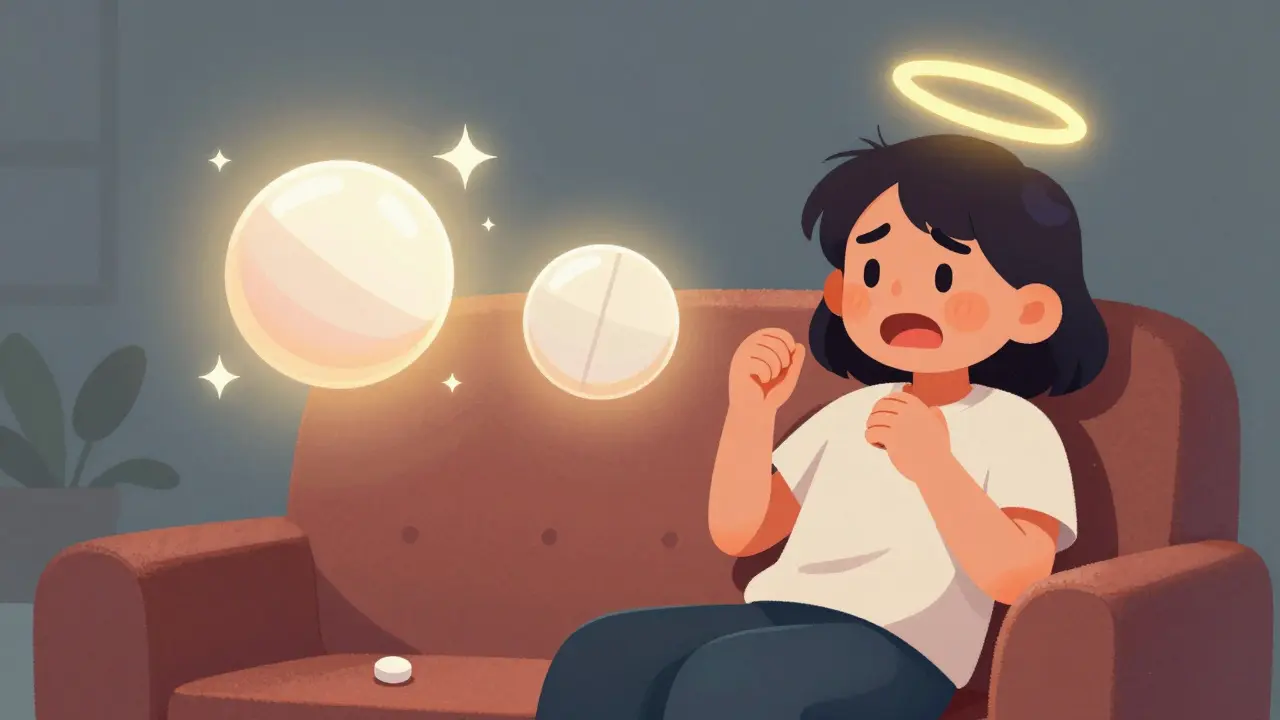
How Pill Appearance Fuels Doubt
It’s not just the price tag on the bottle; it’s the pill itself. Physical characteristics play a huge role in reinforcing price-based efficacy perceptions. Pharmacists Lynch and Tsourounis from UCSF point out that many people view generics as inferior because of observable differences. Think about it: the brand-name tablet might have a shiny coating, taste nice, and go down easily. The generic might be a chalky white pill with a bitter aftertaste.
These sensory details trigger psychological mechanisms that affect treatment outcomes. As noted in a press release from UC Neuroscience, people’s perceptions of the cost of a drug may affect how much they benefit from it, even when receiving only a placebo. If the pill looks "cheap," your brain signals that the treatment is likely "cheap" too. This is why pharmaceutical companies spend millions on marketing-not just to sell a chemical compound, but to sell a feeling of trust and premium quality.
A CDC study by K Sewell documented this through focus groups. In almost every group, generics were strongly perceived as being less effective or potent than brand names. Participants used phrases like, "Not as good as the real medicine," and "Generic medicine is less potent... other medicine is stronger." These aren’t just casual complaints; they represent a fundamental disconnect between scientific reality and patient experience.
The Real-World Impact on Health and Wallets
This perception gap has serious consequences. It’s not just about feelings; it’s about behavior. Research by A Omojasola surveyed 525 participants at community health centers in Houston, Texas. They found that respondents who agreed that "Generic prescription drugs are as effective as brand name prescription drugs" were three times as likely to utilize generic drug discount programs. The adjusted odds ratio was 3.0, with a 95% confidence interval of 1.8-4.8. That’s a massive behavioral shift driven purely by belief.
Meanwhile, 46% of those surveyed expressed uncertainty about generic side effects, and 34% were undecided about whether generics were inferior. This hesitation translates into wasted money and potentially worse health outcomes. With generic drugs accounting for approximately 90% of all prescriptions filled in the United States while representing only 23% of total drug spending, the $37 billion in annual savings generated by generic substitution would be severely impacted if patient skepticism reduced utilization rates.
Healthcare providers play a crucial mediating role here. Research by Shrank and colleagues found that generic medication use was most significantly associated with patient communication by healthcare providers about generics. It wasn’t general preferences or safety perceptions that drove usage-it was what the doctor said. One-third of patients express dissatisfaction with the information they receive from general practitioners regarding generic substitution. Nearly one-third remain skeptical specifically because of the lower cost.

Can Education Fix the Problem?
You might think that simply telling patients the truth would solve the issue. Unfortunately, it’s complicated. Educational interventions show mixed results. Colgan’s study mentioned earlier demonstrated that an educational intervention successfully modified and improved perceptions of generic medicines in understanding (p < .05) and overall preference (p < .01). People understood the science better.
However, these improved perceptions paradoxically did not translate to better reported efficacy experiences with actual medication use. Knowing that two pills are chemically identical doesn’t stop your brain from expecting the expensive one to work better. The placebo response is tied to expectation, not just knowledge. This suggests that education alone isn’t enough; we need strategies that address the emotional and perceptual barriers directly.
Díaz-Lago’s 2023 research added another layer of complexity. While participants rated expensive drugs as more effective, their actual willingness to administer doses did not significantly differ between expensive and inexpensive drugs. This challenges straightforward assumptions about the price-quality heuristic. It suggests that while we *think* expensive drugs are better, our actions don’t always follow suit unless the context strongly pushes us toward that belief.
What You Can Do About It
So, how do you navigate this? First, recognize that the doubt you feel is normal. Your brain is using a shortcut that served our ancestors well-expensive things usually *were* better in nature. But in modern pharmacy, that shortcut is misleading. Trust the regulatory standards. The FDA approves record numbers of generic drugs-59 approvals in 2022 alone-ensuring they meet strict bioequivalence criteria.
Talk to your pharmacist or doctor. Ask them specifically about the generic option. Have them explain not just the cost savings, but the equivalence. Hearing it from a trusted authority can help override the price-quality heuristic. Finally, give generics a fair chance. If you switch from a brand name to a generic and feel like it’s not working, consider whether your expectations played a role. Sometimes, shifting your mindset is the most powerful medicine of all.
Are generic drugs really the same as brand-name drugs?
Yes, generic drugs must contain the exact same active ingredients as brand-name drugs. The FDA requires generics to demonstrate bioequivalence, meaning they deliver the same amount of active ingredient into your bloodstream in the same amount of time. Differences may exist in inactive ingredients like fillers or coatings, which can affect appearance or taste, but not therapeutic effect.
Why do I feel like my generic medication isn't working?
This is likely due to the price-quality heuristic and placebo effect. If you expect a cheaper drug to be less effective, your brain may dampen your perception of relief. Studies show that patients report less pain relief from generic placebos compared to branded placebos, proving that expectation influences physical experience.
Do doctors know about the bias against generic drugs?
Many doctors are aware, but studies show that nearly one-third of patients remain skeptical despite physician advice. Research indicates that direct communication from healthcare providers is the strongest factor in encouraging generic use. If you have concerns, ask your doctor to explain the equivalence explicitly.
Can the way a pill looks affect how well it works?
Indirectly, yes. Physical characteristics like color, shape, and coating influence patient perception. A shiny, branded-looking pill may trigger higher expectations of efficacy, enhancing the placebo response. A chalky, plain generic pill may trigger lower expectations, potentially reducing perceived effectiveness, even if the chemical composition is identical.
Is it safe to switch from a brand-name drug to a generic?
In most cases, yes. Regulatory agencies ensure generics are bioequivalent. However, for certain narrow therapeutic index drugs (where small changes in blood levels matter greatly), some clinicians may recommend sticking to one manufacturer. Always consult your healthcare provider before making significant changes to your medication regimen.