
INR Stability & TTR Estimator
Calculate your Time in Therapeutic Range (TTR) based on your last few clinic visits to see if you are a candidate for the Vitamin K stabilization strategy.
Your TTR: 0%
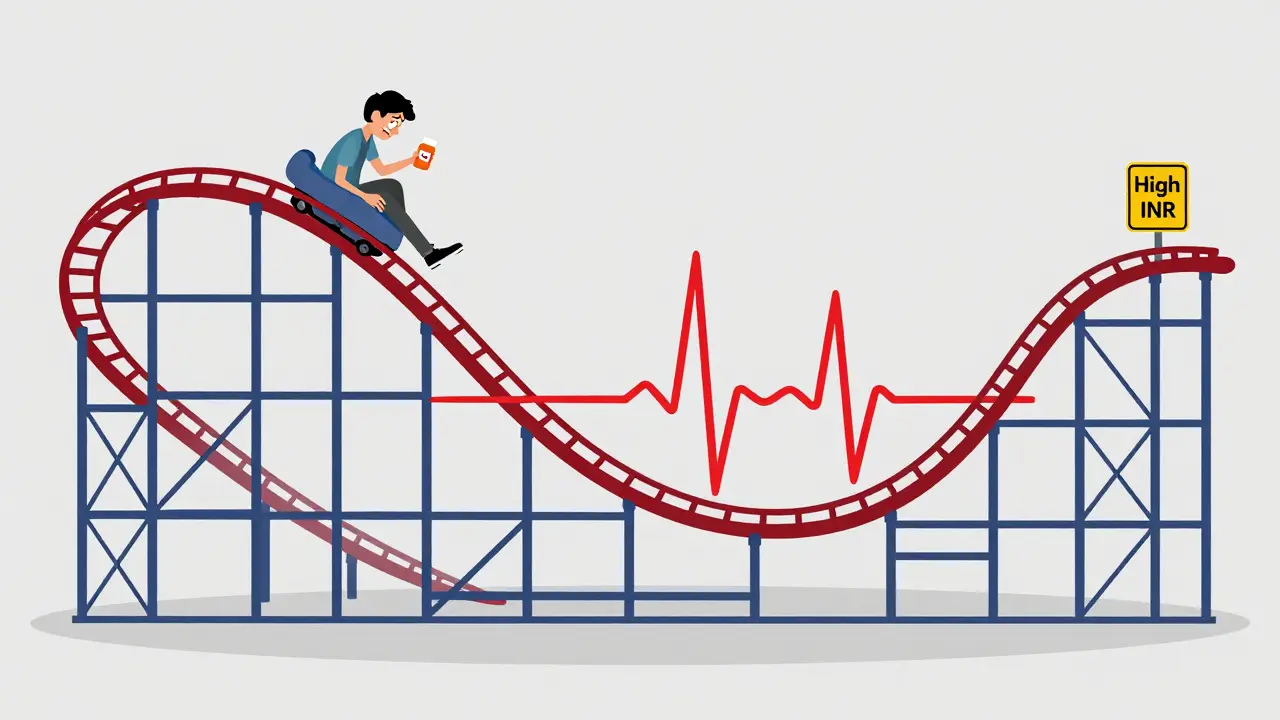
The paradox is that while Vitamin K is exactly what Warfarin works against, adding a controlled, low-dose supplement of it might actually be the secret to smoothing out those peaks and valleys. It sounds counterintuitive-taking a clotting agent while on a blood thinner-but it's about consistency over contradiction.
Why Warfarin and Vitamin K Clash
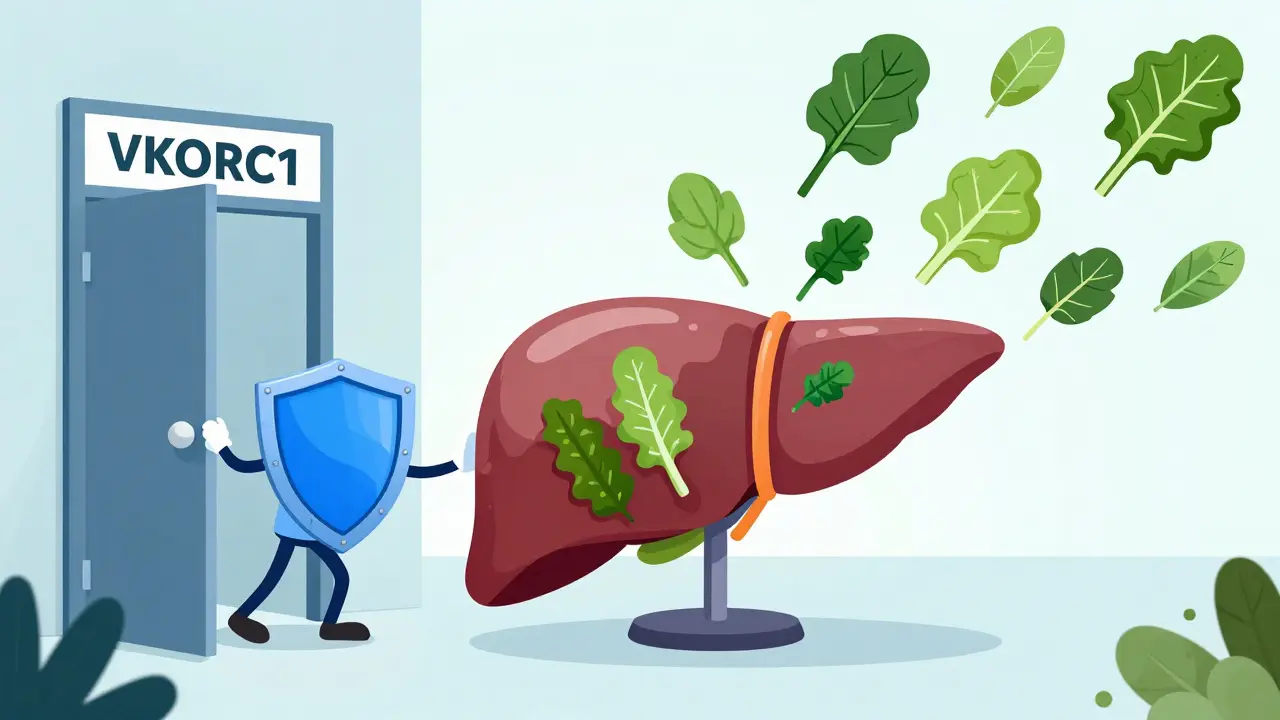
To understand why a supplement helps, you first have to understand the fight happening in your liver. Warfarin is a vitamin K antagonist. It works by blocking an enzyme called VKORC1, which essentially stops your body from recycling vitamin K. Since your body needs vitamin K to create clotting factors, blocking it makes your blood take longer to clot, which is the whole point of the therapy.
The problem is that your body gets vitamin K from your diet-think spinach, kale, and broccoli. If you eat a huge salad one day and almost no greens the next, your vitamin K levels fluctuate. Because Warfarin is so sensitive, these dietary swings cause your INR to jump around. You aren't fighting the drug; you're fighting the unpredictability of your dinner plate.
The Logic Behind Low-Dose Supplementation
The idea is simple: if you provide your body with a steady, predictable amount of vitamin K every single day via a supplement, the "noise" from your diet matters less. It's like filling a bucket with water at a constant rate instead of relying on erratic rain showers. When your intake is stable, your doctor can find a Warfarin dose that actually sticks.
Research, including a landmark study published in Blood, found that patients with unstable INR often had much lower dietary vitamin K intake than those with stable levels. By introducing a standardized dose, clinicians can potentially reduce those extreme INR excursions-the dangerous spikes above 4.0 or drops below 2.0-that lead to emergency room visits.
The Numbers: Dosages and Expected Results
In clinical settings, the most common dosage used for stabilization is 150 micrograms (mcg) of phylloquinone (Vitamin K1) taken orally once daily. This is a very small amount-roughly 1.5 times the general daily recommended intake for adults-but it is enough to create a baseline of stability without completely neutralizing the Warfarin.
If you're wondering what "success" looks like, doctors look at Time in Therapeutic Range (TTR). This is the percentage of time your INR stays within the target window (usually 2.0 to 3.0). While some studies show TTR doesn't always jump massively, others have shown significant reductions in "extreme excursions." For example, a Canadian trial showed that supplementation could cut these dangerous spikes by about 4% in absolute terms, which translates to fewer life-threatening events per year.
| Method | Primary Goal | Cost | Patient Effort | Speed of Result |
|---|---|---|---|---|
| Low-Dose Vitamin K | Biochemical Stability | Very Low ($) | Low (1 pill/day) | Slow (4-8 weeks) |
| Point-of-Care Monitoring | Immediate Detection | High ($$$) | High (Finger sticks) | Instant |
| DOACs (e.g., Apixaban) | Eliminate Monitoring | Very High ($$$$) | Low | Immediate |
Who Should (and Shouldn't) Try This?
This isn't a one-size-fits-all solution. It's specifically designed for people who have "unexplained" instability. If your INR is wild because you forget to take your Warfarin every third day, a supplement won't fix that-you just need a better pill organizer. Similarly, if you're eating mountains of kale daily, you're already getting enough vitamin K, and a supplement might push you too far in the opposite direction.
There are also strict groups who should avoid this approach without very close supervision:
- People with mechanical heart valves in the mitral position (who need higher, tighter INR targets).
- Those who have had a very recent thromboembolic event (a fresh clot).
- Patients currently fighting active malignancy.
What to Expect During Implementation
If you and your doctor decide to try this, don't expect an overnight fix. In fact, the first few weeks can be a bit nerve-wracking. Because you're adding a clotting agent, your INR will almost certainly drop. This is the "lag effect." Your doctor will likely need to increase your Warfarin dose-often by 0.5 to 1.5 mg-to compensate for the extra vitamin K.
The typical protocol involves a one-month baseline period to see how wild your numbers actually are, followed by weekly INR checks for the first month of supplementation. Only after a few weeks of titration does the stability actually kick in. It's a marathon, not a sprint. Most patients don't see the "smoothing" effect for 4 to 8 weeks.

Practical Tips for Success
The biggest hurdle is often psychological. It feels wrong to take something that "works against" your medication. Think of it as tuning a guitar; you're just bringing the string to the right tension so it stays in tune. To make this work, you must be consistent. Taking 150 mcg one day and skipping it the next is worse than taking no supplement at all, as it adds a new source of variability to your blood chemistry.
Keep a simple log of your dietary changes alongside your INR readings. If you notice that your levels only spike when you eat specific fermented foods or supplements containing vitamin K (like some multivitamins), mention this to your provider. The goal is to eliminate all the "surprises" your liver has to deal with.
Will taking Vitamin K make my blood clot too fast?
At a low dose of 150 mcg, the goal isn't to stop the Warfarin from working, but to make its effect more predictable. Because your doctor will adjust your Warfarin dose upward to compensate for the supplement, your overall level of anticoagulation should remain in the therapeutic range. However, this must be done under medical supervision with regular INR testing.
Can I just eat more spinach instead of taking a supplement?
Not really. The whole point of the supplement is precision. The amount of vitamin K in a bowl of spinach varies based on the soil, the freshness of the leaves, and how much you actually eat. A 150 mcg pill is exactly 150 mcg every single time, which is what creates the stability.
How long does it take to see if this is working?
You generally need 4 to 8 weeks to observe true stabilization. The first month is typically spent adjusting the Warfarin dose to account for the new supplement. Stability is measured by a reduction in extreme high or low INR values over several months, not a single test.
Is this better than switching to a DOAC like Apixaban?
For many, yes, because DOACs don't require monitoring. However, DOACs cannot be used for everyone-specifically those with mechanical heart valves or antiphospholipid syndrome. For those who must stay on Warfarin, low-dose vitamin K is a low-cost, effective pharmacological tool to make the drug more manageable.
What happens if I miss a dose of the supplement?
Missing a single dose is unlikely to cause a crisis, but frequent misses recreate the very instability the supplement is meant to solve. If you miss a dose, take it as soon as you remember, unless it's almost time for your next dose. Consistency is the key to keeping your INR stable.
Next Steps and Troubleshooting
If you've tried supplementation for three months and your TTR is still below 60%, or if your INR has become more volatile, it's time to re-evaluate. You may be one of the small percentage of patients who don't respond well to this approach, or there may be an underlying issue like malabsorption or a drug-drug interaction with another medication.
For those just starting, the first priority is a baseline. Ask your doctor for your TTR percentage over the last six months. If it's below 65%, you are a prime candidate for this strategy. Once started, schedule your INR tests strictly-do not skip the weekly checks in the first month, as this is when the highest risk of dosage misalignment occurs.
Divine Manna
April 6, 2026 AT 01:08The fundamental irony of this approach is that it acknowledges the biological unpredictability of the human gut while attempting to impose a rigid chemical baseline. Most patients simply lack the discipline to maintain such a regimen, regardless of the biochemical merits. One must realize that stabilization is as much a psychological victory as it is a clinical one. The pursuit of a perfect TTR is essentially a quest for order amidst the chaos of a flawed digestive system.
Goodwin Colangelo
April 6, 2026 AT 02:36I've seen this work for a lot of my patients who just can't get their diet consistent. The key is definitely that first month of weekly checks. If you try to wing it, you're just asking for a trip to the ER. Just make sure you're using a high-quality supplement and not some random brand from a gas station.
Brian Shiroma
April 7, 2026 AT 20:56Oh sure, because taking an extra pill to counteract the first pill is just the peak of medical efficiency. Truly a masterpiece of logic here.
Joseph Rutakangwa
April 8, 2026 AT 01:30consistency is everything here
Rachelle Z
April 8, 2026 AT 22:13Omg I just love how we have to play chemistry set with our own blood!!! 🧪✨ It's just so thrilling to be on a rollercoaster for the rest of my life!!!! 😂
Will Baker
April 9, 2026 AT 23:13Why would anyone trust a supplement when the diet is the real problem? Just eat the same amount of spinach every day. It's not that hard, unless you actually enjoy making your doctor's life a nightmare.
Ace Kalagui
April 10, 2026 AT 16:16I really think we should all try to be more supportive of those struggling with these medication swings because it can be so isolating when you feel like you're doing everything right but the numbers just won't budge. If you are reading this and feeling frustrated, please know that there are a lot of people walking this path with you and finding these little adjustments in the routine can truly change the quality of your daily life and give you back that sense of control we all crave.
Beth LeCours
April 10, 2026 AT 23:40too long didnt read just take the pill
Vicki Marinker
April 12, 2026 AT 02:54The notion that a standardized dose of 150 mcg is a panacea for the variability of human metabolism is quaint, if not entirely delusional. I find it exhausting that people believe a simple pill can override the complex interplay of gut flora and dietary absorption. It is merely a bandage on a gaping wound of medical mismanagement.
Branden Prunica
April 12, 2026 AT 14:55MY LIFE IS LITERALLY A NIGHTMARE! One day I'm practically a statue and the next I'm bleeding if I even look at a papercut! This whole process of adjusting doses for a month sounds like absolute torture! Who can even sleep during the titration phase?! The stress is actually unreal!
angel sharma
April 13, 2026 AT 14:21Let's get after it people! This is the kind of proactive health management that puts you back in the driver's seat of your own life and you should absolutely push your doctors to look at this if you are struggling because you deserve to feel stable and secure in your health journey and we can all reach those TTR goals if we just stay focused and disciplined every single day!
Sam Hayes
April 14, 2026 AT 11:39definitely worth a chat with your doc if your numbers are jumping. its way easier than trying to weigh every piece of broccoli you eat
Joey Petelle
April 15, 2026 AT 08:52Typical American medical wasteland where we just stack pills like Lego bricks until something gives. It's a gorgeous circus of pharmacological guesswork. I'm sure the pharma companies are just weeping with joy at the prospect of selling us two pills instead of one for the same problem.
Dee McDonald
April 16, 2026 AT 01:55Wait a second, if this helps with stability, why isn't this the standard protocol from day one? It seems like we're just letting people suffer through the rollercoaster for no reason! Get this implemented now!