
Opioid Tapering Calculator
How Slow Should You Taper?
Based on CDC guidelines and clinical studies, the safest approach is a slow taper. This calculator helps determine your personalized schedule.
Stopping opioids isn’t as simple as just cutting the dose. For people who’ve been on these medications for months or years, sudden discontinuation can trigger serious problems-severe pain, panic attacks, insomnia, and even life-threatening withdrawal. The good news? With the right approach, tapering opioids safely is not only possible, it’s often the best path forward for long-term health.
Why Tapering Matters
Many people start opioids for acute pain-after surgery, an injury, or a flare-up of chronic conditions. But over time, the body builds tolerance. The same dose stops working as well, and side effects like drowsiness, constipation, and mental fog become harder to ignore. When opioids no longer improve function or quality of life, continuing them does more harm than good.
The CDC’s 2022 guidelines make it clear: abrupt discontinuation of opioids in physically dependent patients is dangerous. Between 2012 and 2017, the FDA documented over 100 cases of serious harm-including suicide attempts and uncontrolled pain-after patients were suddenly cut off. In 2021, a major study found that patients who had their opioid doses reduced by more than 10% per week had a 68% higher risk of overdose and a 78% higher risk of suicide attempt or self-harm compared to those who tapered slowly.
This isn’t about fear. It’s about science. The goal isn’t to stop opioids at all costs. It’s to reduce harm while improving daily function.
When to Consider Tapering
You don’t need to wait for a crisis to start thinking about tapering. Here are clear signs it’s time to talk to your provider:
- Your pain hasn’t improved in the last 3-6 months, even with higher doses.
- You’re experiencing side effects like constant drowsiness, confusion, or nausea that affect your work, relationships, or safety.
- You’ve had an overdose or near-overdose event-even if you were revived.
- You’re combining opioids with benzodiazepines or alcohol, which greatly increases overdose risk.
- You’re refilling prescriptions early, losing pills, or getting them from multiple sources.
- You’ve developed symptoms of depression, anxiety, or suicidal thoughts.
These aren’t signs of failure. They’re signs your body needs a different approach. Many patients find that after reducing opioids, their pain becomes more manageable with non-opioid tools like physical therapy, CBT, or targeted nerve blocks.
How Slow Should the Taper Be?
There’s no one-size-fits-all schedule. But research gives us clear benchmarks.
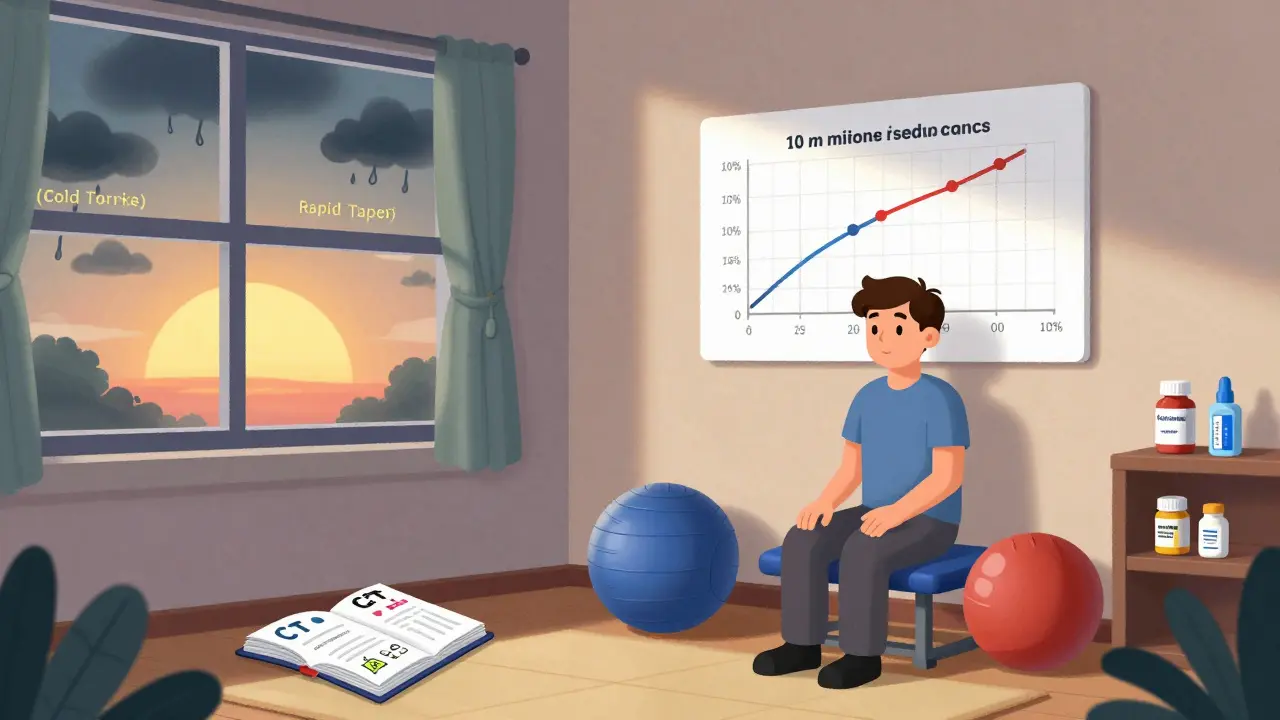
For most people, a slow taper means reducing the dose by 10% to 25% every 2 to 4 weeks. This gives your nervous system time to adjust. A fast taper-cutting 20% or more every few days-is risky and generally not recommended unless under close medical supervision.
Here’s what works best based on real-world data:
- Patients on doses under 90 morphine milligram equivalents (MME) per day can usually taper at 10-25% every 3 weeks.
- Those on higher doses (>120 MME) or with complex health issues (like depression, trauma, or past substance use) often need tapers as slow as 5% per month.
- One 2022 survey of 1,200 patients found 63% preferred a 10% monthly reduction. These patients were 32% more likely to stick with the plan than those who tried faster cuts.
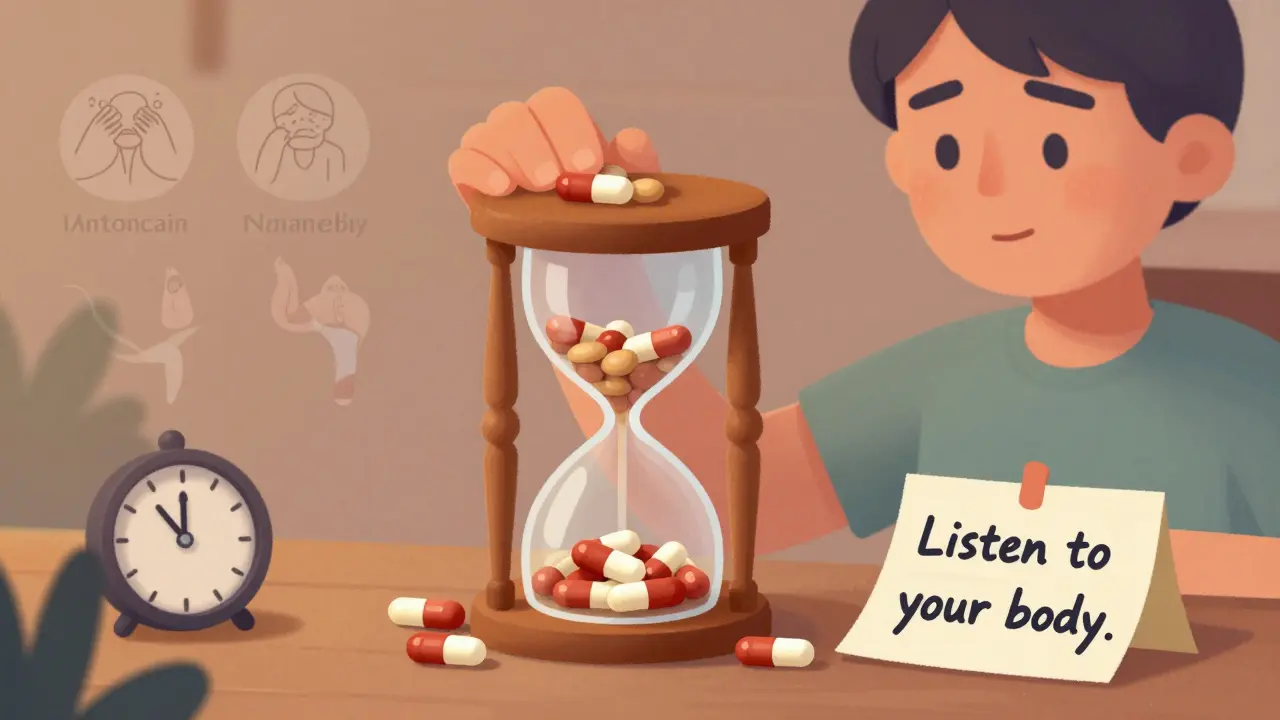
The key? Listen to your body. If you’re sweating, shaking, having trouble sleeping, or feeling anxious, you’re going too fast. Pause the taper. Stay at your current dose for another week or two. Then try again.
What Happens During Withdrawal?
Withdrawal isn’t the same as addiction. It’s your body’s normal response to removing a substance it’s adapted to. Symptoms usually start 12-30 hours after the last dose and peak around days 3-5. Common signs include:
- Anxiety (reported by 82% of patients in clinical trials)
- Insomnia (76%)
- Muscle aches and cramps (68%)
- Nausea, vomiting, or diarrhea (59%)
- Restlessness, chills, or goosebumps
These symptoms are uncomfortable, but they’re not life-threatening. The real danger comes when people stop tapering because the discomfort feels unbearable-and then go back to their old dose. That’s when overdose risk spikes. Your body’s tolerance drops quickly. A dose that used to be safe can now kill you.
Supportive Medications That Help
You don’t have to suffer through withdrawal alone. Several non-opioid medications can ease symptoms and keep you on track:
- Clonidine (0.1-0.3 mg twice daily): Reduces sweating, anxiety, rapid heartbeat, and high blood pressure.
- Hydroxyzine (25-50 mg at bedtime): Helps with anxiety and sleep without the risks of benzodiazepines.
- Loperamide (2-4 mg as needed): Controls diarrhea without causing opioid-like effects.
- NSAIDs or acetaminophen: Manage residual pain. No opioids needed.
For patients with a history of opioid use disorder, buprenorphine may be used to stabilize withdrawal and allow for a smoother transition. This isn’t replacing one opioid with another-it’s using a safer, longer-acting medication to reduce cravings and prevent relapse.
What to Avoid
Not all tapering plans are created equal. Here are common mistakes that lead to failure-or worse:
- Stopping cold turkey. This is never recommended. Even if you feel fine, your body still needs time to adjust.
- Letting someone else decide your pace. A provider should guide you, but the plan must be yours. If you don’t agree with the schedule, say so.
- Ignoring mental health. Anxiety, depression, or trauma can make withdrawal feel unbearable. Therapy (like CBT) should be part of the plan.
- Skipping naloxone. If you’re on over 50 MME daily, have a history of overdose, or use benzodiazepines, you should have naloxone on hand before starting the taper. Over 40% of overdoses during tapering happen in the first 30 days.
- Not documenting the plan. A signed tapering agreement increases success rates by over 30%. It’s not paperwork-it’s a safety net.
Success Isn’t Always About Stopping Completely
Many people think the goal is to get off opioids entirely. But for some, the real win is reducing the dose enough to feel better-without the side effects.
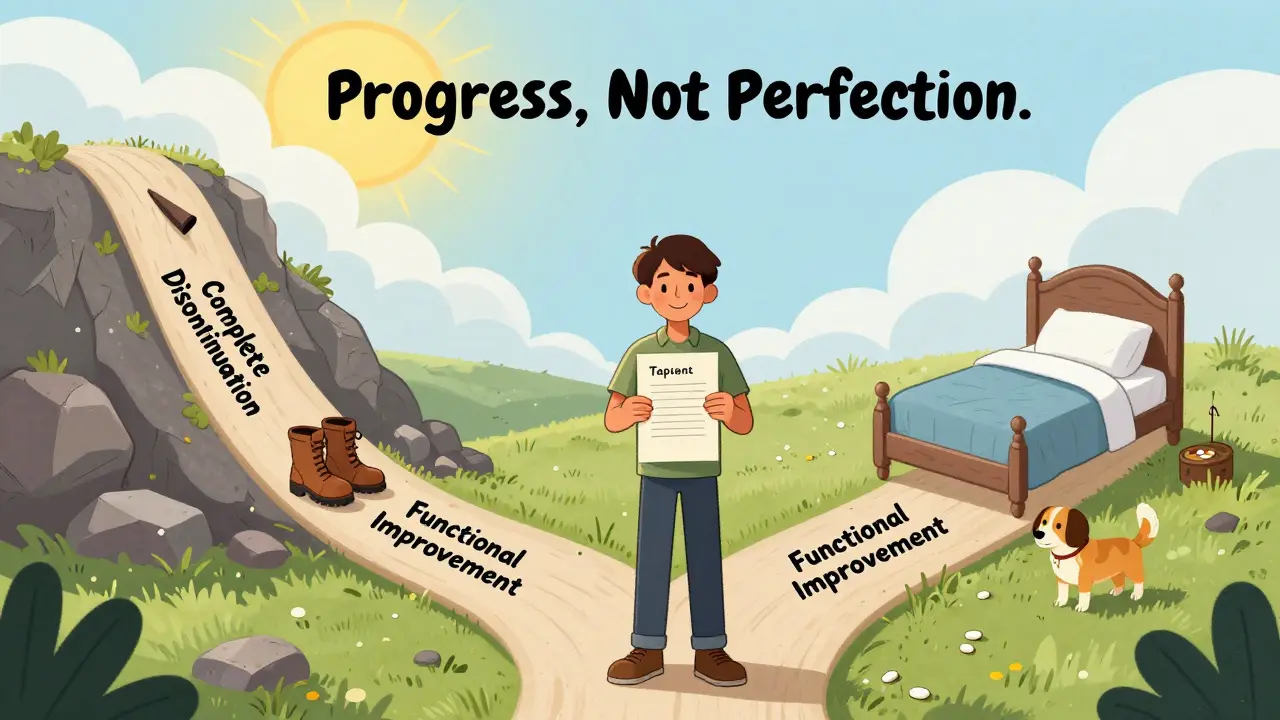
Research shows that 68% of successful tapering plans aim for functional improvement, not complete discontinuation. Maybe you go from 120 MME to 40 MME. Maybe you stop daily pills and only use them for flare-ups. That’s still progress.
One patient in Austin, who’d been on 150 MME for 7 years after a back injury, reduced to 30 MME over 8 months. She now walks her dog daily, sleeps through the night, and doesn’t feel foggy anymore. She still takes a small dose for bad days-but she’s in control. That’s the goal.
Your Next Steps
If you’re thinking about tapering, here’s what to do:
- Talk to your provider. Bring up your concerns. Ask if tapering is right for you.
- Review your dose. Know your current MME. Use a calculator if needed-many online tools can help.
- Ask about support. Can you get therapy? Physical therapy? Naloxone? Clonidine?
- Write down your goals. Is it better sleep? More energy? Less nausea? Keep them visible.
- Get a written plan. A signed agreement with your provider reduces dropout rates and keeps you accountable.
- Build your support system. Tell someone you trust what you’re doing. You don’t have to do this alone.
Tapering opioids safely isn’t about willpower. It’s about smart planning, medical support, and patience. The goal isn’t to rush. It’s to heal.
Nicole Blain
March 19, 2026 AT 00:47🙏
gemeika hernandez
March 20, 2026 AT 19:17Sanjana Rajan
March 21, 2026 AT 07:15Kendrick Heyward
March 21, 2026 AT 18:50Kathy Underhill
March 23, 2026 AT 04:18Lauren Volpi
March 23, 2026 AT 10:56MALYN RICABLANCA
March 23, 2026 AT 18:41Michelle Jackson
March 24, 2026 AT 18:49Melissa Starks
March 26, 2026 AT 14:19Kal Lambert
March 27, 2026 AT 23:34Melissa Stansbury
March 28, 2026 AT 22:26cara s
March 29, 2026 AT 05:33Amadi Kenneth
March 30, 2026 AT 10:59