
Statin-Grapefruit Interaction Risk Calculator
You might think squeezing a fresh grapefruit into your morning routine is the healthiest way to start your day. It’s packed with vitamin C, fiber, and antioxidants. But if you take certain cholesterol-lowering medications, that juicy fruit could be quietly turning your prescribed dose into a toxic overdose. The combination of statins and grapefruit is one of the most well-known drug-food interactions in medicine, yet millions of people still mix them without realizing the risk.
This isn’t just about getting an upset stomach. For some patients, this combination can lead to severe muscle damage or even kidney failure. Understanding why this happens-and which specific drugs are affected-can help you stay safe while keeping your heart healthy.
The Science Behind the Interaction
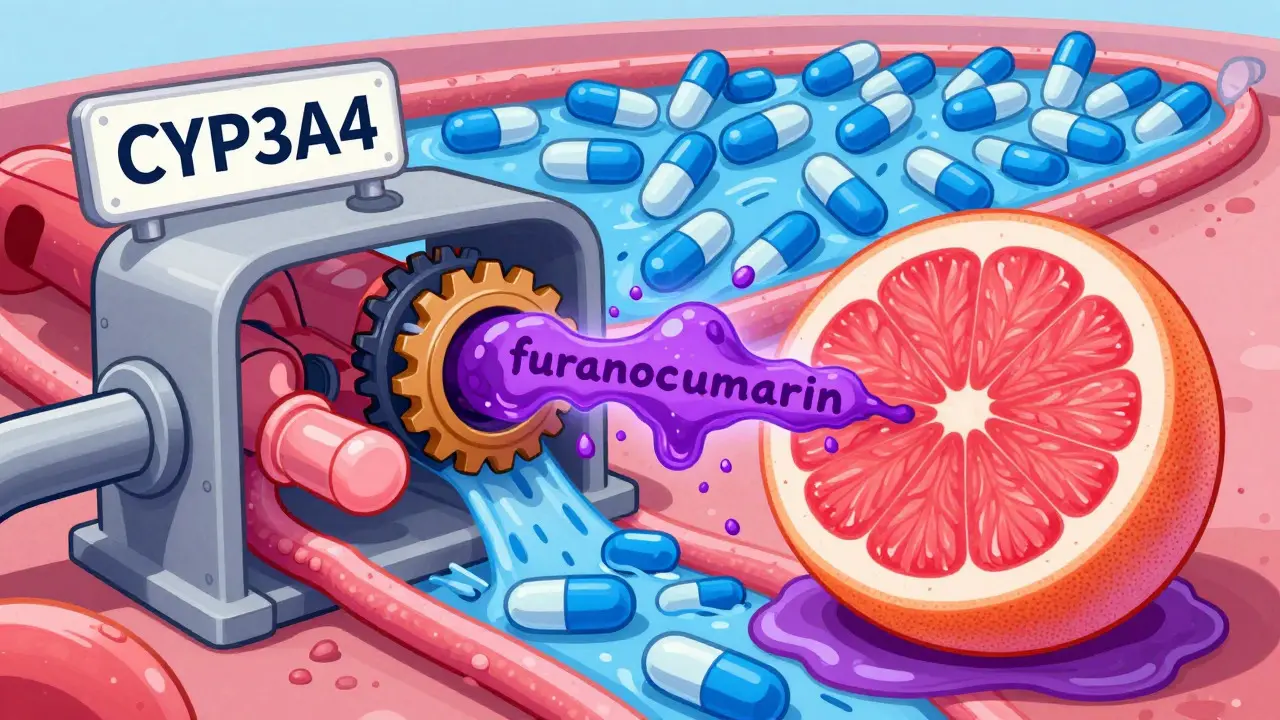
To understand why grapefruit interferes with statins, we have to look at how your body processes medication. Most drugs don’t enter your bloodstream directly. They pass through your digestive system first. In the small intestine, there is a specific enzyme called cytochrome P450 3A4 (often shortened to CYP3A4). This enzyme acts like a gatekeeper. Its job is to break down certain chemicals before they reach your liver and the rest of your body. This process is known as "first-pass metabolism."
Grapefruit contains natural compounds called furanocoumarins. These compounds are unique because they don’t just block the CYP3A4 enzyme temporarily; they bind to it irreversibly. Think of it like gum stuck in a gear. Once the furanocoumarins attach to the enzyme, that enzyme stops working. Your body has to build new enzymes to replace them, which takes time-usually between 24 and 72 hours.
When you eat grapefruit, you effectively shut down the gatekeeper in your gut. If you take a statin that relies on CYP3A4 for breakdown, much more of the drug enters your bloodstream than intended. You aren’t just taking your normal dose; you’re accidentally taking two, three, or even six times that amount.
Which Statins Are Dangerous With Grapefruit?
Not all statins react the same way. The risk depends entirely on how your body metabolizes the specific medication you are prescribed. Doctors categorize these based on their metabolic pathways.
| Statin Name (Brand) | Interaction Risk | Metabolic Pathway | Recommendation |
|---|---|---|---|
| Simvastatin (Zocor) | High | CYP3A4 | Avoid grapefruit completely |
| Lovastatin (Mevacor) | High | CYP3A4 | Avoid grapefruit completely |
| Atorvastatin (Lipitor) | Moderate | CYP3A4 | Limit to <1 glass/day |
| Rosuvastatin (Crestor) | Low/None | Minimal CYP3A4 | Safe to consume |
| Pravastatin (Pravachol) | Low/None | Non-CYP3A4 | Safe to consume |
| Fluvastatin (Lescol) | Low/None | CYP2C9 | Safe to consume |
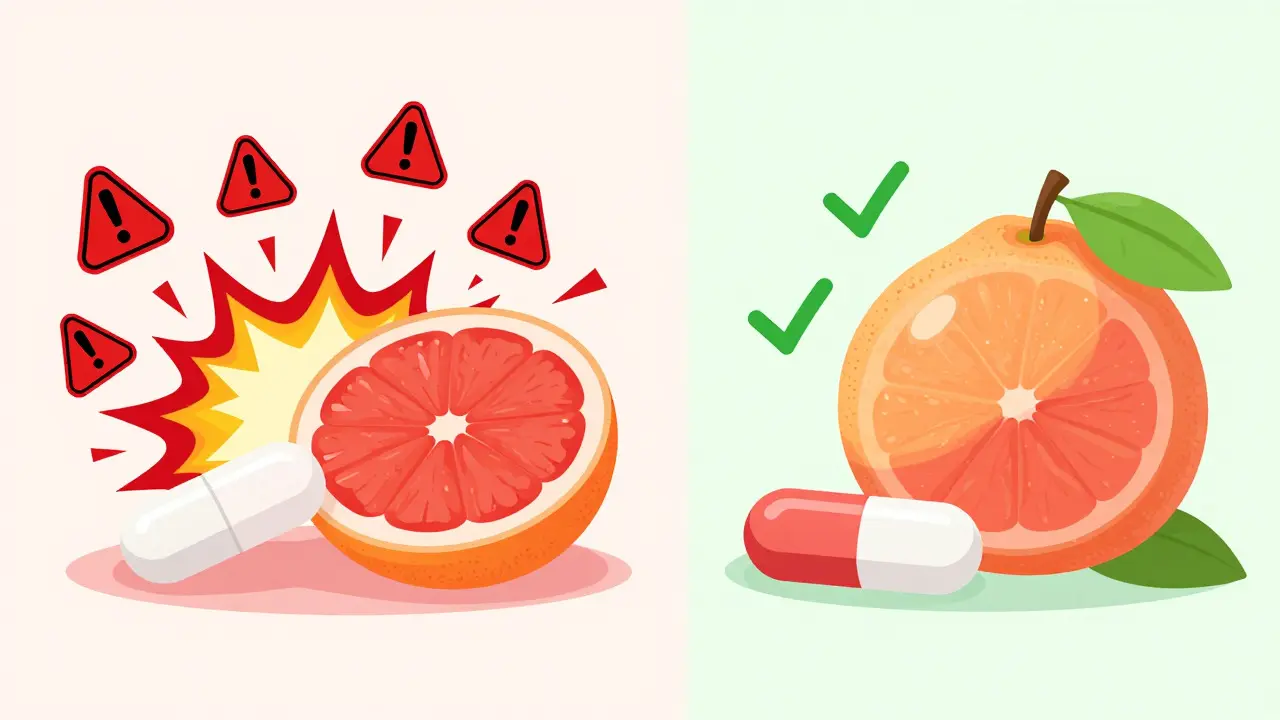
Simvastatin and lovastatin are the most sensitive. Research shows that drinking grapefruit juice can increase the concentration of simvastatin in your blood by up to 3.6 times. That is a massive jump. Atorvastatin also interacts, but to a lesser degree, typically doubling or tripling blood levels. On the other hand, rosuvastatin, pravastatin, and fluvastatin bypass the CYP3A4 enzyme mostly. You can generally enjoy grapefruit while taking these without worrying about a dangerous spike in medication levels.
The Real Danger: Muscle Damage and Kidney Failure
Why does having too much statin in your blood matter? Statins work by blocking an enzyme in the liver that makes cholesterol. When the drug level gets too high, it starts affecting muscles instead. The most common symptom is myalgia, or simple muscle pain. About 5% to 10% of people on statins experience this normally, but grapefruit pushes that risk higher.
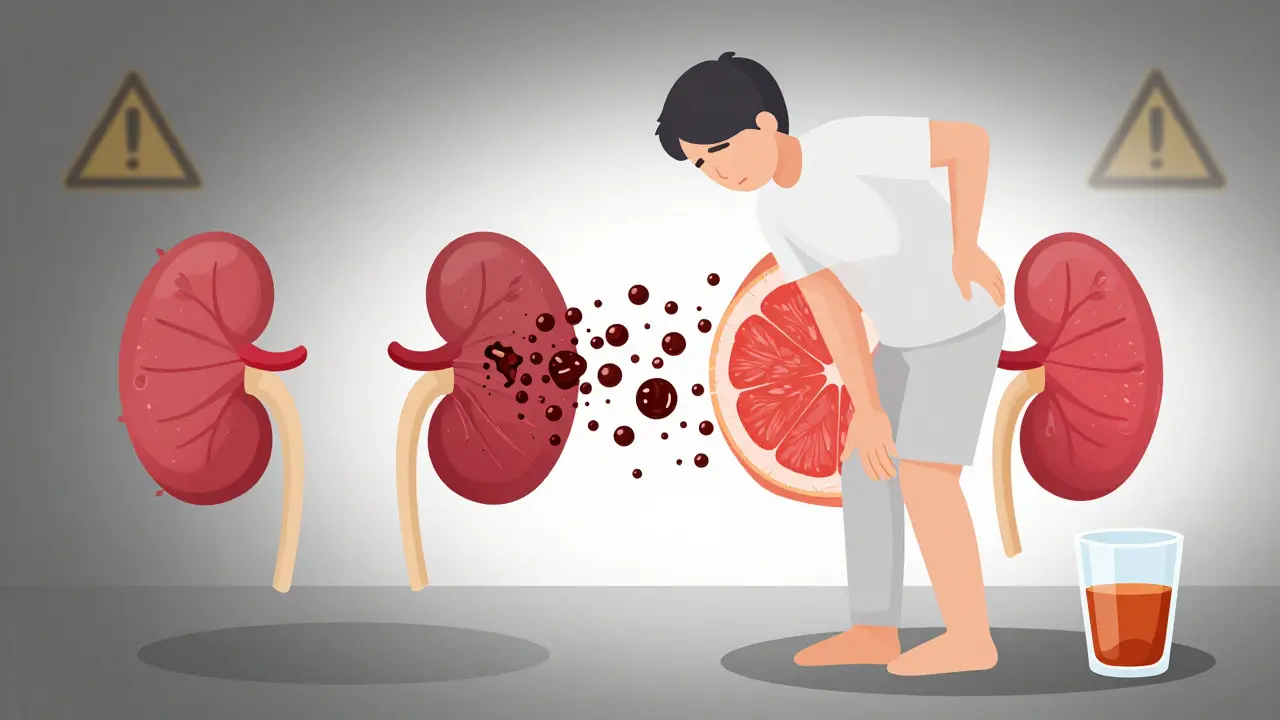
The serious concern is a condition called rhabdomyolysis. This is a rare but potentially fatal condition where muscle tissue breaks down rapidly. When muscles break apart, they release a protein called myoglobin into your bloodstream. Myoglobin is heavy and hard for your kidneys to filter. It can clog your kidney tubules, leading to acute kidney injury or total kidney failure.
Case reports document instances where patients developed rhabdomyolysis after combining standard doses of simvastatin with daily grapefruit consumption. Symptoms include:
- Severe, unexplained muscle weakness
- Intense muscle soreness, often in the back, hips, or thighs
- Tea-colored or dark brown urine (a sign of myoglobin presence)
- Fatigue and nausea
If you notice these signs, seek medical attention immediately. While rhabdomyolysis is rare-occurring in roughly 0.1 to 0.5 cases per 100,000 patient-years-the consequences are life-threatening.
Common Myths About Timing and Amounts
Many patients try to outsmart the interaction by changing when they eat grapefruit. A common question is: "If I take my pill at night and eat grapefruit in the morning, am I safe?" The answer is no.
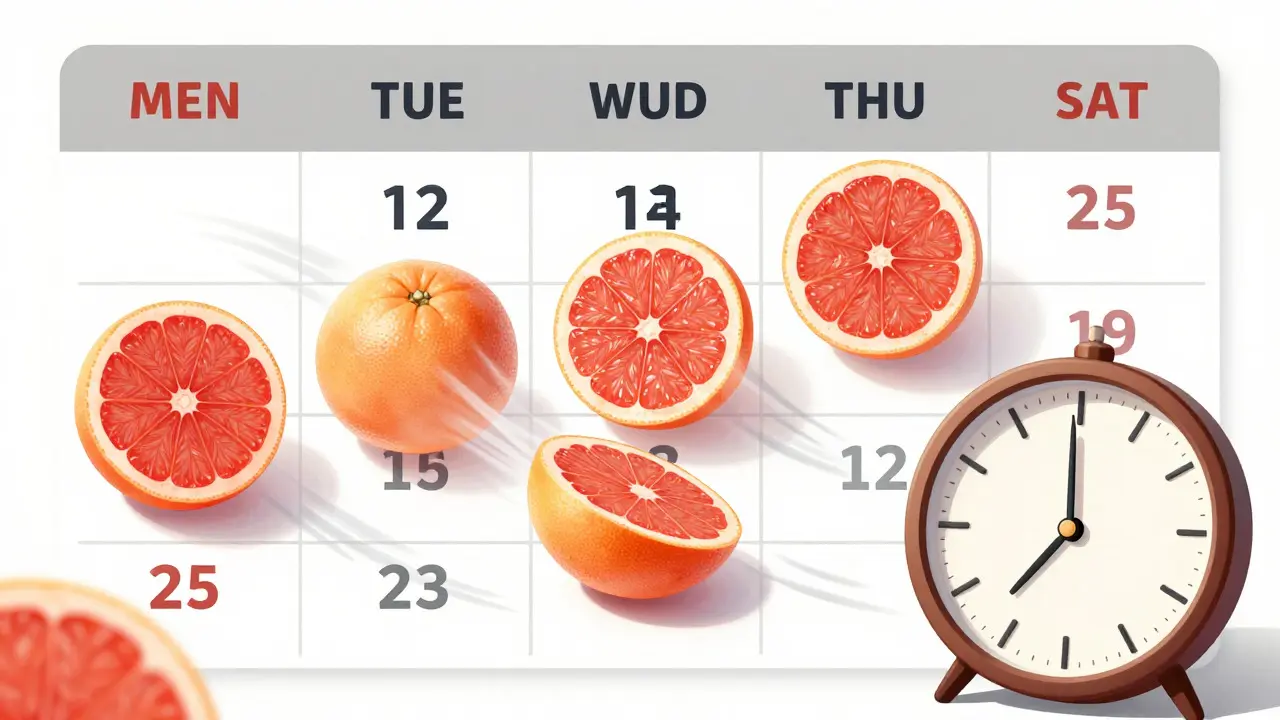
Because furanocoumarins cause irreversible inhibition, the effect lasts long after the fruit is gone from your stomach. Studies show the enzyme suppression can persist for up to 72 hours. So, eating grapefruit three days ago can still impact how your body processes today’s medication. Separating the timing doesn’t help.
Another myth involves the form of the fruit. Does it matter if you eat the whole fruit, drink the juice, or take a supplement? Unfortunately, yes-it matters in that they all carry the risk. Juice often concentrates the furanocoumarins, making it more potent, but the whole fruit contains enough to trigger the interaction. Even grapefruit-flavored supplements or extracts can cause issues.
How much is too much? The FDA advises that for high-risk statins like simvastatin, you should avoid grapefruit entirely. For atorvastatin, the limit is stricter than you might think: no more than one small glass (about 200 milliliters) per day. However, individual genetics play a role. Some people are "poor metabolizers" due to genetic variations in their CYP3A4 genes, meaning even a tiny amount of grapefruit could spike their drug levels dangerously.
What Should You Do?
If you love grapefruit and need to manage your cholesterol, you don’t necessarily have to give up either. Here is a practical approach to managing this risk:
- Check your prescription label. Look for warnings about grapefruit or CYP3A4 inhibitors. If it’s there, take it seriously.
- Talk to your doctor about switching. If you are on simvastatin or lovastatin and refuse to quit grapefruit, ask if pravastatin or rosuvastatin would work for you. These alternatives do not interact significantly with the fruit.
- Monitor for symptoms. If you continue the combination, pay close attention to any new muscle pains or changes in urine color.
- Inform all healthcare providers. Pharmacists are excellent resources. Ask them to review your entire medication list, as other drugs (like certain blood pressure meds or anti-anxiety drugs) also interact with grapefruit via the same enzyme pathway.
Don’t stop taking your statin on your own. Stopping cholesterol medication abruptly increases your risk of heart attack and stroke. The goal is to find a balance where you get the cardiovascular protection you need without exposing yourself to unnecessary toxicity.
Does orange juice interact with statins?
No, orange juice does not contain significant amounts of furanocoumarins. It is safe to consume with all types of statins. Other citrus fruits like lemons and limes are also generally safe.
How long does the grapefruit effect last?
The inhibition of the CYP3A4 enzyme can last anywhere from 24 to 72 hours after consuming grapefruit. This is why spacing out your medication and fruit intake does not prevent the interaction.
Can I eat grapefruit seeds or peel?
Yes, both the pulp and the peel contain furanocoumarins. In fact, the peel often has higher concentrations. Avoid all parts of the fruit if you are on a high-risk statin.
Are there other foods that interact with statins?
Yes, Seville oranges (often used in marmalades), pomelos, and limequats also contain furanocoumarins and can cause similar interactions. Cranberry juice has been reported to interact with some statins, though the mechanism is different and less consistent.
What should I do if I already ate grapefruit and took my statin?
Don’t panic. One instance is unlikely to cause immediate harm unless you consumed large quantities. Monitor yourself for muscle pain or dark urine over the next few days. If symptoms appear, contact your doctor. For future doses, consider skipping the grapefruit until the enzyme recovers (up to 3 days).