
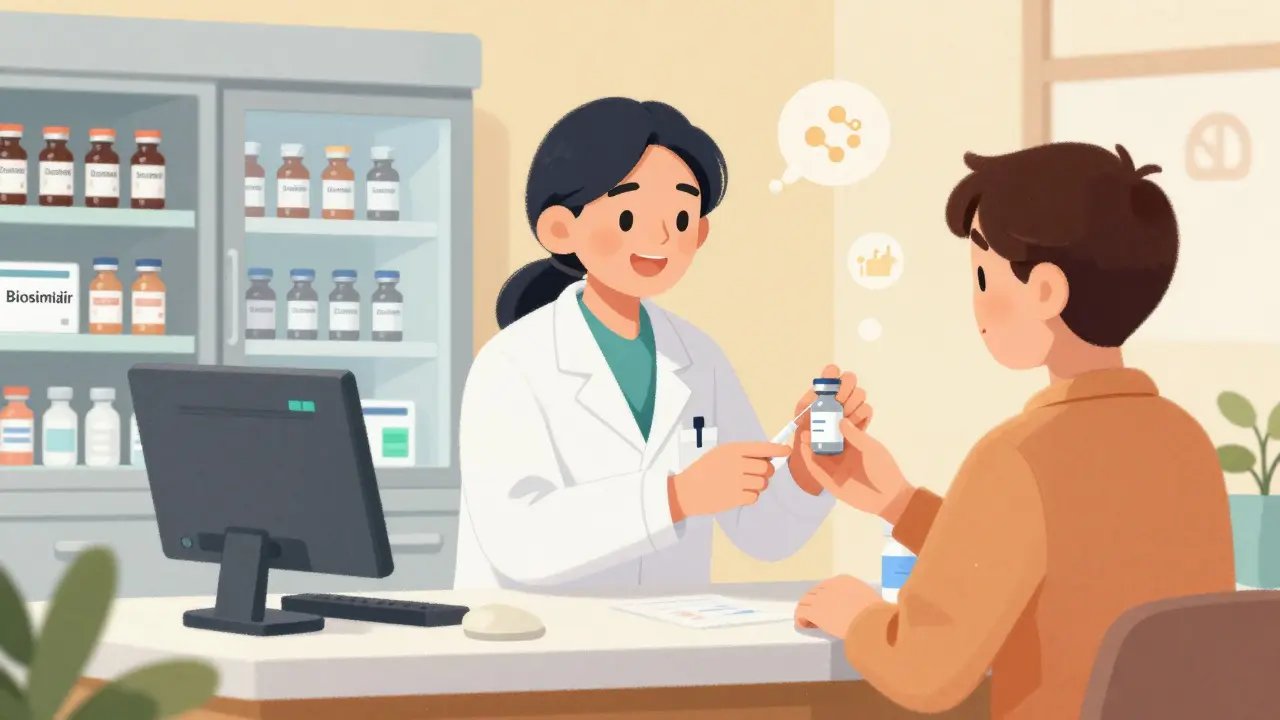
When you hear "specialty pharmacy," you might think of expensive brand-name drugs for rare diseases. But here’s the twist: generic specialty drugs are increasingly being dispensed through the same high-touch systems - and that changes everything for patients and providers.
What Makes a Drug "Specialty" - Even When It’s Generic
Not all generic drugs are created equal. A generic ibuprofen from your local pharmacy? Simple. A generic version of a biologic drug like adalimumab (Humira)? That’s a whole different story. Specialty drugs aren’t defined by price - they’re defined by complexity. These are medications that need special handling: refrigerated storage, precise dosing, infusion or injection, and ongoing monitoring. Even when they’re generic, they still require the same infrastructure. That’s because many so-called "generic" specialty drugs are actually biosimilars - highly similar versions of complex biologic drugs made from living cells. Unlike traditional generics, which are chemically identical to their brand-name counterparts, biosimilars can’t be exact copies. That means they still need expert handling. The American Society of Health-System Pharmacists (ASHP) confirms that specialty drugs - whether branded or generic - require pharmacists who understand disease states like rheumatoid arthritis, hepatitis C, or cancer. These aren’t just pills you pick up. They’re treatments that need education, monitoring, and coordination.The Role of Specialty Pharmacists: More Than Just Filling Prescriptions
Think of a specialty pharmacist as a clinical coordinator, not a pill counter. Their job starts the moment a prescription arrives. First, they verify insurance coverage and manage prior authorization - a process that can take days, especially when insurers treat generic specialty drugs the same as brand-name ones. A 2023 study in PMC found that 68% of patients who switched from a brand to a generic specialty drug stayed with the same pharmacy because they trusted the care team. Then comes patient education. A patient on a generic methotrexate injection for psoriasis doesn’t just need the drug - they need to know how to inject it safely, how to store it, what side effects to watch for, and when to call for help. Specialty pharmacies assign dedicated care coordinators, nurses, and pharmacists to each patient. This isn’t optional. It’s built into the model. One patient in Manchester told their pharmacist, "I didn’t care if it was generic - I just didn’t want to start over with a new team." That’s the norm, not the exception. When a patient transitions from a brand to a generic version, continuity matters. The same pharmacist who helped them manage side effects on the brand drug is the one who now monitors their response to the biosimilar.Why Can’t Retail Pharmacies Handle These Drugs?
You’d think a cheaper generic version could go to any pharmacy. But manufacturers often lock distribution through "limited distribution networks." That means even if a drug is generic, it can only be dispensed by a specialty pharmacy. Why? Because the manufacturer knows the drug’s success depends on how it’s used - not just what’s in the bottle. According to U.S. Pharmacist, these mandatory distribution programs are common for specialty drugs, regardless of brand status. Even when a biosimilar is 30-40% cheaper than the original, it still flows through the same specialty channels. Retail pharmacies lack the systems to handle temperature-controlled shipping, REMS (Risk Evaluation and Mitigation Strategies) protocols, or 24/7 clinical support. A 2023 CVS Caremark report showed retail pharmacies fill prescriptions in about 1.2 days. Specialty pharmacies? On average, 7.2 days. That delay isn’t inefficiency - it’s due diligence. Each step is designed to prevent errors: verifying lab results, checking drug interactions, confirming patient understanding, and scheduling follow-up calls.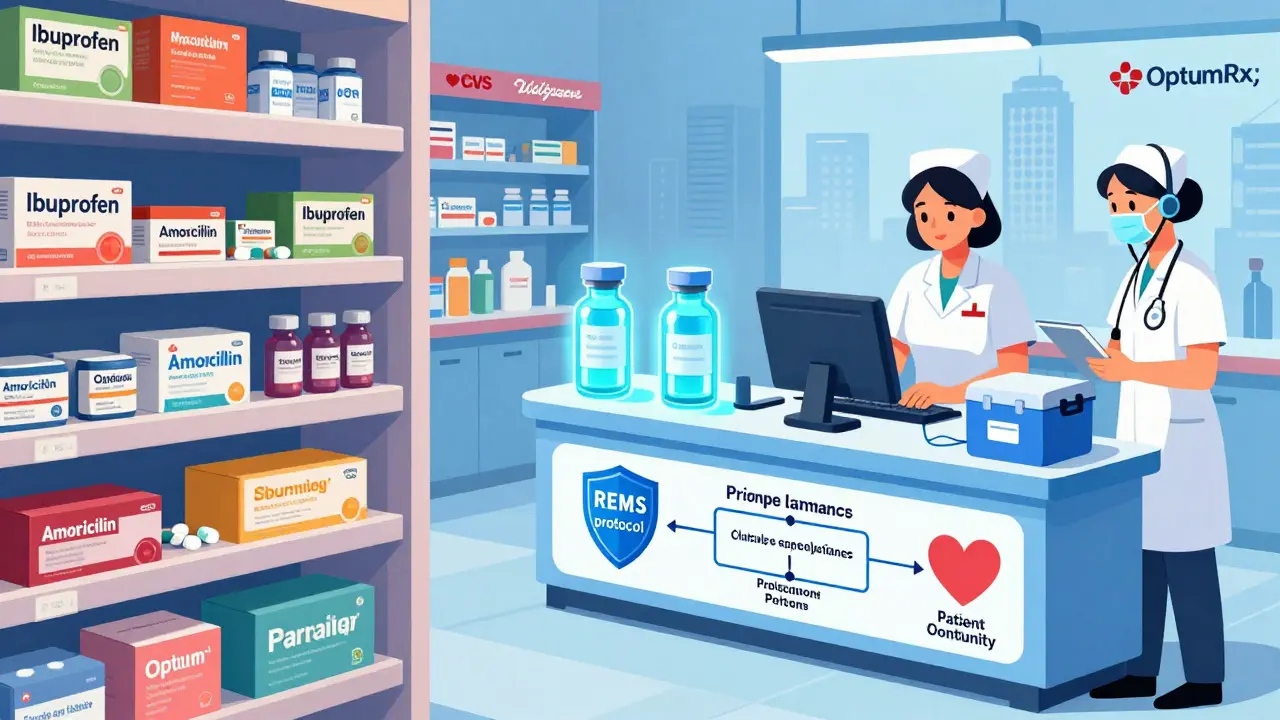
How Pricing Works: The Hidden Cost of Convenience
Patients often assume generics mean lower out-of-pocket costs. But with specialty drugs, that’s not always true. A generic specialty drug might cost the insurer less, but the dispensing fee - typically $250 to $500 - stays the same. That fee covers the clinical support, home delivery, and ongoing monitoring. Some patients see their copay jump from $15 at a retail pharmacy to $75 through a specialty channel. Why? Because insurers still classify these drugs as specialty, even if they’re generic. In fact, a 2024 MyHealthTeams survey found 62% of patients paid more for their generic specialty drug than they expected. But here’s the flip side: those higher fees often mean better outcomes. Patients who stay with specialty pharmacy services have 30% fewer hospitalizations, according to ASHP. The support isn’t a cost - it’s a preventive measure.Technology Is Changing the Game
Specialty pharmacies aren’t stuck in the past. They’re upgrading fast. In 2023, Surescripts rolled out Real-Time Prescription Benefit (RTPB) technology across 4.7 million specialty prescriptions. The result? Prior authorization processing time dropped by 3.2 days on average. Now, pharmacists can see a patient’s coverage, copay, and alternatives before the prescription even leaves the doctor’s office. This cuts down delays and helps patients start treatment faster. It also helps providers choose the most cost-effective option - brand or generic - without losing clinical control. Temperature-controlled logistics have improved too. Specialty pharmacies now use GPS-tracked coolers with real-time alerts if a shipment goes outside 2-8°C. That’s critical for biosimilars, which can lose effectiveness if mishandled.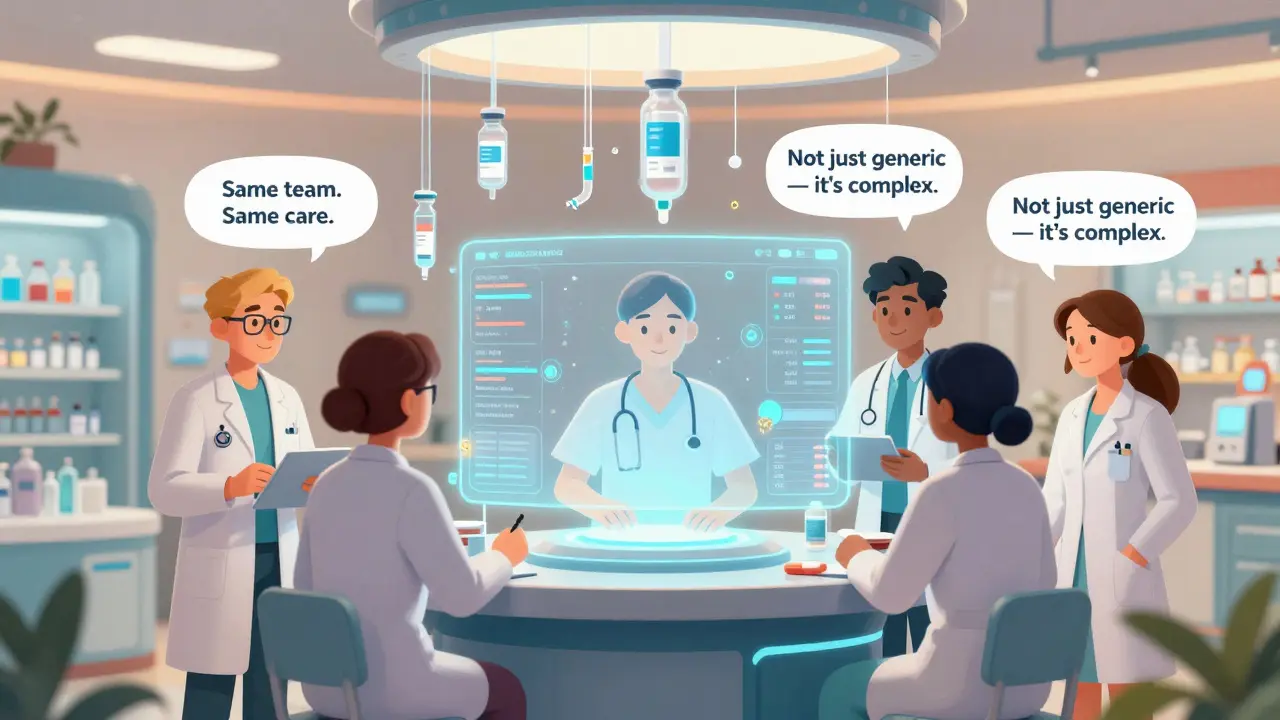
What’s Next? Biosimilars and Consolidation
The biggest shift coming? Biosimilars. In 2024, new CMS rules require Medicare Part D plans to cover all FDA-approved biosimilars. That’s expected to drive a 40% increase in specialty pharmacy volume by 2026. At the same time, health systems are building their own specialty pharmacies. Walgreens bought Shields Health Solutions in January 2024. CVS and OptumRx now control over 80% of the U.S. specialty pharmacy market. That consolidation means fewer independent players - but also more integration with clinics and hospitals. The future isn’t about brand vs. generic. It’s about service. Whether a drug costs $100 or $10,000, if it needs monitoring, education, or special handling - it belongs in a specialty pharmacy.What Patients Should Know
If you’re switching from a brand specialty drug to a generic version:- Ask if your pharmacy will keep the same care team.
- Confirm your copay won’t spike unexpectedly.
- Make sure your provider knows your new drug is a biosimilar - not a chemical generic.
- Don’t assume you can switch to retail. Many generics still require specialty distribution.
Can a generic specialty drug be dispensed at a regular pharmacy?
Usually not. Even if a specialty drug is generic or a biosimilar, manufacturers often require distribution through specialty pharmacies only. This is called a "limited distribution network." Retail pharmacies typically don’t have the infrastructure for temperature control, clinical monitoring, or prior authorization support needed for these drugs.
Why is the copay higher for a generic specialty drug than a regular generic?
Because specialty drugs are classified by complexity, not cost. The higher copay covers clinical services - like nurse follow-ups, injection training, and insurance coordination - not just the drug itself. A regular generic might cost $5 with no extra fees. A generic specialty drug might cost $75 because it includes $400 in clinical support.
Are biosimilars the same as generic drugs?
No. Traditional generics are chemically identical to their brand-name versions. Biosimilars are highly similar to complex biologic drugs but aren’t exact copies because they’re made from living cells. They still require the same handling, monitoring, and clinical support as the original biologic - which is why they’re dispensed through specialty pharmacies.
Do I have to use the same specialty pharmacy if I switch to a generic version?
You’re not required to, but most patients benefit from staying. Your pharmacy team already knows your history, side effects, and treatment goals. Switching pharmacies means restarting education, re-verifying insurance, and rebuilding trust. A 2024 survey found 68% of patients preferred to stay with the same pharmacy when switching to a generic.
How long does it take to get a generic specialty drug?
On average, 7.2 days from prescription receipt to delivery. This is longer than retail (1.2 days) because of steps like prior authorization, insurance appeals, patient education, and specialized shipping. Oncology and hepatitis C medications can take up to 9 days. New technology like Real-Time Prescription Benefit has cut this time by over 3 days in many cases.
Morgan Dodgen
March 9, 2026 AT 15:20Let’s be real - this whole "specialty pharmacy" model is just a glorified rent-seeking scheme wrapped in clinical jargon. Biosimilars? More like "bioscamilars" - same FDA stamp, same $$$ markup, same overstaffed care teams billing $500 for a 3-minute phone call. The system’s rigged. Manufacturers lock distribution not for safety - but to maintain monopoly pricing. And don’t get me started on how insurers still classify generics as "specialty" just to keep their rebate pipelines flowing. 🤡
Erica Santos
March 9, 2026 AT 22:29Oh wow. So the real villain isn’t Big Pharma - it’s the pharmacists who "care too much." You know what’s cheaper than a $400 clinical support fee? Not taking the drug at all. Let’s be honest - if you need a nurse to hold your hand while you inject yourself, maybe you shouldn’t be on it in the first place. This isn’t healthcare. It’s performance art with a pharmacy label. 😏
Nicholas Gama
March 11, 2026 AT 06:25Specialty drugs aren’t defined by price. They’re defined by control. The system exists to keep patients dependent. Not on the drug. On the service. And that’s the real profit center. Always has been.
rafeq khlo
March 11, 2026 AT 22:30The notion that generic specialty drugs require the same infrastructure as branded biologics is fundamentally misleading. The complexity lies not in the molecule but in the regulatory and commercial architecture erected around it. The clinical support model is not a necessity - it is a constructed artifact of market consolidation. The 7.2-day turnaround is not diligence - it is bureaucratic inertia masquerading as patient care. The industry has successfully convinced regulators, insurers, and patients that inefficiency equals safety. This is a classic case of institutional capture.
Stephen Rudd
March 12, 2026 AT 18:05You people are delusional. This isn't about safety. It's about control. Why can't a patient just get their methotrexate from CVS? Because the specialty pharmacy cartel doesn't want competition. They're making $500 per prescription on a drug that costs $20 to make. And now they're calling it "clinical support"? Please. If you're too fragile to handle your own injection, maybe you're not fit to be alive. Stop pretending this is medicine. It's a luxury service for people who can't handle responsibility. And the FDA? They're in on it.
Scott Easterling
March 14, 2026 AT 01:32Wait… so you’re telling me a generic drug - a generic - can’t be dispensed at a pharmacy unless you have a whole team of nurses, a GPS-cooled cooler, and a 30-minute consultation? That’s insane. Who’s paying for this? The patient? The insurer? The government? Someone’s getting rich off this. And it’s not the patient. I’ve seen retail pharmacies handle insulin for decades. This is just a money grab dressed up as compassion. And the fact that people are okay with this? That’s the real tragedy.
Neeti Rustagi
March 15, 2026 AT 18:37While the systemic inefficiencies are undeniable, the emotional and clinical continuity offered by specialty pharmacies cannot be dismissed. Many patients, particularly those managing chronic autoimmune conditions, report profound anxiety when forced to transition care teams. The trust built over months - sometimes years - is not a luxury; it is therapeutic. A pharmacist who knows your lab trends, your side effect history, and your emotional triggers is not a cost center - they are a stabilizing force. The data on hospitalization reduction is not anecdotal. It is a reflection of human-centered care, not corporate greed. We must not confuse the architecture of care with its intent.
Mantooth Lehto
March 16, 2026 AT 20:56I’ve been on a biosimilar for 18 months. My pharmacy team called me every week. They sent me injection videos. They helped me appeal my insurance denial. When I had a flare-up, they called my rheumatologist for me. I didn’t pay $75 because I’m stupid - I paid it because they kept me out of the ER. And yeah, I cried when they reminded me to take my dose. Don’t shame people for needing support. That’s not healthcare. That’s cruelty.
George Vou
March 18, 2026 AT 18:51so like… if its generic why cant i just get it at walgreens like normal? like i get the whole "complex drug" thing but like… my cousin takes methotrexate and she just picks it up like a prescription. is this all just a scam? like… are we being lied to? i feel like i got scammed. also why does it take 7 days? i need my meds not a 3 week audit
Mary Beth Brook
March 19, 2026 AT 02:37Specialty pharmacies aren’t the problem - they’re the solution to a broken system. The U.S. has outsourced clinical responsibility to private entities because we refuse to fund public health infrastructure. The $500 fee? It’s what we pay to avoid universal care. The real scandal isn’t the pharmacy - it’s that we let a profit-driven model replace public responsibility. If you want cheaper drugs, fund the system. Don’t blame the pharmacists doing the job Congress refuses to do.
Jazminn Jones
March 19, 2026 AT 09:28The conflation of biosimilars with traditional generics is not merely inaccurate - it is dangerously misleading. The molecular heterogeneity of biosimilars necessitates pharmacovigilance protocols that are non-negotiable. To reduce their distribution to retail channels is to ignore the pharmacokinetic unpredictability inherent in their manufacturing. The 7.2-day turnaround is not inefficiency - it is the necessary latency of clinical due diligence. To demand convenience over safety is not patient advocacy - it is negligence disguised as populism. The specialty pharmacy model is not a market distortion - it is the only rational response to biological complexity.