
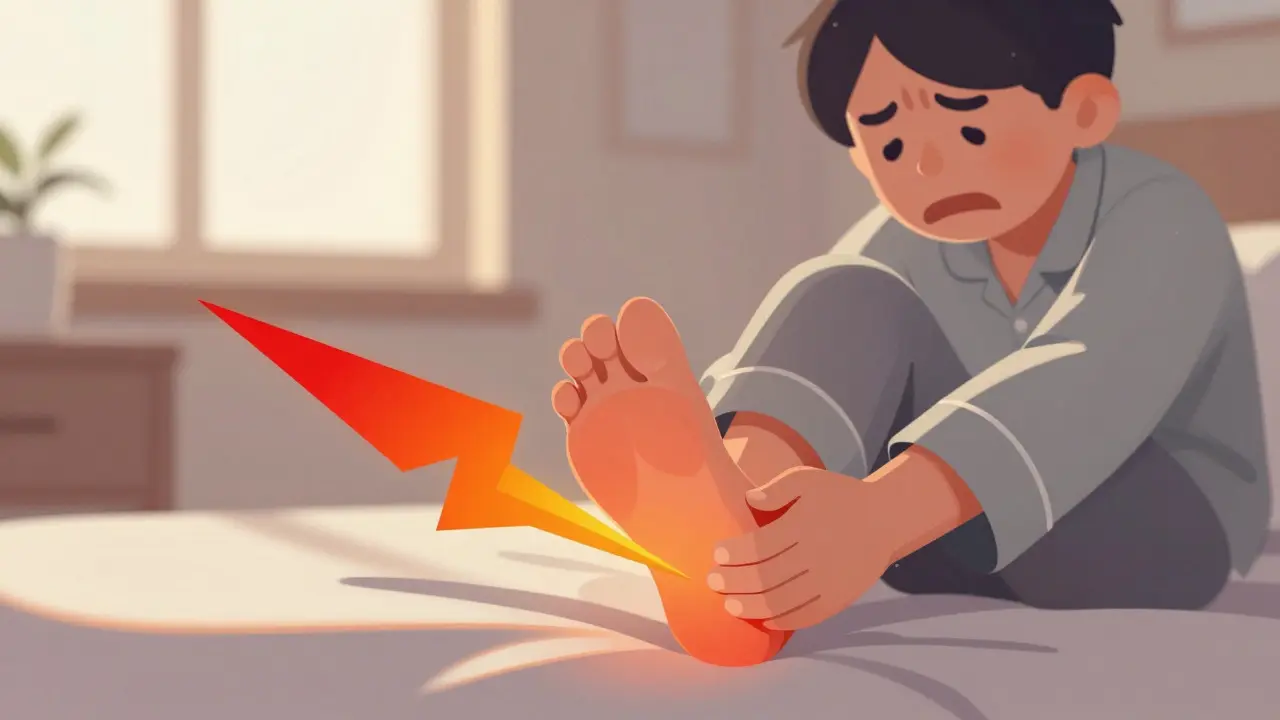
Waking up with a sharp stab in your heel that fades after a few steps is a classic sign of plantar fasciitis, a condition affecting roughly 10% of adults at some point in their lives. Despite the name suggesting inflammation, recent medical consensus reclassifies it as a degenerative overuse injury known as plantar fasciopathy. This chronic issue impacts the thick band of tissue connecting your heel bone to your toes, causing significant discomfort for millions of Americans annually. Understanding the biomechanical roots of this pain is crucial because traditional anti-inflammatory approaches often fail to address the underlying structural wear and tear.
Understanding the Plantar Fascia and Its Role
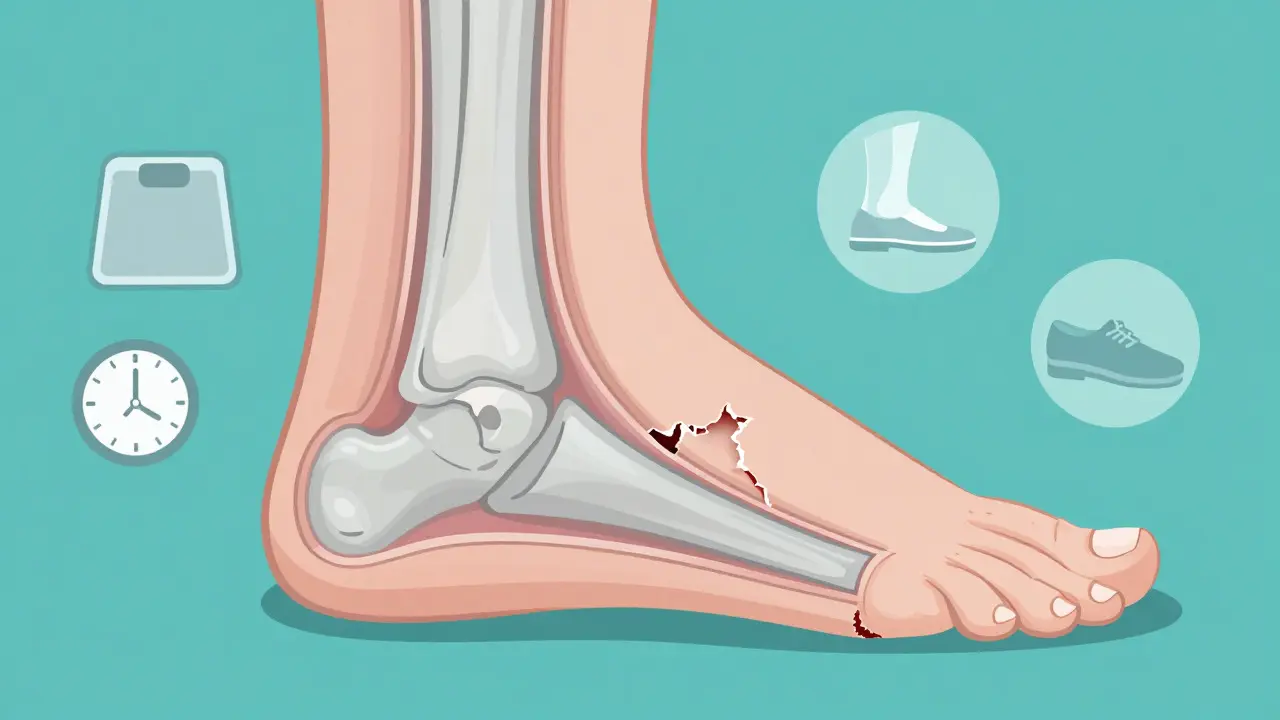
The plantar fascia is a strong, fibrous ligament that forms the longitudinal arch of the foot. It originates from the posteromedial calcaneal tuberosity (the heel bone) and inserts into each metatarsal head. Its primary job is shock absorption and supporting the arch during weight-bearing activities. When this tissue undergoes repetitive micro-tears due to overuse or poor mechanics, it fails to heal properly, leading to myxoid degeneration and fragmentation. This process weakens the attachment point at the heel, resulting in the characteristic localized tenderness found 2-3 cm anterior to the medial calcaneal tuberosity.
It is vital to distinguish this condition from other sources of heel pain. For instance, Baxter neuritis involves nerve entrapment causing burning sensations, while tarsal tunnel syndrome presents with paresthesia in the plantar foot. Misdiagnosis is common; 42% of patients report being initially mistaken for having heel spurs. However, X-rays are often misleading. Dr. James D. Heckman notes that 80% of patients with clinical plantar fasciitis have no radiographic evidence of spurs, whereas 15% of asymptomatic individuals do show them. Therefore, diagnosis relies on clinical features rather than imaging alone.
Risk Factors and Who Is Most Vulnerable
Certain demographic and lifestyle factors significantly increase the likelihood of developing this condition. The peak incidence occurs between ages 40 and 60, but it can affect anyone. The American Academy of Family Physicians identifies several key risk factors with specific odds ratios:
- High BMI: A Body Mass Index greater than 27 kg/m² increases risk by 4.2 times.
- Limited Ankle Dorsiflexion: Having less than 10 degrees of ankle mobility raises risk by 3.7 times.
- Pes Planus: Flat feet contribute to a 2.9 times higher risk.
- Occupational Standing: Jobs requiring more than 4 hours of daily standing increase risk by 5.1 times.
Interestingly, the condition shows a bimodal distribution. About 63% of cases occur in sedentary individuals with higher body weight, while 37% affect active individuals who run more than 10 miles weekly. High-risk occupational groups include teachers (14.3% prevalence), factory workers (12.7%), and healthcare professionals (11.9%). If you fall into these categories, proactive management becomes essential to prevent acute flare-ups.
Diagnosing the Condition Accurately
Accurate diagnosis prevents unnecessary treatments like early corticosteroid injections, which carry risks. The American Orthopaedic Foot & Ankle Society requires three of four clinical features for a definitive diagnosis:
- Localized tenderness near the inner heel.
- Pain during the first steps in the morning or after prolonged rest.
- Pain when passively dorsiflexing (pulling up) the toes.
- Pain after prolonged standing.
Ultrasound imaging serves as a valuable confirmatory tool. It typically reveals plantar fascia thickness greater than 4.0 mm (normal range is 2.0-3.5 mm). This diagnostic method offers 85% sensitivity and 90% specificity, making it highly reliable for confirming the degenerative changes associated with the condition. If you experience these symptoms, consulting a podiatrist or orthopedic specialist for a physical exam is the recommended first step before considering advanced imaging.
First-Line Conservative Treatments
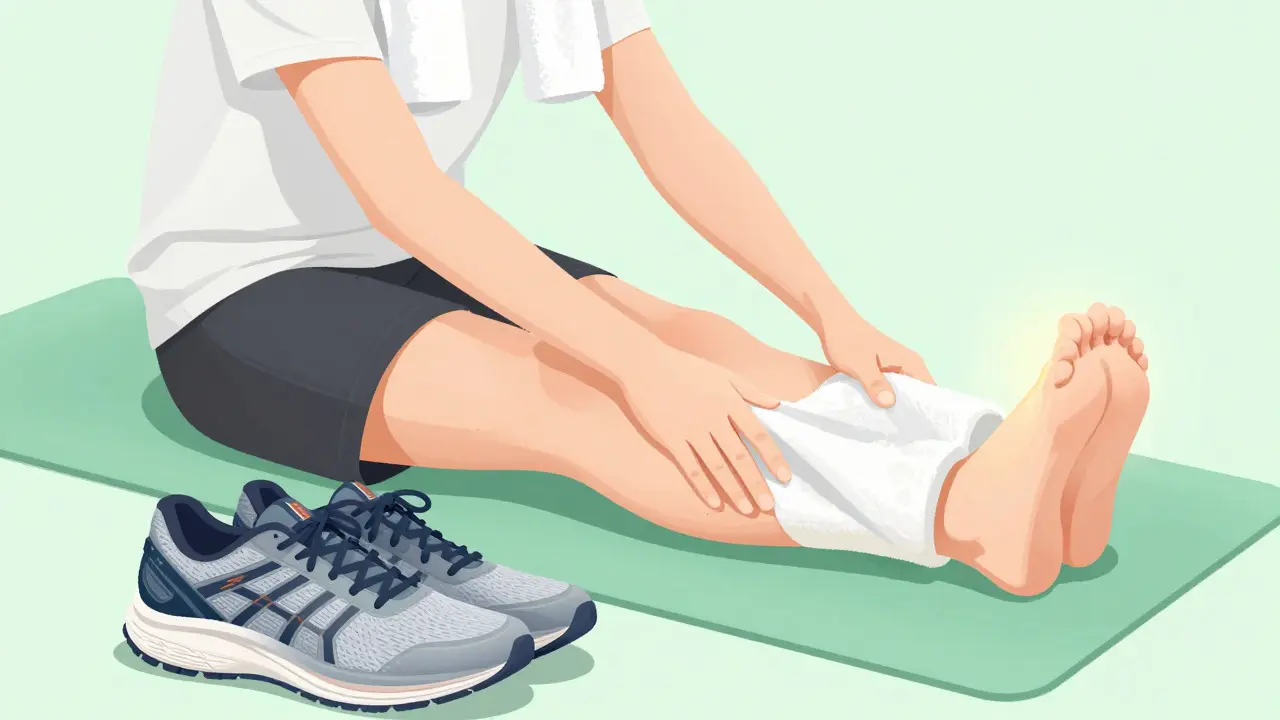
Conservative management resolves 80-90% of cases within 6-12 months. The gold standard remains targeted stretching, specifically designed to load the plantar fascia directly. Traditional calf stretches are 23% less effective than fascia-specific protocols. The most effective technique is the seated towel stretch: sit with your leg extended, loop a towel around the ball of your foot, and pull your toes toward your shin until you feel a deep stretch in the arch. Hold for 10 seconds, repeat 10 times, and perform this routine three times daily.
Beyond stretching, footwear plays a critical role. Shoes should have a 10-15mm heel-to-toe drop and substantial medial arch support. Models like the Brooks Adrenaline GTS and Hoka Clifton have shown high patient satisfaction rates (82% and 79% respectively) due to their stability features. Additionally, weight loss is strongly recommended for those with a BMI over 27. A 1-point reduction in BMI correlates with a 5.3% reduction in pain at six months, highlighting the direct link between mechanical load and tissue stress.
Advanced Interventions and Emerging Therapies
If conservative measures fail after three months, second-line treatments come into play. Radial shockwave therapy is now strongly recommended by the American Academy of Orthopaedic Surgeons as a next step. It achieves 70-80% success rates after 3-4 sessions by stimulating tissue repair through acoustic waves. However, out-of-pocket costs range from $2,500 to $3,500, with only 35% insurance coverage according to recent Medicare data.
Emerging options include Platelet-Rich Plasma (PRP) injections, which showed 65% pain reduction at six months in a 2022 double-blind RCT. While promising, PRP costs $800-$1,200 per injection with minimal insurance support. Ultrasound-guided cryoplasty is another investigational approach demonstrating 82% success at six months, though it remains largely experimental. Surgical intervention, such as plantar fascia release, is reserved for rare, refractory cases where all other options have failed, given the potential for long-term arch flattening and weakness.
Preventing Recurrence and Long-Term Management
While 90% of cases resolve within 10 months using structured care, recurrence occurs in 25-30% of patients, typically within 12 months of symptom resolution. To prevent this, maintenance stretching is non-negotiable. Many patients stop stretching once the pain subsides, which leads to relapse. Incorporating daily calf and fascia stretches into your morning routine ensures the tissue remains flexible and resilient. Furthermore, monitoring your footwear is crucial; replace running shoes every 400-500 miles to maintain proper cushioning and support. By addressing the biomechanical causes rather than just masking the pain, you create a sustainable path to long-term heel health.
Is plantar fasciitis caused by inflammation?
Not primarily. While the name suggests inflammation, histologic studies show it is a degenerative condition (fasciopathy) characterized by tissue breakdown and lack of healing. Anti-inflammatory drugs may help temporarily but do not address the root structural cause.
Do heel spurs cause plantar fasciitis pain?
Usually no. Heel spurs are bony growths that are often incidental findings. Most people with plantar fasciitis pain do not have spurs, and many people with spurs have no pain. The pain comes from the degenerated fascia tissue itself.
How long does it take for stretching to work?
Most patients see significant improvement within 8 to 12 weeks of consistent daily stretching. Adherence is key; missing sessions can delay recovery. Full resolution typically occurs within 6 to 12 months.
Are night splints worth the cost?
They are effective for about 72% of users but suffer from a high discontinuation rate (44%) due to discomfort. They keep the foot in a dorsiflexed position overnight to prevent morning stiffness. If you tolerate them well, they can be a helpful adjunct to stretching.
When should I consider surgery?
Surgery is a last resort, considered only after 6-12 months of failed conservative treatment and advanced therapies like shockwave or PRP. It carries risks of arch flattening and requires a longer recovery period compared to non-invasive options.