
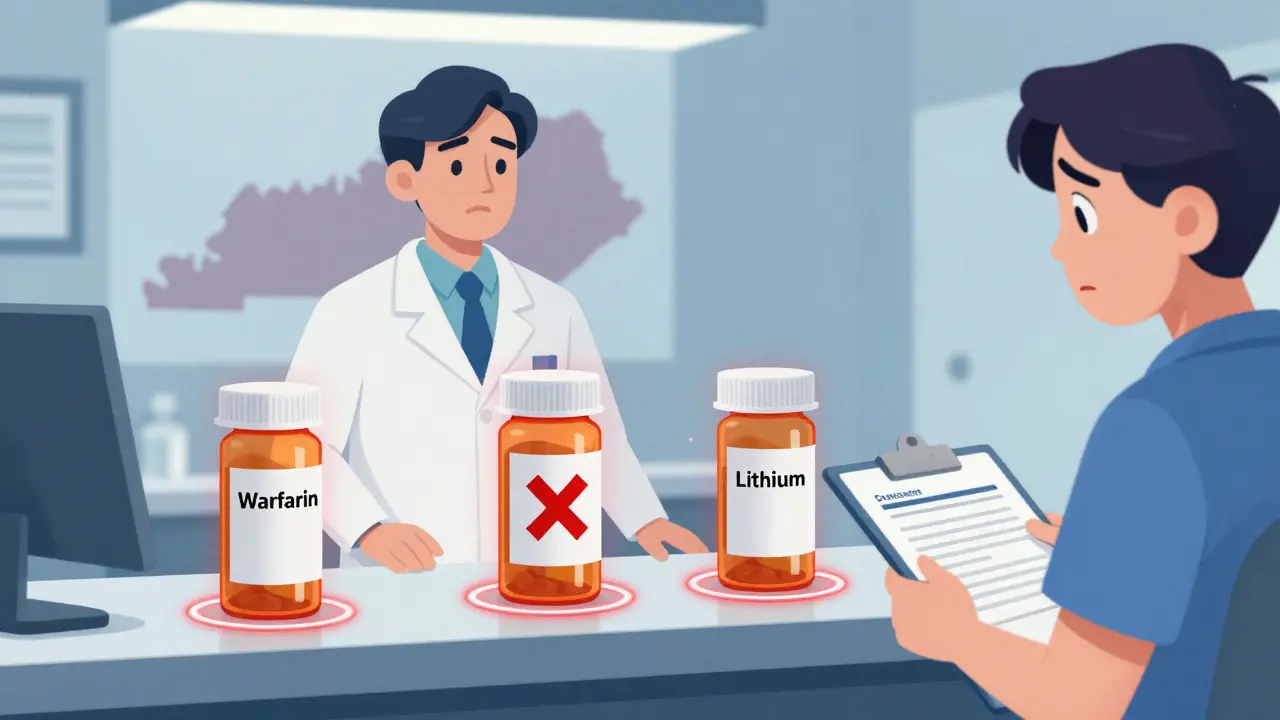
When you pick up a prescription for a medication like warfarin, levothyroxine, or an anti-seizure drug, you might assume the pharmacy can swap the brand name for a cheaper generic version. But in many states, that’s not allowed - and it’s not because of confusion or outdated rules. It’s because of NTI-specific substitution laws.
NTI stands for Narrow Therapeutic Index. These are drugs where even tiny changes in dose can mean the difference between healing and harm. A little too much, and you risk bleeding, seizures, or poisoning. A little too little, and the treatment fails. That’s why some states have stepped in with rules that go beyond federal guidelines.
What makes a drug "narrow therapeutic index"?
The FDA doesn’t officially label any drug as NTI. It says approved generics are just as safe and effective as brand names. But pharmacists and doctors see real-world differences. For example, warfarin - a blood thinner - has a very narrow window where it works. If your INR level drops by 0.5 or spikes by 1, you could clot or bleed internally. Levothyroxine, used for thyroid conditions, affects metabolism, heart rate, and even bone density. Even small changes in absorption can throw off a patient’s balance.
Studies show that while most generics perform the same, a small percentage of patients experience instability after switching. That’s not because the generic is bad - it’s because these drugs are so sensitive. That’s why 27 states have created their own rules, even though the FDA says they don’t need to.
How states handle NTI substitution
Not all states treat NTI drugs the same. There are three main approaches:
- Carve-out: The drug is completely off-limits for substitution. This is the strictest rule.
- Consent required: Both the doctor and patient must sign off before a switch can happen.
- Notification only: The pharmacist can substitute, but must inform the prescriber and patient afterward.
States like Kentucky, North Carolina, and Connecticut use the most restrictive methods. Kentucky bans substitution for 27 specific drugs, including digoxin, lithium, and all strengths of warfarin and levothyroxine. No exceptions unless the doctor writes "Do Not Substitute" on the prescription. North Carolina requires written consent from both the prescriber and the patient - a form that must be signed and kept on file for three years. Connecticut goes further: if you’re on an anti-epileptic drug and your pharmacist tries to switch it, they must notify both you and your doctor within 72 hours. If either of you objects within 14 days, the substitution is canceled.
On the other end, states like California, Texas, and Virginia follow federal rules. They allow substitution unless the doctor writes "Do Not Substitute." No extra paperwork. No mandatory notifications. Just standard generic substitution.
Why the differences?
It comes down to history, fear, and data.
After the 1984 Hatch-Waxman Act made it easier to approve generics, some states got nervous. They saw reports of patients having seizures or unstable INRs after switching. Some of those cases were real. Others were coincidental - patients changed diet, started new meds, or missed doses. But the fear stuck.
States with strict rules point to studies showing 28.7% fewer adverse events in places with carve-outs. But those studies don’t prove the rules caused the drop. Maybe those states had better patient monitoring or more experienced pharmacists.
Meanwhile, critics argue that many drugs on state NTI lists don’t even have solid evidence of being narrow-index. A 2021 review found only 12 out of 47 drugs on state lists were truly proven to have a narrow therapeutic index. Yet, states still list drugs like digoxin and lithium - even though they’ve been used with generics for decades without widespread problems.
What pharmacists deal with
If you’ve ever waited longer than usual at the pharmacy, this might be why.
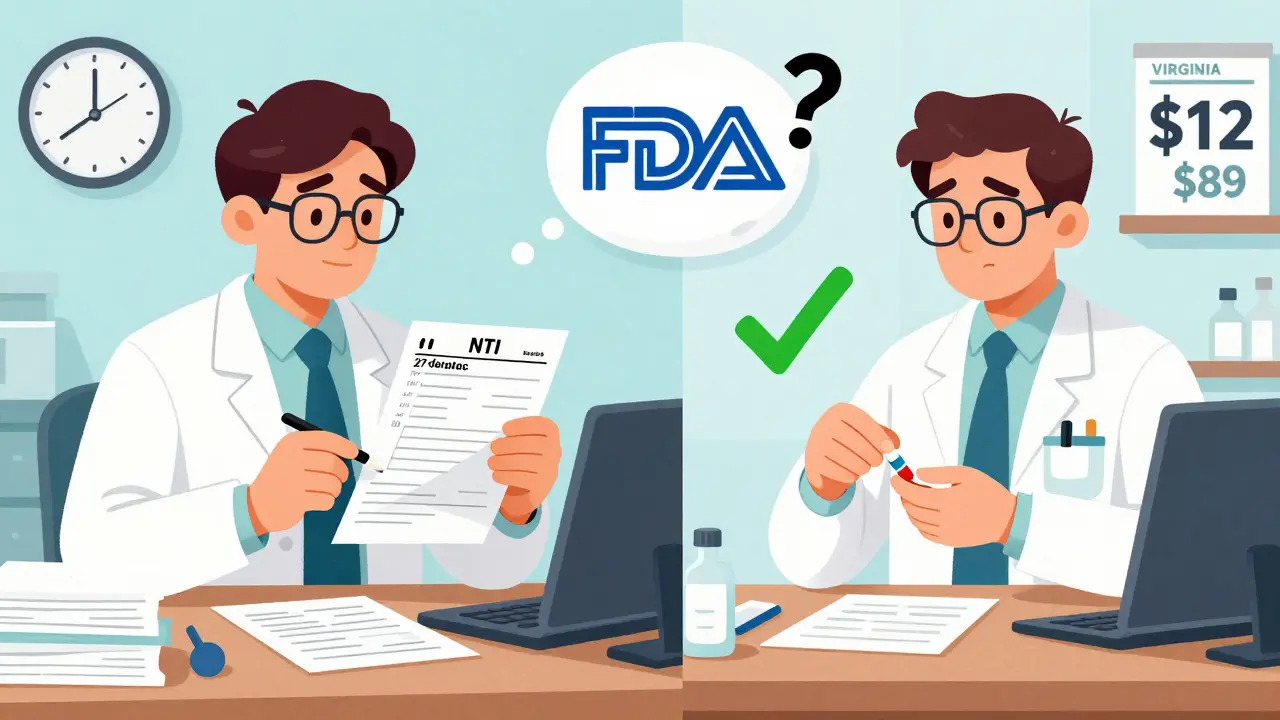
In Kentucky, pharmacists must manually check every prescription against a 27-drug list. That adds 5 to 7 minutes per NTI prescription. Chain pharmacies use software that auto-blocks substitutions, but smaller pharmacies? They’re stuck with paper lists and phone calls to doctors.
A 2022 study found pharmacists in restrictive states spend an extra 8.7 hours per month just on NTI compliance. That’s time they could spend counseling patients or checking for drug interactions.
One pharmacist in Ohio told a national survey: "I had a 78-year-old woman come in for her levothyroxine. She’d been on the same brand for 12 years. I wanted to switch her to generic to save her $15 a month. But I had to call her doctor, get a signed consent, and then explain to her why this isn’t like switching painkillers. She cried. She was scared. I didn’t blame her. But I also didn’t get paid extra for that conversation."
Who wins? Who loses?
Patients in states with strict rules often pay more. Brand-name NTI drugs can cost 3 to 10 times more than generics. In Kentucky, where substitution is blocked, patients pay an average of $89 per month for levothyroxine. In Virginia, where substitution is allowed, it’s $12.
But some patients feel safer. The Epilepsy Foundation supports Connecticut’s rules. After they were implemented, ER visits for seizure-related issues dropped 19.2%. Meanwhile, the American Heart Association says there’s no evidence warfarin generics are less stable. A study of over 12,000 Medicare patients found no difference in INR control between brand and generic warfarin.
Pharmacies are caught in the middle. Chain stores have software that adapts to each state’s rules. Independent pharmacies? They’re scrambling. Some refuse to fill NTI prescriptions unless the doctor writes "Dispense as written." Others just assume substitution is safe - and risk fines.
What’s changing?
The FDA is trying to help. In 2023, it released draft guidance suggesting a clear way to define NTI drugs: if the ratio between the minimum toxic dose and minimum effective dose is 2.0 or less, then it qualifies. That’s a science-based standard.
Nine states, including New York and Ohio, are now reviewing their lists to match this. California passed a law in 2022 requiring all NTI designations to be based on peer-reviewed evidence - not tradition.
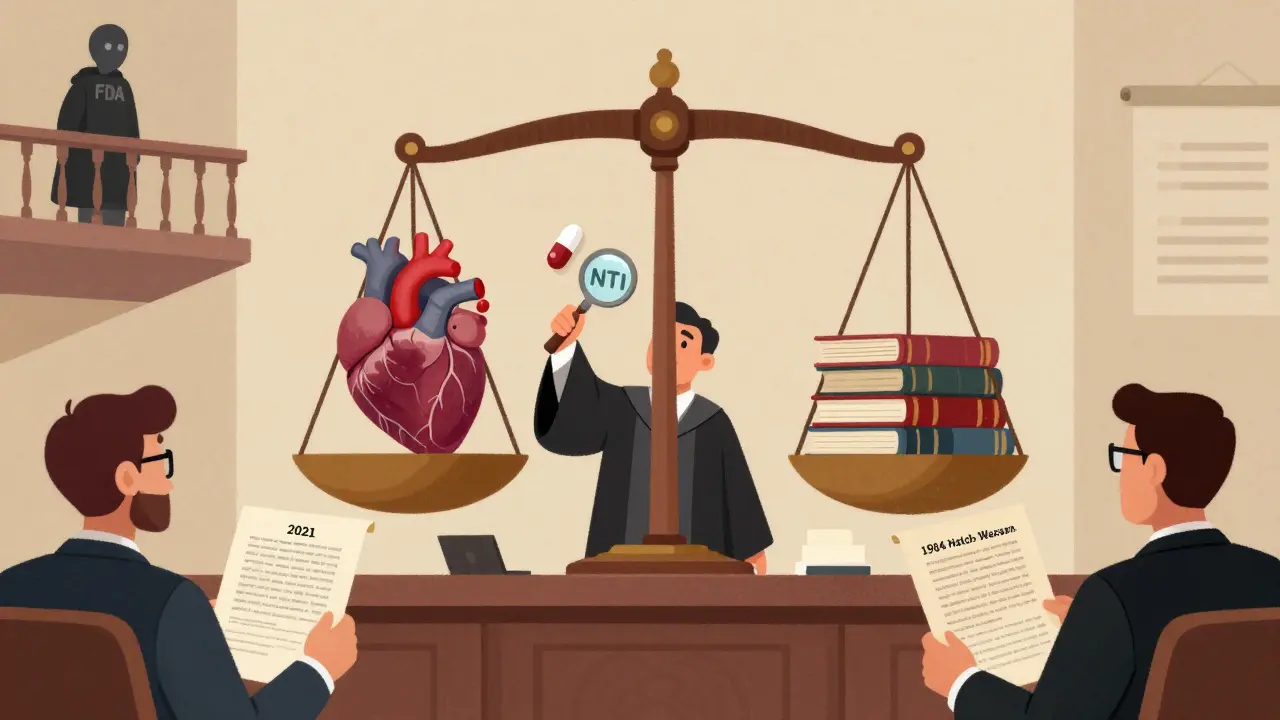
But change is slow. Kentucky’s list is being challenged in federal court. The Association for Accessible Medicines says it violates interstate commerce laws. If the court sides with them, Kentucky might be forced to rewrite its rules - and other states could follow.
Meanwhile, the National Association of Boards of Pharmacy is working on a model framework to bring some consistency. But with 50 different systems, harmonization won’t happen overnight.
What does this mean for you?
If you take an NTI drug:
- Check your state’s rules. Some require consent. Others don’t care.
- Ask your pharmacist: "Is this drug on your NTI list?"
- If you’re switching from brand to generic, monitor how you feel. Report any new symptoms - dizziness, fatigue, irregular heartbeat, or seizures.
- Don’t assume a generic is unsafe. For most people, it works fine. But if you’ve had stability issues before, ask your doctor to write "Do Not Substitute."
And if you’re a prescriber? Know your state’s law. Document everything. And don’t dismiss patient concerns - even if the science says substitution is safe, their experience matters.
The truth? There’s no perfect answer. The FDA says one thing. Pharmacists see another. Patients feel something different. And states? They’re still figuring it out.
Which states ban generic substitution for NTI drugs entirely?
Kentucky, North Carolina, and Connecticut are the most restrictive. Kentucky prohibits substitution for 27 specific NTI drugs, including digoxin, levothyroxine, lithium, and warfarin. North Carolina requires dual written consent from both prescriber and patient. Connecticut mandates written notification and allows either the patient or prescriber to block substitution within 14 days. Other states like Maryland and Maine require consent but don’t outright ban substitution.
Does the FDA recognize NTI drugs as a separate category?
No. The FDA does not officially designate any drugs as Narrow Therapeutic Index (NTI) in the Orange Book or elsewhere. It maintains that all therapeutically equivalent generics - including those for drugs commonly listed as NTI - meet the same rigorous standards for safety and efficacy as brand-name products. The FDA’s position is that bioequivalence testing is sufficient for all drugs, regardless of therapeutic index.
Why do some states have NTI lists if the FDA doesn’t?
State pharmacy boards created NTI lists out of clinical concern after early reports of instability in patients switching from brand to generic versions of drugs like warfarin and levothyroxine. Even though large studies later showed no significant difference in outcomes for most patients, the perception of risk remained. States argue they have the authority under police powers to protect public health, even if federal guidelines don’t require it.
Can a pharmacist substitute an NTI drug if the doctor doesn’t say "Do Not Substitute"?
It depends on the state. In states with carve-out rules (like Kentucky), substitution is blocked regardless of the prescriber’s note. In states with consent requirements (like North Carolina), substitution requires signed approval from both patient and prescriber. In states with no NTI rules (like Texas or California), substitution is allowed unless the prescriber writes "Do Not Substitute." Always check your state’s specific law.
What NTI drugs are most commonly restricted by state laws?
The most commonly restricted NTI drugs include: warfarin sodium tablets, levothyroxine sodium tablets, lithium carbonate tablets, digoxin tablets, phenytoin, carbamazepine, and valproic acid. These are listed in state regulations because they have steep dose-response curves and are associated with serious outcomes if levels fluctuate. However, only a few of these have been scientifically validated as truly narrow-index by systematic reviews.
Are there any federal efforts to standardize NTI rules?
Yes. In 2023, the FDA released draft guidance proposing a standardized definition for NTI drugs: if the ratio of minimum toxic dose to minimum effective dose is 2.0 or less, it qualifies. Nine states are reviewing their lists in response. The National Association of Boards of Pharmacy is also developing a model framework for harmonization. But because states control pharmacy practice, full federal uniformity is unlikely.
Kal Lambert
March 15, 2026 AT 18:40Melissa Stansbury
March 16, 2026 AT 21:26cara s
March 17, 2026 AT 12:55Amadi Kenneth
March 18, 2026 AT 00:30Shameer Ahammad
March 19, 2026 AT 07:19Alexander Pitt
March 20, 2026 AT 10:14Manish Singh
March 20, 2026 AT 16:07Nilesh Khedekar
March 21, 2026 AT 20:11Robin Hall
March 23, 2026 AT 04:32jared baker
March 24, 2026 AT 19:40Michelle Jackson
March 26, 2026 AT 09:10Suchi G.
March 27, 2026 AT 16:42