

Waking up feeling like you’ve been hit by a truck is not part of the romanticized version of pregnancy. For most people, it’s just Tuesday. Morning sickness, medically known as nausea and vomiting of pregnancy (NVP), hits between 70% and 85% of pregnant individuals. It’s exhausting, it’s messy, and frankly, it can feel hopeless when you’re too nauseated to keep water down.
The good news? You don’t have to white-knuckle your way through the first trimester. We have effective treatments now. The challenge isn’t finding relief; it’s finding relief that is actually safe for the baby. With so many options ranging from ancient herbal remedies to modern prescription drugs, knowing what works-and what doesn’t-can make the difference between surviving pregnancy and thriving during it.
Start Here: Non-Drug Strategies That Actually Work
Before reaching for pills, medical guidelines recommend starting with lifestyle changes and non-pharmacological tools. This isn’t just about ‘sucking it up.’ These methods are evidence-backed and carry zero risk of side effects.
Ginger is the heavyweight champion of natural remedies. The FDA classifies ginger as Generally Recognized As Safe (GRAS). A 2023 meta-analysis in Frontiers in Public Health looked at 14 clinical studies and found that taking 1,000 mg of dried ginger root daily improved nausea symptoms by 32% compared to placebo. You can find this in capsules, chews, or tea. Just stick to under 1,000 mg per day to avoid heartburn, which is already a common complaint.
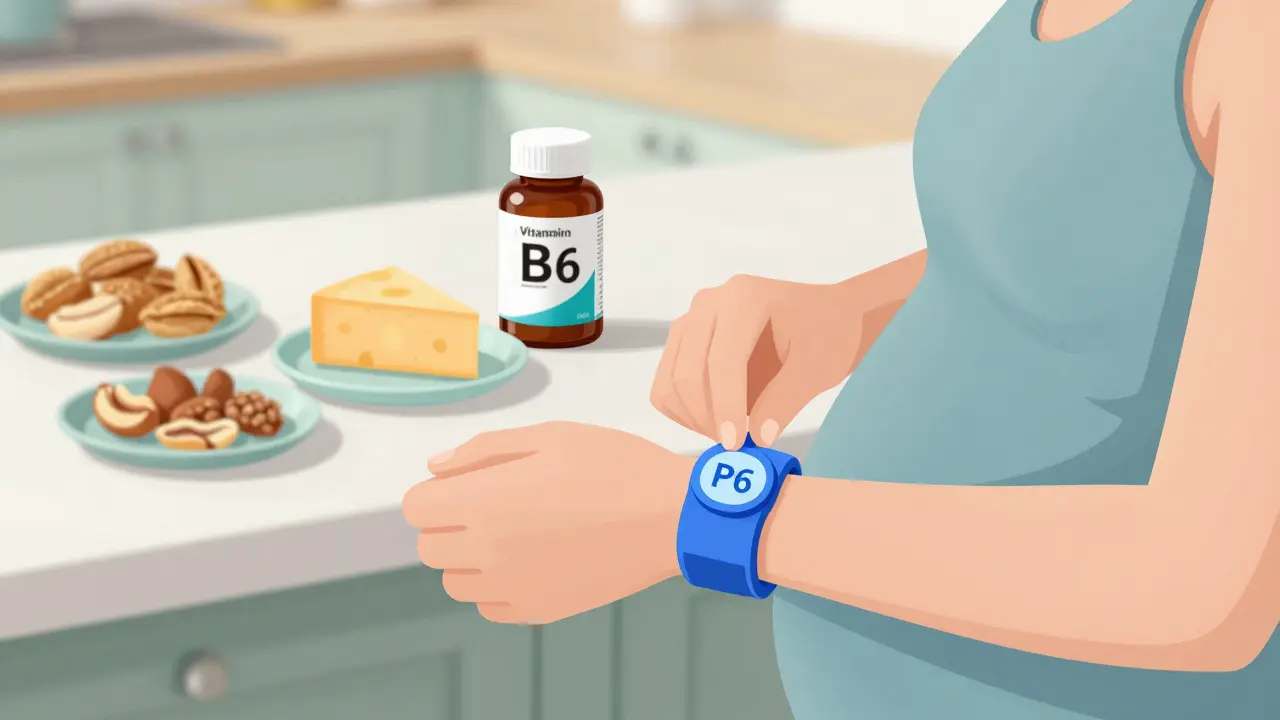
If pills are out of the question right now, try acupressure wristbands. These bands apply pressure to the P6 point on your inner wrist. A 2021 Cochrane Review involving over 1,100 participants found that these bands reduced vomiting episodes by an average of 2.2 times per day compared to fake bands. They’re cheap, reusable, and you can wear them 24/7. Many users report they work best for motion sickness but still provide noticeable relief for pregnancy nausea.
Dietary tweaks matter more than you might think. Instead of three big meals, aim for small snacks every two to three hours. Each snack should have about 45-60 grams of carbohydrates and 15-20 grams of protein. Keep crackers by your bed and eat one before you even sit up. Cold foods often smell less than hot ones, which helps if strong odors trigger your gag reflex.
The Gold Standard: First-Line Medications
If ginger and wristbands aren’t cutting it, it’s time to talk to your doctor about medication. The current gold standard, recommended by the American College of Obstetricians and Gynecologists (ACOG) as first-line therapy, is a combination of pyridoxine (Vitamin B6) and doxylamine.
You can buy these separately over the counter. Vitamin B6 is safe at doses of 10-25 mg every eight hours. Doxylamine is an antihistamine found in sleep aids like Unisom SleepTabs. However, doxylamine makes about 65% of users drowsy. Because timing the release of these two drugs is tricky when bought separately, many doctors prescribe Diclegis, a delayed-release formulation containing both ingredients.
Diclegis has a fascinating history. Its predecessor, Bendectin, was pulled from the US market in 1983 due to lawsuit fears, despite no evidence of harm. After decades of reevaluation, including a review of 200,000 pregnancies, it was reintroduced in 2013 as Diclegis. It holds an FDA Pregnancy Category A rating, meaning controlled human studies show no risk to the fetus. In clinical trials, 70% of women reported significant symptom reduction, compared to 48% on a placebo.
| Treatment | Type | Efficacy | Key Side Effect | Approximate Monthly Cost (US) |
|---|---|---|---|---|
| Pyridoxine + Doxylamine (OTC) | Vitamin + Antihistamine | Moderate to High | Drowsiness (65%) | $15 - $30 |
| Diclegis (Prescription) | Combination Drug | High (70% reduction) | Drowsiness (65%) | $250 (without insurance) |
| Ginger Supplements | Natural Remedy | Moderate (32% improvement) | Heartburn (rare) | $5 - $15 |
When First-Line Fails: Second-Line Prescriptions
About 0.3% to 2% of pregnancies develop hyperemesis gravidarum, a severe form of morning sickness that causes dehydration and weight loss, sometimes requiring hospitalization. For these cases, or when Diclegis doesn’t work, doctors turn to second-line medications.
Ondansetron (brand name Zofran) is the most common second-line drug. It’s powerful, controlling symptoms in 70-80% of patients. However, its safety profile is more complex. Early studies raised concerns about oral clefts, but a massive 2019 study in the New England Journal of Medicine covering 1.2 million pregnancies found no significant increase in cardiac malformations. Despite this, experts like Dr. Gideon Koren recommend reserving ondansetron for cases where other treatments fail, due to unresolved questions about long-term developmental risks.
Promethazine (Phenergan) is another option. It’s effective but carries a high risk of drowsiness (around 15-30%) and can be harsh on the stomach if taken orally. In severe cases where patients can’t keep pills down, promethazine suppositories may be used.

What to Avoid: The Marijuana Myth
You might hear friends say marijuana helped their nausea. While it might stop the spinning sensation, major health organizations, including ACOG and the Society of Obstetricians and Gynaecologists of Canada, strongly advise against it. There is insufficient data on its safety for fetal development. Studies link cannabis use in pregnancy to lower birth weights, with an average difference of 113 grams. Given the abundance of proven, safer alternatives, the risk isn’t worth it.
Practical Tips for Managing Relief
Getting the right treatment is only half the battle. How you take it matters.
- Patience with Diclegis: It takes 3-5 days to build up in your system. Don’t judge its effectiveness after one dose. Most users see major improvement by day seven.
- Timing Ginger: Take ginger supplements after eating to prevent gastric irritation. Empty stomachs are the enemy of nausea.
- Acupressure Placement: The band must sit exactly three finger-widths above the wrist crease, between the two tendons. If it’s too high or low, it won’t work.
- Cost Hacks: Diclegis can cost nearly $250 a month without insurance. Ask your pharmacist about generic pyridoxine/doxylamine combinations, which can cost under $20. GoodRx coupons can also help bridge the gap.
If you’re struggling to keep any medication down, tell your provider immediately. Switching to a different formulation, like a dissolvable tablet or suppository, might be necessary. You shouldn’t have to suffer in silence.
Is it safe to take Vitamin B6 during pregnancy?
Yes. Vitamin B6 (pyridoxine) is considered very safe. The FDA confirms it is safe at doses up to 200 mg daily during pregnancy, though typical therapeutic doses for nausea are much lower, around 10-25 mg every 8 hours.
Does Zofran cause birth defects?
Large-scale studies, including a 2019 NEJM study of 1.2 million pregnancies, have found no significant increase in cardiac malformations associated with ondansetron (Zofran). However, some earlier studies suggested a slight potential risk for oral clefts, so doctors typically reserve it for severe cases where first-line treatments fail.
How much ginger is too much for morning sickness?
Most guidelines recommend staying under 1,000 mg of dried ginger root per day. While ginger is GRAS (Generally Recognized As Safe), higher doses can cause heartburn or stomach upset, which may worsen your discomfort.
Why was Bendectin removed and then brought back?
Bendectin was withdrawn in 1983 due to litigation costs related to unfounded fears of birth defects, not because of proven safety issues. After decades of research confirming its safety, including reviews of hundreds of thousands of pregnancies, it was reintroduced in 2013 as Diclegis with an FDA Pregnancy Category A rating.
Can I use acupressure bands all day?
Yes. Acupressure bands are designed for continuous wear. The Mayo Clinic notes that optimal results often require consistent 24-hour wear to maintain pressure on the P6 nerve point.