

Electrolyte imbalances are not just numbers on a lab report; they are silent threats that can stop your heart or paralyze your muscles in minutes. While we often think of hydration as drinking water, true cellular function depends on the precise balance of charged minerals-specifically potassium, phosphate, and magnesium. When these levels drift outside their narrow physiological ranges, the consequences range from fatigue to fatal arrhythmias. For patients with renal issues or those on complex medication regimens, understanding how to manage these three critical ions is a matter of life and death.
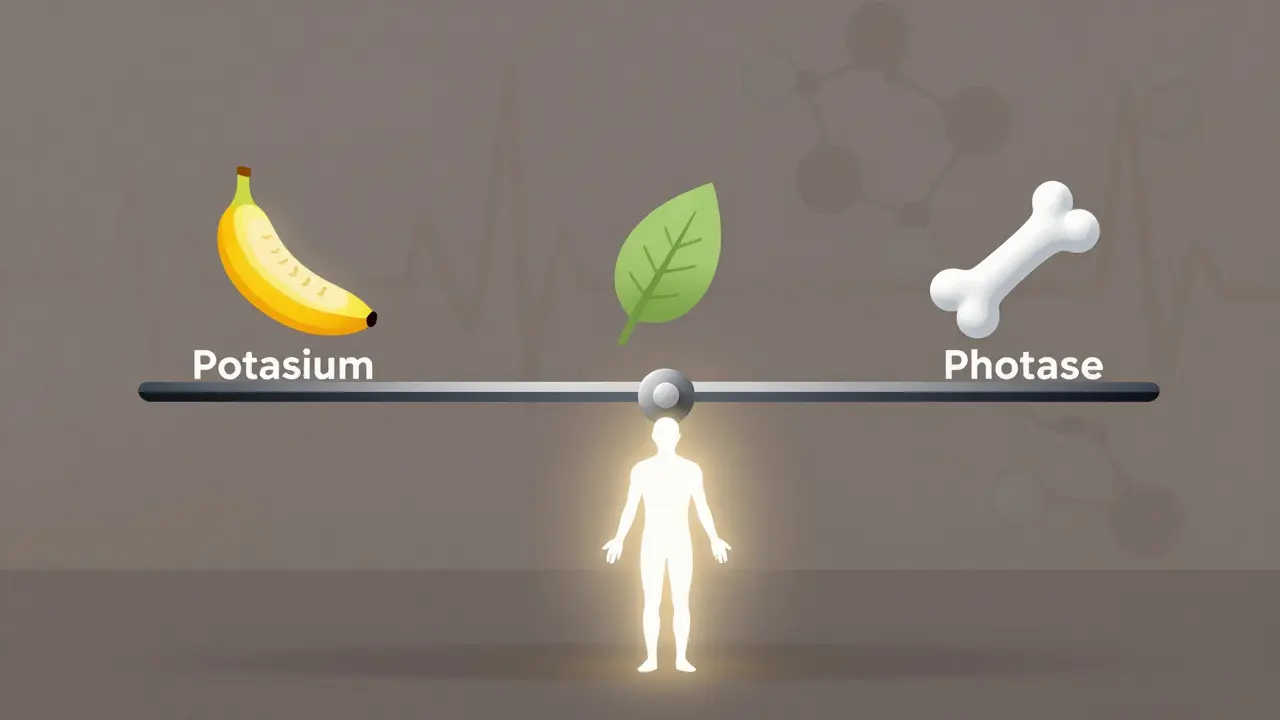
The human body operates like a sophisticated electrical grid. Potassium regulates nerve signals and muscle contractions, magnesium powers over 300 enzymatic reactions including energy production, and phosphate builds bones and stores cellular energy. Disrupt this balance, and the system fails. Recent safety alerts from the National Institute for Health and Care Excellence (NICE) have highlighted that sodium and potassium errors remain a leading cause of preventable hospital harm. This guide breaks down exactly how to monitor, treat, and prevent these dangerous shifts, focusing on the interplay between these three vital minerals.
The Critical Ranges: What Normal Looks Like
Before you can fix an imbalance, you need to know what "normal" actually means for each mineral. These ranges are tight because the body has very little tolerance for error.
- Potassium: The safe zone is 3.2-5.0 mEq/L. Levels below 3.0 mEq/L (hypokalemia) or above 6.5 mEq/L (hyperkalemia) are considered critical and require immediate intervention.
- Magnesium: Normal serum levels sit between 1.7-2.2 mg/dL (or 0.7-0.9 mmol/L). Critical thresholds trigger action when levels drop below 1.0 mg/dL or rise above 2.5 mg/dL.
- Phosphate: The target range is 2.5-4.5 mg/dL. Severe hypophosphatemia occurs below 1.0 mg/dL, while hyperphosphatemia requires attention above 4.5 mg/dL.
These numbers come from established clinical guidelines by organizations like AMBOSS and the Cleveland Clinic. Remember that "normal" can vary slightly based on the specific laboratory reference ranges, but deviations beyond these points signal a breakdown in homeostasis.
Potassium: The Heart’s Conductor
Potassium is the primary intracellular cation, meaning it lives mostly inside your cells. It is responsible for repolarizing the heart muscle after every beat. When potassium is too low, the heart becomes irritable and prone to erratic rhythms. When it is too high, the electrical signal can simply stop, leading to cardiac arrest.
Hypokalemia (Low Potassium) is common in patients taking diuretics (water pills) or those with vomiting and diarrhea. Symptoms include muscle weakness, cramps, and constipation. If left untreated, it leads to dangerous arrhythmias. Treatment involves oral supplementation for mild cases or IV replacement for severe deficits. However, there is a strict rule: never exceed 10 mEq/hr via peripheral IV or 40 mEq/hr via a central line. Pushing potassium faster than this causes severe pain at the injection site and risks stopping the heart due to rapid concentration spikes.
Hyperkalemia (High Potassium) is more immediately lethal. It often affects people with chronic kidney disease (CKD) who cannot excrete excess potassium. If levels exceed 7 mEq/L or if ECG changes appear (like peaked T-waves), emergency protocols kick in. The first step is stabilizing the heart membrane with calcium gluconate. Next, you shift potassium into the cells using insulin and glucose. Finally, you remove potassium from the body using binders like patiromer or sodium zirconium cyclosilicate, which NICE approved in early 2023 for safer long-term management compared to older resins.
Magnesium: The Unsaid Partner
You cannot effectively treat potassium without addressing magnesium. They are physiologically linked. Magnesium acts as a gatekeeper for potassium channels in the kidneys. If you are low on magnesium, your kidneys will continue to waste potassium, no matter how much you replace it. This is why hypomagnesemia makes hypokalemia refractory to treatment.
Magnesium supports ATP metabolism-the energy currency of your cells-and is crucial for neuromuscular stability. Low magnesium (<1.0 mg/dL) can cause tremors, seizures, and torsades de pointes, a specific type of deadly heart rhythm disorder.
When replacing magnesium, clinicians typically use IV infusions of 4g/100mL premixed solutions, infused at a rate of 1 g/min. Oral magnesium is available but often causes diarrhea, which worsens electrolyte loss. The key takeaway? Always check magnesium levels before starting aggressive potassium replacement. If both are low, fix the magnesium first or concurrently to ensure the potassium stays where it belongs.

Phosphate: The Energy Builder
Phosphate works hand-in-hand with calcium to build bone density and is essential for cellular energy transfer (ATP contains phosphate groups). Unlike potassium and magnesium, phosphate imbalances are often overlooked until they cause severe complications like respiratory failure or rhabdomyolysis (muscle breakdown).
Hypophosphatemia is frequently seen in critically ill patients, particularly during refeeding syndrome (when nutrition is reintroduced to malnourished patients) or in those with alcohol use disorder. A major recent risk factor identified by the FDA in 2020 is the use of high-dose intravenous iron, specifically ferric carboxymaltose, which can cause prolonged low phosphate levels. Treatment involves calculating doses in millimoles of elemental phosphorus. Mild cases are treated orally (e.g., 8 mmol PO), while severe cases require IV replacement (e.g., 7.5 mmol IV), carefully monitored to avoid rebound hyperphosphatemia.
Hyperphosphatemia is common in advanced kidney disease. High phosphate pulls calcium out of bones, weakening them, and deposits calcium in blood vessels, hardening them. Management focuses on dietary restriction (avoiding processed foods with phosphate additives) and phosphate binders taken with meals.
The Interconnected Web: Why Order Matters
Treating electrolytes is not about fixing one number at a time in isolation. It is about managing a dynamic system. Here is the logical flow for complex cases:
- Assess All Three: Never look at potassium alone. Check magnesium and phosphate simultaneously.
- Stabilize the Heart: If ECG changes are present, calcium gluconate is the first line of defense for hyperkalemia.
- Replete Magnesium First: If magnesium is low, correct it before or alongside potassium. Without adequate magnesium, potassium replacement is futile.
- Replace Potassium Safely: Use controlled IV rates or oral supplements. Monitor levels at 1, 2, 4, 6, and 24 hours post-treatment initiation.
- Address Phosphate Needs: In critical care, watch for drops in phosphate during nutritional support. Replace cautiously to avoid shifting fluids into cells too rapidly.
| Electrolyte | Critical Low Threshold | Primary Risk | Key Treatment Strategy |
|---|---|---|---|
| Potassium | <3.0 mEq/L | Cardiac Arrhythmias | IV KCl (max 10-40 mEq/hr); Insulin/Glucose for high levels |
| Magnesium | <1.0 mg/dL | Seizures, Refractory Hypokalemia | IV MgSO4 (1g/min); Must precede K+ correction |
| Phosphate | <1.0 mg/dL | Respiratory Failure, Muscle Breakdown | Oral/IV Phosphorus salts; Monitor for rebound |
Monitoring and Prevention in Daily Life
For patients with renal health concerns, prevention is better than cure. Dietary choices play a huge role. Bananas, oranges, and potatoes are high in potassium; spinach and nuts are rich in magnesium; dairy and meat contain phosphate. If your kidneys struggle to filter these, working with a renal dietitian is essential.
Medication review is equally important. ACE inhibitors, ARBs, and certain diuretics significantly impact potassium levels. Non-steroidal anti-inflammatory drugs (NSAIDs) can also reduce kidney perfusion, worsening retention. Regular blood work-at least quarterly for stable CKD patients-is non-negotiable. New point-of-care testing technologies in emergency departments have reduced time-to-treatment for critical imbalances by nearly 40 minutes, highlighting the value of rapid detection.
Educational initiatives have shown that standardized order sets and clinical decision support tools can reduce electrolyte-related adverse events by over 20%. As a patient, advocate for yourself. Ask your doctor: "Have you checked my magnesium along with my potassium?" and "Are any of my medications affecting my electrolyte balance?"
Frequently Asked Questions
Why is magnesium checked before treating low potassium?
Magnesium is required for the kidneys to retain potassium. If you are deficient in magnesium, your kidneys will continue to excrete potassium regardless of how much you supplement. Correcting magnesium first ensures that potassium replacement is effective and prevents recurrent hypokalemia.
What are the symptoms of dangerously high potassium?
Early symptoms may be subtle, such as muscle weakness or tingling. However, severe hyperkalemia (>6.5 mEq/L) often presents with palpitations, chest pain, or sudden collapse due to cardiac arrest. ECG changes like peaked T-waves are the hallmark diagnostic sign.
Can I take potassium supplements over the counter?
Over-the-counter potassium supplements are limited in dose (usually 99 mg) to prevent accidental overdose. Higher doses require a prescription and medical supervision because excessive potassium can stop the heart. Always consult your healthcare provider before starting any supplement.
How does kidney disease affect phosphate levels?
Healthy kidneys excrete excess phosphate. As kidney function declines, phosphate builds up in the blood (hyperphosphatemia). This can lead to secondary hyperparathyroidism and vascular calcification. Management involves dietary restrictions and phosphate-binding medications.
What is the fastest way to lower high potassium in an emergency?
In a hospital setting, the fastest method is shifting potassium into cells using intravenous insulin and glucose, often combined with beta-agonists like albuterol. Calcium gluconate is given first to protect the heart, but it does not lower potassium levels-it only stabilizes the cardiac membrane.
Does ferric carboxymaltose cause low phosphate?
Yes. The FDA issued a safety alert in 2020 noting that high-dose or long-term use of ferric carboxymaltose, an intravenous iron preparation, can cause significant and prolonged hypophosphatemia. Patients receiving this treatment should have their phosphate levels monitored regularly.