
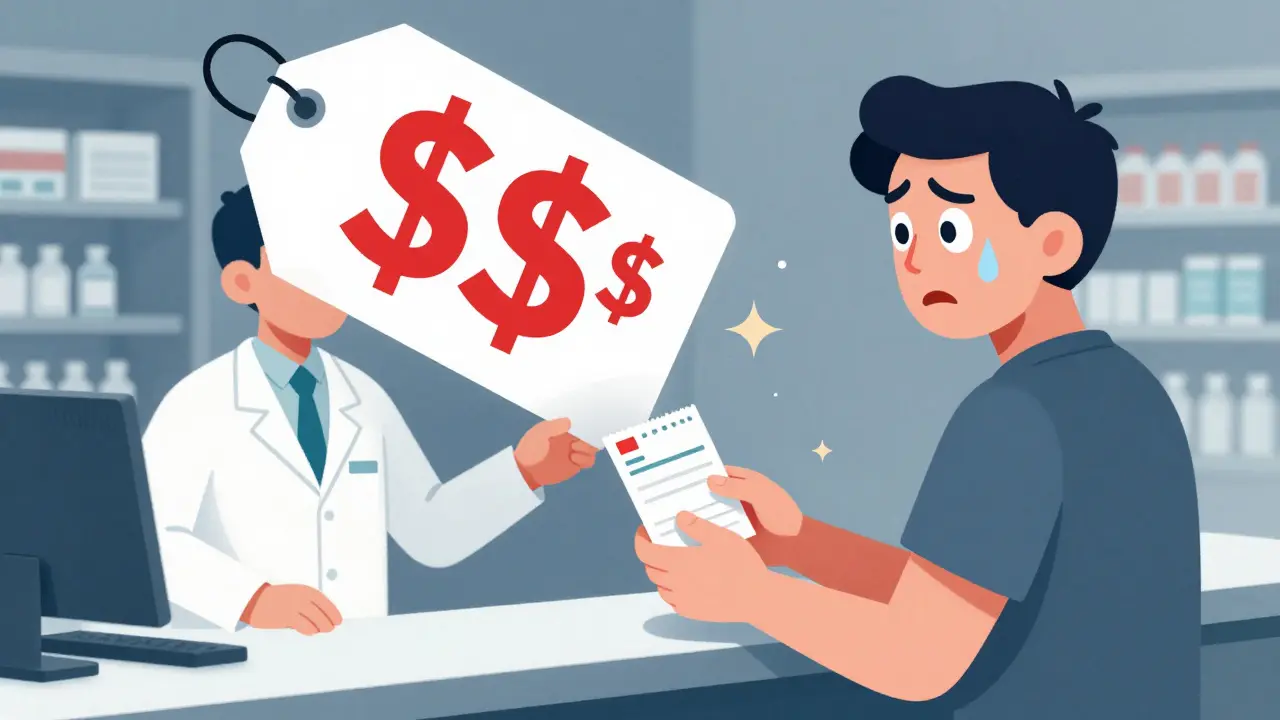
You pick up your prescription. The pharmacist hands you the bag, but before you walk out, you have to pay. For many of us with private insurance, that price tag is shockingly high-sometimes hundreds of dollars for a single month’s supply of medication. It feels like a trap. You have insurance, yet you’re paying almost full price because your plan requires a high deductible or a steep copay. But there is a way to slash that bill significantly, often by 80% or more. It’s called a manufacturer savings program.
These programs are not charity. They are strategic tools created by pharmaceutical companies to keep you on their specific brand-name drugs rather than switching to cheaper generics. However, if you understand how they work, you can use them to save thousands of dollars a year. This guide will show you exactly how to find, apply for, and use these savings programs, while avoiding the common traps that can leave you paying more in the long run.
What Are Manufacturer Savings Programs?
At their core, Manufacturer Savings Programs are financial assistance mechanisms provided by drug makers to offset the cost of their medications for patients with commercial insurance. They primarily come in two forms: copay cards (or coupons) and Patient Assistance Programs (PAPs).
Copay cards are the most common tool for insured individuals. When you present the card at the pharmacy, the manufacturer pays the pharmacy directly for a portion of your cost. According to data from KFF, these programs cover nearly one-third of brand-name prescriptions in major therapy areas like diabetes and asthma. In 2023 alone, these programs represented $23 billion in value for patients. The result? A study in the *Journal of Managed Care & Pharmacy* found that using these coupons reduces out-of-pocket costs by nearly 85%.
Patient Assistance Programs, on the other hand, are typically for uninsured individuals or those who cannot afford their medication regardless of income. While valuable, this article focuses on copay cards since they are the primary resource for people with employer-sponsored or private market insurance plans.
Who Is Eligible? The Insurance Catch
Before you start searching, you need to know if you qualify. The rules here are strict and non-negotiable due to federal law.
- Commercial Insurance: You must have private health insurance (from an employer or purchased individually through the marketplace). This is the primary target audience for these programs.
- No Government Plans: If you are covered by Medicare, Medicaid, TRICARE, or any other government-funded health plan, you are generally ineligible. Federal anti-kickback statutes prohibit manufacturers from providing financial incentives to beneficiaries of public programs. This is why you will see warnings on every coupon site stating "Not valid for Medicare/Medicaid patients."
- Prescription Requirement: You must have a valid prescription for the specific brand-name drug associated with the program.
If you fall into the government-insured category, look into state-specific prescription assistance programs or nonprofit foundations instead. For everyone else with private coverage, the door is open.
Step-by-Step: How to Find and Apply
Finding the right program shouldn’t be hard, but it does require knowing where to look. Here is the exact process to get your discount.
- Identify Your Drug and Manufacturer: Check your prescription bottle. Who makes the drug? Is it Eli Lilly, Novartis, Pfizer? Knowing the manufacturer is key.
- Visit the Official Website: Go directly to the drug manufacturer’s official website. Look for a tab labeled "Patient Support," "Savings Program," or "Copay Card." Avoid third-party sites unless they are reputable aggregators like GoodRx, which often link directly to official programs.
- Check Eligibility Online: Most major brands have instant eligibility checkers. Enter your zip code and insurance information. The system will tell you immediately if you qualify.
- Register for the Card: If eligible, you’ll fill out a short form. This usually asks for your name, address, insurance policy number, and sometimes your doctor’s information. Keep this simple; do not share unnecessary personal data.
- Receive Your Code: Within minutes, you’ll receive a digital card or a unique ID code via email. Some programs allow you to print a physical card, but the digital version is standard now.
A 2022 investigation by Medical News Today found that 73% of major pharmaceutical companies maintain dedicated portals for this purpose. If you can’t find it on the manufacturer’s site, search for "[Drug Name] copay card" and ensure the URL matches the company’s domain.
Using the Card at the Pharmacy
Getting the card is only half the battle. Using it correctly ensures the discount applies. Here is what happens behind the scenes when you redeem your savings.
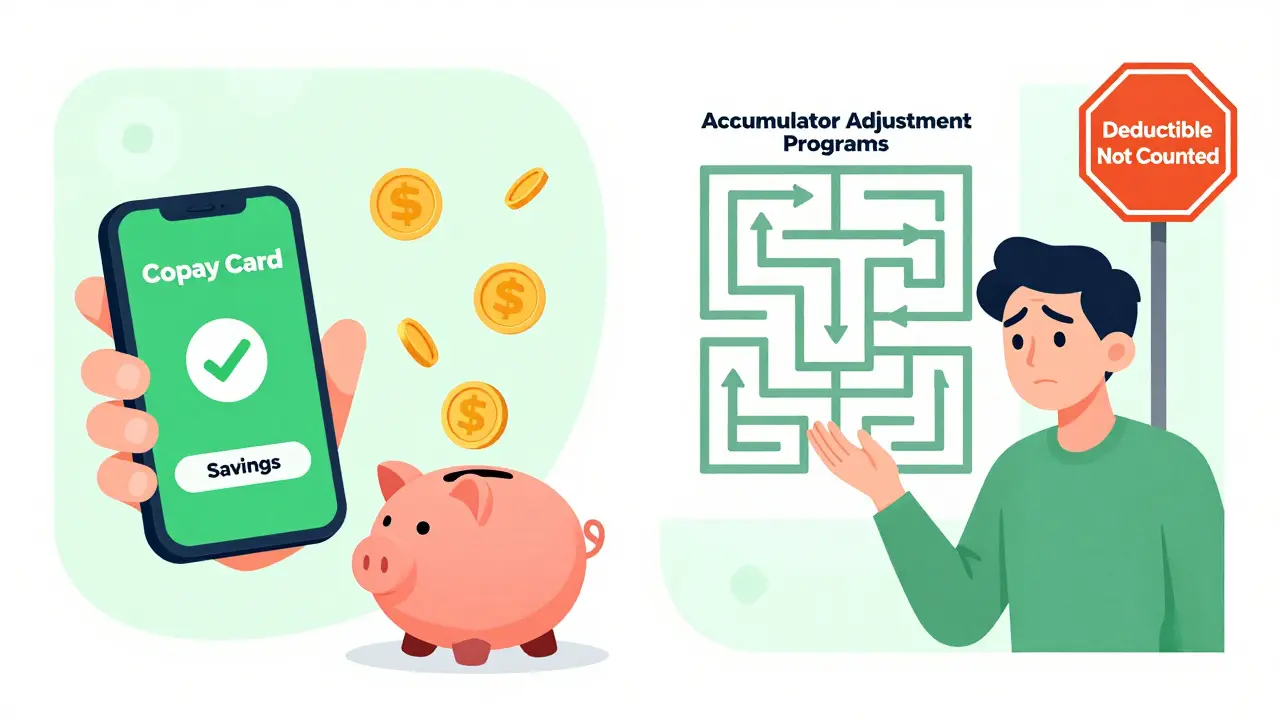
When you hand over your insurance card and the manufacturer’s copay card (or enter the digital code), the pharmacy sends the claim to a Third-Party Administrator (TPA) like ConnectiveRx or Prime Therapeutics. This TPA verifies two things: first, that you are eligible, and second, that the drug is covered under the program. If everything checks out, the TPA tells the pharmacy to charge you only the reduced amount (often $0 to $25). The manufacturer then reimburses the TPA for the difference.
To make this smooth:
- Show Both Cards: Present your insurance card first, then the copay card. If using a digital app, have the barcode ready on your phone.
- Confirm Participation: Most large chains (CVS, Walgreens, Rite Aid) accept these cards. Independent pharmacies may vary. Ask the pharmacist, "Do you accept manufacturer copay cards?" before they run the insurance.
- Check the Receipt: Ensure the receipt shows the discount applied. The line item might say "Manufacturer Discount" or "Copay Assistance."
The Hidden Trap: Accumulator Adjustment Programs
This is the most critical part of the article. Many patients think they are saving money, but they are actually hurting their long-term financial position. This is due to Accumulator Adjustment Programs (AAPs).
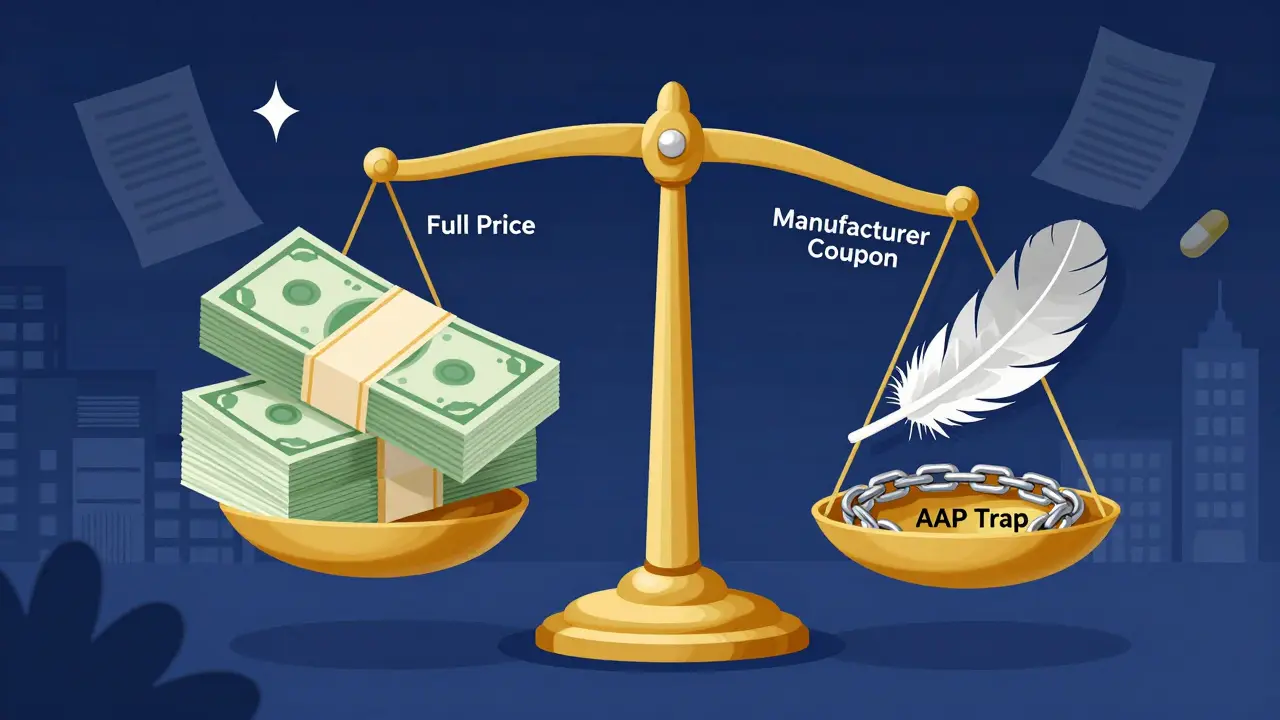
Insurance plans have deductibles and out-of-pocket maximums. Once you hit these limits, your insurance covers 100% of your care. Normally, every dollar you spend counts toward that limit. However, many employers have adopted AAPs. These programs treat manufacturer discounts as "third-party payments" rather than patient spending. This means the $400 you saved on your drug does not count toward your deductible.
Imagine this scenario:
You have a $5,000 deductible. Your drug costs $600 a month. Without a coupon, you pay $600 x 9 months = $5,400. You hit your deductible early, and your insurance takes over for the rest of the year. With a coupon, you pay $25 a month. You save $575 a month. But because of the AAP, that $575 doesn’t count toward your deductible. You might end up paying the full $600 for months later in the year because you never reached your cap. In total, you could pay more annually despite having the coupon.
As of 2023, 87% of large employers had implemented these adjustments. To avoid this:
- Ask Your HR or Insurance Provider: Call your benefits administrator and ask, "Does my plan use an accumulator adjustment program?"
- Calculate the Math: If yes, calculate whether hitting your deductible faster without the coupon saves you more money overall.
- Know Your State Laws: As of 2023, 32 states have passed laws restricting these practices, requiring insurers to count manufacturer discounts toward deductibles. If you live in one of these states, you are likely safe.
Limitations and Expirations
Manufacturer savings programs are not permanent. They come with caps and expiration dates that you must monitor.
| Feature | Typical Value/Rule | Impact on Patient |
|---|---|---|
| Annual Cap | $5,000 - $15,000 | Savings stop after reaching the limit; you pay full copay thereafter. |
| Expiration | 12 - 24 months | You must re-enroll or renew the card to continue getting discounts. |
| Drug Exclusivity | Brand Name Only | Cannot be used for generic alternatives; encourages staying on expensive drugs. |
| Refills | Limited quantity | Some cards limit the number of refills per year (e.g., 12 refills). |
For example, a patient on Jardiance for diabetes might reduce their monthly cost from $562 to $100. That’s great. But if the program caps savings at $1,200 per year, once you’ve saved that amount, your next prescription could jump back to hundreds of dollars. Always read the fine print on the program’s website regarding "maximum annual savings."
Alternatives to Manufacturer Programs
If you don’t qualify for a manufacturer program, or if the math doesn’t work out due to accumulator adjustments, you have other options.
Pharmacy Discount Cards: Services like GoodRx, SingleCare, or Mark Cuban Cost Plus Drugs offer discounts for both brand and generic drugs. These are not insurance; they are negotiated cash prices. For some brand drugs, these can offer 30-60% savings. They work for everyone, including Medicare and Medicaid patients. However, these discounts usually do not count toward your insurance deductible either.
Patient Assistance Programs (PAPs): If you are uninsured or underinsured, go back to the manufacturer’s website and look for the PAP section. These programs often provide the drug for free or at a very low cost based on income verification. This is different from a copay card and requires more documentation, such as tax returns.
Talk to Your Doctor: Sometimes, a therapeutic alternative exists. There may be another brand-name drug in the same class that has a more generous savings program, or a generic option that is clinically effective and much cheaper. Never switch medications without consulting your physician, but always ask, "Is there a lower-cost alternative with better financial support?"
Real-World Examples and Success Stories
Let’s look at how this plays out in real life. Consider a patient named Sarah, who has private insurance and needs Humira for rheumatoid arthritis. The list price is high, and her copay is $450 per month. She finds the Amgen patient access program online. She registers, gets a digital card, and presents it at CVS. Her new cost is $5 per month. Over a year, she saves $5,250. Because her state prohibits accumulator adjustments, those savings also help her reach her deductible faster. This is the ideal scenario.
Now consider Mike, who has similar insurance but lives in a state with no protections against accumulator programs. His employer uses an AAP. He uses the coupon, pays $5 a month, but his deductible remains untouched. By December, he realizes he hasn’t met his deductible, so his insurance isn’t covering other medical services fully. He ends up paying more out-of-pocket for unrelated healthcare issues. Mike should have skipped the coupon, paid the higher copay, and hit his deductible earlier to maximize his insurance benefits.
These examples highlight why understanding your specific insurance plan is just as important as finding the coupon.
Future Trends and Regulatory Changes
The landscape of drug pricing is shifting. The Inflation Reduction Act of 2022 capped insulin costs at $35 for Medicare beneficiaries, reducing the need for coupons for those patients. Meanwhile, proposed legislation like the Fair Deal for Patients Act aims to ban accumulator adjustments nationwide, which would make manufacturer coupons more beneficial for everyone.
Manufacturers are also making their platforms more sophisticated. Expect more personalized digital dashboards where you can track your savings, refill status, and renewal dates. However, scrutiny is increasing. The FDA has issued draft guidance emphasizing clearer disclosure of coupon limitations, meaning future programs may have stricter eligibility checks and more transparent terms.
Despite these changes, manufacturer savings programs remain a vital tool for millions of Americans. They are not perfect, and they serve the interests of drug makers as much as patients. But when used strategically-with an eye on deductibles, caps, and eligibility-they can provide immediate and significant relief from the burden of high drug prices.
Can I use a manufacturer copay card if I have Medicare?
No. Federal law prohibits pharmaceutical manufacturers from offering copay assistance to patients enrolled in Medicare, Medicaid, or other government-funded health plans. This is due to the Anti-Kickback Statute, which aims to prevent financial incentives from influencing treatment decisions in public programs. If you have Medicare, look into Extra Help programs or state-specific prescription assistance initiatives instead.
Does using a manufacturer coupon count toward my deductible?
It depends on your insurance plan and your state laws. Many employers use "accumulator adjustment programs" that exclude manufacturer discounts from counting toward your deductible or out-of-pocket maximum. In this case, the money you save does not help you reach the point where your insurance covers 100% of costs. As of 2023, 32 states have banned this practice, so if you live in one of those states, the discount likely counts. Always check with your HR department or insurance provider to confirm.
How much can I save with a manufacturer savings program?
Most programs reduce out-of-pocket costs by 70% to 85%. For example, a drug that costs $500 might drop to $25 or even $0 per month. However, there are usually annual caps, ranging from $5,000 to $15,000 in total savings per year. Once you hit that cap, you will resume paying your regular copay until the next plan year begins.
Where can I find a copay card for my medication?
The safest place to start is the official website of the drug manufacturer. Look for links labeled "Patient Support," "Savings," or "Copay Card." You can also use reputable aggregator sites like GoodRx, which often direct you to the official manufacturer portal. Avoid unofficial third-party sites that may sell your data or offer fraudulent codes.
What happens if my manufacturer coupon expires?
Most coupons expire after 12 to 24 months. When this happens, your pharmacy will charge your regular copay. To continue saving, you usually need to log back into the manufacturer’s website and renew your enrollment. Some programs automatically renew, while others require manual action. Set a reminder on your phone to check your status three months before the expected expiration date.
Are manufacturer savings programs available for generic drugs?
Generally, no. Manufacturer savings programs are designed specifically for brand-name drugs to encourage patients to stay on the more expensive branded option rather than switching to a generic. Generic drugs already have low prices due to competition. If you need savings on generics, look into pharmacy discount cards like GoodRx or SingleCare, which offer negotiated cash prices for both brand and generic medications.
Why do pharmaceutical companies offer these savings programs?
While they help patients, these programs also serve business goals. They create brand loyalty, making patients less likely to switch to cheaper generics or competing brands. Studies suggest that well-designed coupon programs can extend patient use of a drug by 30 to 60 days per year and increase branded drug sales by over 60%. Essentially, the manufacturer absorbs some of the cost to maintain market share and justify high list prices.