
Imagine this: you’re in the middle of an asthma attack or a severe COPD flare-up. You grab your rescue inhaler, shake it, and press down. Nothing comes out. Or worse, what does come out isn’t strong enough to open your airways. This isn’t a movie scene; it’s a reality for thousands of people every year. The culprit? Improper storage.
We often treat our respiratory medications like everyday items-tossing them in glove compartments, leaving them on bathroom counters, or stuffing them into gym bags. But inhalers and nebulizer solutions are delicate chemical formulations. They aren’t just plastic tubes and liquid; they are precision-engineered devices that rely on specific environmental conditions to work. If you store them wrong, they fail when you need them most.
In this guide, we’ll break down exactly how to keep your respiratory meds safe, effective, and ready for action. We’ll cover temperature limits, humidity traps, travel hacks, and the right way to toss old meds so you never have to wonder if your device will fire when seconds count.
The Golden Rules of Temperature and Humidity
Most people think "room temperature" means anywhere inside their house. In the world of pharmaceuticals, however, room temperature has a strict definition. According to guidelines from the International Council for Harmonisation (ICH) and the FDA, room temperature is specifically 59°F to 77°F (15°C to 25°C). While brief excursions up to 86°F (30°C) are usually tolerated, staying outside this range for long periods degrades the medication.
Why does this matter? Because heat changes the chemistry. A study by the University of North Carolina’s Center for Aerosol Science found that inhalers stored in a hot car (around 95°F) saw their drug delivery efficiency drop by up to 40% in just 24 hours. The metered dose consistency plummeted from 95% to a meager 62%. That’s not a slight reduction; that’s a potentially life-threatening failure.
Humidity is the silent killer for another common type of device: Dry Powder Inhalers (DPIs). Devices like Spiriva HandiHaler or Advair Diskus contain powder, not liquid spray. If the humidity in your storage area exceeds 60%, the powder can clump together or become brittle. GlaxoSmithKline’s stability reports confirm that high humidity compromises the capsule integrity, meaning you might inhale nothing but dust instead of medicine.
- Metered-Dose Inhalers (MDIs): Keep between 59°F-86°F. Protect from extreme cold (below 59°F) which can freeze the propellant.
- Dry Powder Inhalers (DPIs): Keep between 59°F-77°F. Must be kept in a low-humidity environment (<60%).
- Nebulizer Solutions: Most liquid ampules (like albuterol) should be stored at 68°F-77°F (20°C-25°C).
Where NOT to Store Your Respiratory Meds
You’d be surprised by how many places we instinctively choose that are actually dangerous for your health. Let’s clear up the biggest myths.
The Bathroom Counter Trap
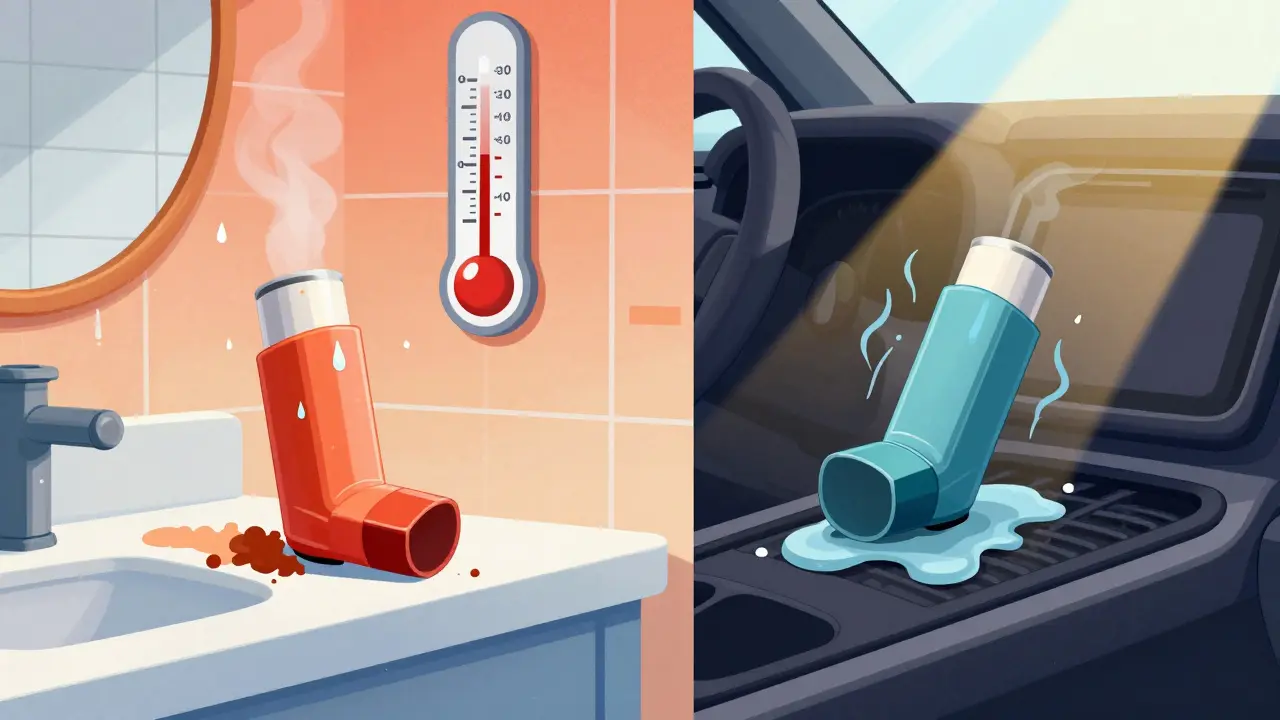
This is the number one mistake. Showers create steam, which spikes humidity levels well above the 60% threshold. Pharmacists at St. Jude Children's Research Hospital found that storing albuterol in a bathroom reduced its concentration by 35% within just two weeks. If you keep your inhaler here, move it today. A bedroom closet or a kitchen cabinet away from the stove is far safer.
The Car Glove Box
Never leave your inhaler in the car during warm months. The National Institutes of Health warns that interior car temperatures can reach 158°F within 30 minutes on a sunny day. At that heat, the medication denatures-meaning it breaks down chemically and becomes useless. Even in winter, freezing temperatures can crack the plastic casing or freeze the propellant in MDIs, causing pressure buildup that makes the dose erratic.
The Refrigerator (Usually)
Unless the label explicitly says "Refrigerate," do not put your inhaler in the fridge. Cold condensation forms when you take a cold device into a warm room, introducing moisture directly into the mechanism. This is especially disastrous for DPIs. However, there are exceptions. Some nebulizer solutions, like Pulmicort Respules, require refrigeration (36°F-46°F) until first use. Always check the package insert. If it doesn’t say "refrigerate," assume it wants room temperature.
Special Considerations for Different Device Types
Not all inhalers are created equal. Understanding your specific device helps you protect it better.
| Device Type | Key Sensitivity | Ideal Temp Range | Biggest Risk |
|---|---|---|---|
| Pressurized MDI (e.g., ProAir HFA) | Heat & Pressure | 59°F - 86°F | Explosion risk if punctured/burned; loss of potency in heat |
| Dry Powder (e.g., Spiriva, Ellipta) | Moisture | 59°F - 77°F | Powder clumping due to humidity >60% |
| Breath-Actuated (e.g., RespiClick) | Temperature | 68°F - 77°F | Mechanical sensor failure in extreme temps |
| Nebulizer Ampules | Contamination & Heat | 68°F - 77°F | Bacterial growth if left open; degradation above 104°F |
For Pressurized Metered-Dose Inhalers (pMDIs), remember that they are essentially small pressurized tanks. Never throw them in the trash where they could be crushed or incinerated. For Nebulizer medications, once you open an ampule, it must be used immediately or discarded. Do not save leftover solution for later unless the manufacturer specifies otherwise, as contamination risks rise quickly.
Traveling with Inhalers and Nebulizers
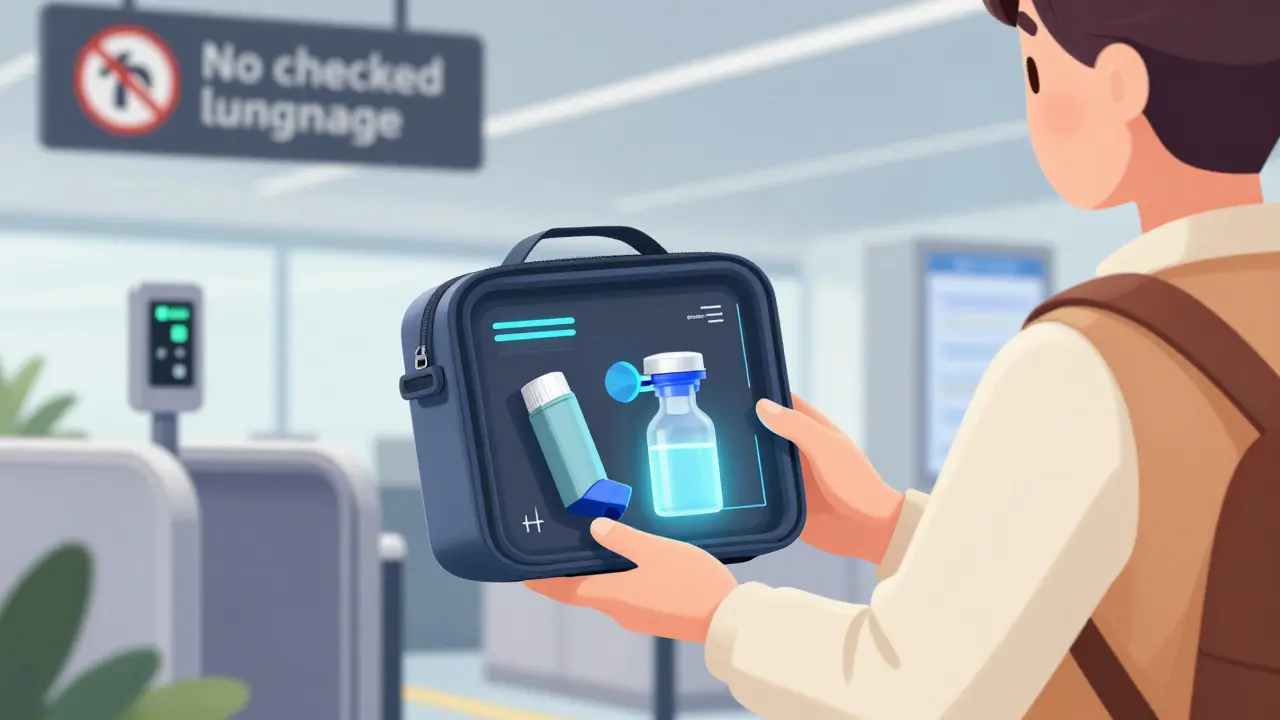
Travel adds complexity. Airplane cabins are pressurized to about 8,000 feet, which is fine for inhalers, but cargo holds can get extremely cold. Always carry your respiratory meds in your cabin baggage, never checked luggage. TSA allows inhalers and nebulizer liquids through security without removing them from your bag, but it’s smart to declare them to avoid delays.
If you’re traveling to a hot climate or hiking in summer, invest in an insulated case. Products like the MediSafe case or generic insulated pouches can maintain stable temperatures for up to 15 hours. The American College of Physicians recommends the "Rule of 15": try not to leave your inhaler outside a temperature-controlled environment for more than 15 minutes at a time.
For nebulizers, portability is key. Battery-operated portable compressors are widely available now. Just ensure you have extra batteries and that the compressor itself isn’t exposed to direct sunlight while charging. Keep the tubing clean and dry to prevent mold growth, which thrives in damp travel environments.
School and Workplace Storage Strategies
Many students and employees keep their rescue inhalers at school or work. The CDC reports that 63% of school-related asthma emergencies involved improperly stored rescue inhalers, often kept in nurse’s offices that exceeded 80°F. If you don’t have access to a climate-controlled locker, ask your employer or school nurse about installing a small, battery-operated fan or using a personal insulated pouch.
At home, consider a "medication station" in a cool, dry closet. Avoid areas near radiators, windows with direct sun, or above the refrigerator (where heat vents blow). A digital hygrometer-a cheap device that measures humidity-can help you verify your chosen spot stays below 60% humidity.
When to Replace and How to Dispose Safely
Even if stored perfectly, inhalers expire. Check the expiration date printed on the canister or device. Using an expired inhaler is risky because the propellant may leak, or the drug may degrade. If your MDI feels unusually light or doesn’t spray consistently, it’s likely empty or broken, even if doses remain according to the counter.
Disposal is critical. Pressurized inhalers cannot go in regular household trash because they can explode in landfills or recycling facilities. Here’s the safe way to handle them:
- Check Local Guidelines: Many pharmacies offer take-back programs. Ask your pharmacist about local disposal options.
- Do Not Puncture: Never try to vent the gas yourself. It’s dangerous and releases harmful chemicals into your home.
- Separate Components: For some devices, you can remove the metal canister from the plastic actuator. The plastic part can often go in the trash, but the canister needs special handling.
- Nebulizer Parts: Plastic tubing and masks can usually be recycled or trashed, but check local rules. Metal filters should be disposed of as general waste.
If you suspect your medication was exposed to extreme heat (like a car trunk in July), do not wait for an emergency to test it. Replace it. The cost of a new inhaler is far less than the cost of an ER visit.
Quick Checklist for Safe Storage
- ✅ Store at room temperature (59°F-77°F).
- ✅ Keep away from bathrooms and kitchens (high humidity/heat).
- ✅ Never leave in cars during hot or freezing weather.
- ✅ Use original packaging to protect from light and moisture.
- ✅ Carry inhalers in cabin luggage when traveling.
- ✅ Inspect monthly for signs of damage or leakage.
- ✅ Dispose of expired or compromised devices via pharmacy take-back.
Can I freeze my inhaler if it gets too hot?
No, do not freeze your inhaler. Freezing can damage the internal mechanism and cause the propellant to expand unpredictably. If your inhaler gets hot, let it cool down naturally to room temperature before using it. If it was exposed to extreme heat for a long time, replace it.
How do I know if my inhaler has gone bad?
Signs include a weak or inconsistent spray, difficulty pressing the canister, or visible cracks in the device. If you’ve been using it correctly but aren’t getting relief, it may be degraded. Also, check the expiration date. If it’s past the date, discard it safely.
Is it okay to store my nebulizer solution in the fridge?
Only if the label explicitly says "Refrigerate." Most nebulizer solutions, like albuterol, should be stored at room temperature. Refrigerating non-refrigerated meds can cause condensation and contamination when opened. Always follow the manufacturer’s instructions on the box or leaflet.
What is the best way to travel with a nebulizer?
Use a portable, battery-operated nebulizer compressor. Pack the device in your carry-on bag, along with extra batteries and sealed medication ampules. Keep the tubing dry and clean to prevent mold. Declare your medical equipment at security checkpoints to speed up the process.
Can I store my inhaler in my pocket all day?
It’s not ideal. Body heat can raise the temperature of the inhaler, and pockets are prone to moisture from sweat. Additionally, sitting on the inhaler can damage the valve. It’s better to keep it in a dedicated pouch or bag where it’s protected from heat, moisture, and physical pressure.