
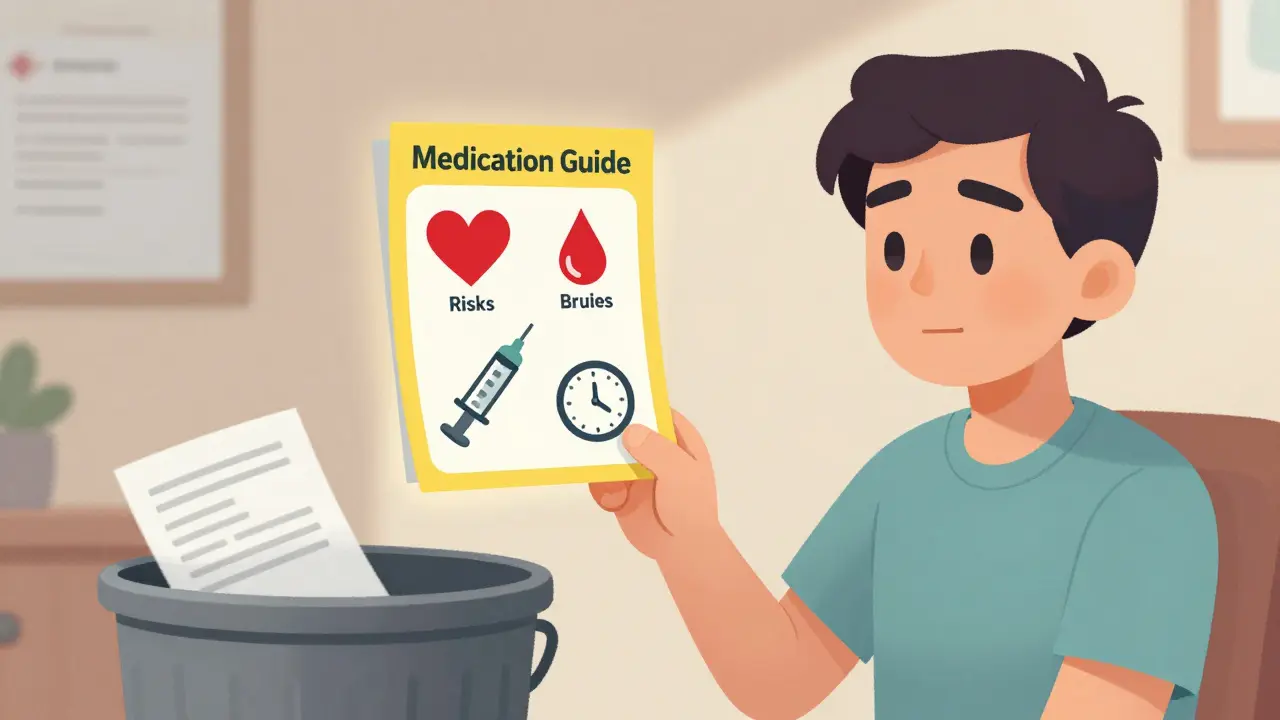
Every time you pick up a prescription, there’s a small paper insert tucked inside the box. It’s not just a throwaway sheet. This is a Medication Guide-a legally required document from the FDA designed to tell you exactly what could go wrong, and what you need to do to stay safe. Most people glance at it, toss it, and forget it. But if you’re taking a drug with serious risks, skipping this guide could mean missing life-saving instructions.
Why Medication Guides Exist
Medication Guides aren’t optional brochures. They’re required by law for drugs with serious, preventable risks. The FDA created them after realizing patients weren’t understanding warnings buried in technical labels. Today, about 150 guides exist for medications ranging from antidepressants to blood thinners to cancer drugs. These aren’t just summaries-they’re direct, plain-language warnings written at a 6th to 8th-grade reading level. That means no medical jargon. No confusing terms. Just clear facts: what can happen, when it’s most likely to happen, and what you must do to catch it early.For example, the guide for clozapine (an antipsychotic used for treatment-resistant schizophrenia) says plainly: "About 1 in 200 people taking clozapine may develop a condition called agranulocytosis." It doesn’t say "may cause low white blood cells." It gives you the number. That’s intentional. Research shows patients understand risks better when they’re given concrete numbers, not vague phrases like "can cause."
The 4 Sections That Matter Most
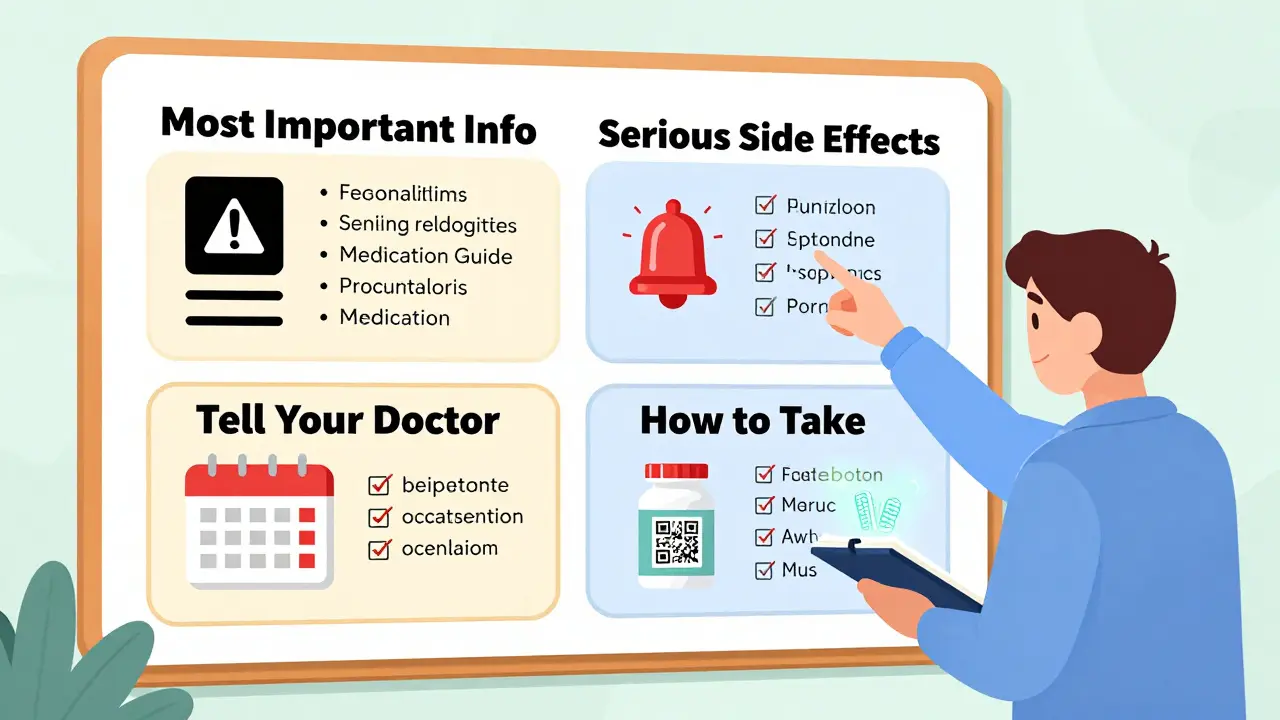
Every Medication Guide follows the same structure. You don’t need to read every word. Focus on these four sections:- "What is the most important information I should know about [drug name]?" This is where the FDA puts its strongest warnings. Look for phrases like "can cause serious liver damage," "may lead to suicidal thoughts," or "can result in life-threatening infections." This section often contains the "black box" warning-the highest level of alert.
- "What are the possible or reasonably likely serious side effects of [drug name]?" This isn’t a list of minor side effects. It’s the dangerous ones you must watch for. Pay attention to how they’re worded. For example, the guide for warfarin (a blood thinner) says: "Call your doctor immediately if you notice unusual bruising or bleeding that lasts a long time." It doesn’t say "sometimes bruise easily." It tells you exactly what’s dangerous.
- "What should I tell my healthcare provider before taking [drug name]?" This tells you what health conditions or medications could make the drug more dangerous. If you have liver disease, kidney problems, or take other drugs, this section tells you whether you’re at higher risk.
- "How should I take [drug name]?" This is where monitoring instructions hide. Look for phrases like: "Your doctor will check your blood before you start and every 3 months," or "You need a TB test before starting this medicine." These aren’t suggestions-they’re requirements.
How to Spot the Hidden Monitoring Rules
Monitoring isn’t just about getting blood tests. It’s about timing. Many risks peak early. For example, antidepressants like sertraline (an SSRI) carry a warning that suicidal thoughts are most likely during the first 4-6 weeks. The guide doesn’t say "watch for mood changes." It says: "Pay close attention to any changes, especially sudden changes, in mood, behavior, thoughts, or feelings. This is very important when an antidepressant is started or when the dose is changed."Here’s how to find the hidden monitoring rules:
- Look for the word "test". Every time it appears, write down what’s being tested and how often.
- Circle any time frame: "weekly," "monthly," "before each dose."
- Underline any symptom that says "call your doctor immediately" or "go to the emergency room."
- Watch for phrases like "do not stop without talking to your doctor," or "avoid alcohol." These are red flags.
One study found that patients who highlighted these sections in their guide had 68% fewer adverse events. Why? Because they knew exactly what to watch for-and when.
Real-World Examples: What to Look For
Let’s break down a few real Medication Guides to show you how they work:- Warfarin (Coumadin): The guide says you need a blood test called INR every month. If your dose changes, you need it more often. It also says: "If you fall or hit your head, call your doctor right away." Why? Because warfarin increases bleeding risk. A minor bump could become a major problem.
- Adalimumab (Humira): This drug suppresses your immune system. The guide says: "Get tested for tuberculosis before starting. Get tested every 6 months." It also warns: "Call your doctor if you have fever, night sweats, or weight loss." These are signs of infection.
- Abiraterone (Zytiga): Used for prostate cancer, it says: "Your doctor will check your liver function before you start and every month." It also says: "Do not take this medicine with food." Why? Because food can cause dangerous spikes in drug levels.
Notice a pattern? The best guides don’t say "monitor." They say "get tested every X weeks," "check for Y symptom," or "call if Z happens." That’s the difference between a warning and a plan.
What to Do When You Don’t Get the Guide
By law, pharmacies must give you a Medication Guide every time you fill a prescription for one of these drugs. But a 2022 audit found that 41% of independent pharmacies failed to do so consistently. If you don’t get one:- Ask your pharmacist: "Did I get the Medication Guide for this drug?"
- If they say no, ask for it. If they say they don’t have it, ask them to call the manufacturer.
- You can also download the official guide from DailyMed (the NIH’s official medication database). Just search for your drug name.
Don’t assume it’s "not important" because you didn’t get it. If the drug requires a Medication Guide, it’s because the risk is real. Don’t skip it.
Pro Tips for Better Understanding
Here’s what works for patients who actually use their guides:- The 3-2-1 Method: Spend 3 minutes reading the guide before your first dose. Review it for 2 minutes before each refill. Check for changes in 1 minute every month.
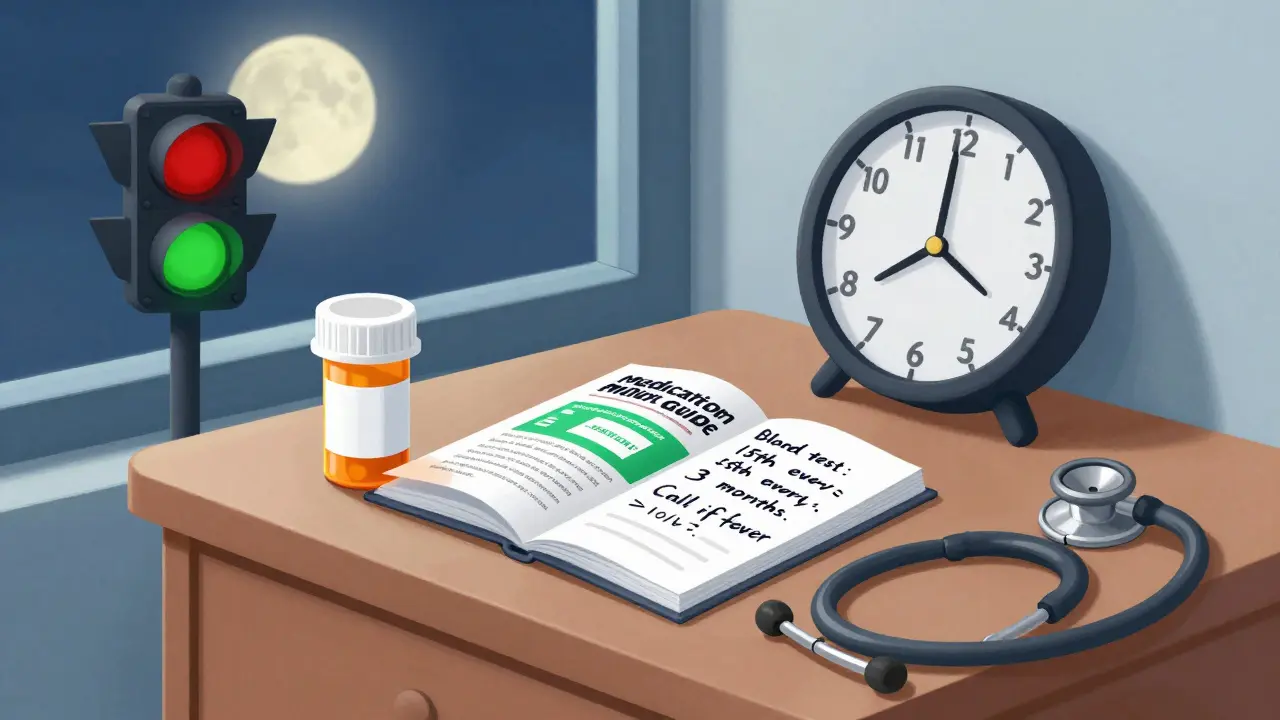
- Use the Traffic Light System: Mark symptoms as green (normal), yellow (call your doctor), or red (go to ER). This turns confusing text into a visual action plan.
- Write it down: Keep a small notebook next to your meds. Write: "Blood test: every 3 months on the 15th," "Call if: fever over 101°F," "Don’t take with: grapefruit." One study showed this cut adverse events by 68%.
- Ask your pharmacist: They’re trained to explain these guides. Say: "Can you walk me through the monitoring part?" One pharmacist reported that when she spent 90 seconds explaining it, patient compliance jumped from 45% to 82%.
What’s Changing in 2026
The FDA is making Medication Guides easier to use. By 2026, all high-risk drugs will have QR codes on the packaging that link directly to the latest guide. Some companies are already testing AI-powered guides that personalize warnings based on your age, other medications, and health history. But until then, you still need to read the paper version.One thing won’t change: if a drug has a Medication Guide, it’s because someone could die if you ignore it. That’s not fear-mongering. It’s fact. The FDA found that patients who followed the monitoring instructions had 32% fewer serious side effects. That’s not a small number. That’s life or death.
So next time you get a prescription, don’t toss the guide. Read it. Highlight it. Write it down. And if you’re unsure-ask. Your life might depend on it.
Do all prescription drugs come with a Medication Guide?
No. Only drugs with serious, preventable risks require a Medication Guide. These include blood thinners, antidepressants, certain cancer drugs, immunosuppressants, and some pain medications. The FDA decides based on evidence of life-threatening side effects. If your drug doesn’t have one, it doesn’t mean it’s risk-free-it just means the risks aren’t considered preventable through patient education alone.
What if I don’t understand what the guide says?
Don’t guess. Ask your pharmacist or doctor. Pharmacists are trained to explain Medication Guides in plain language. You can also call the drug manufacturer’s patient support line-most have one listed on the guide. If you’re still confused, ask for a printed version in larger font or request a video explanation. The FDA requires manufacturers to provide accessible formats upon request.
Can I rely on my phone app or online summary instead of the guide?
No. Third-party apps, websites, and even your doctor’s notes may not reflect the most current FDA-approved information. Medication Guides are updated within 30 days of new safety data. Online sources often lag behind. Always use the official guide provided with your prescription or downloaded from DailyMed. It’s the only version legally required to be accurate and current.
What if I miss a blood test or monitoring appointment?
Call your doctor right away. Many drugs require monitoring to be safe. Missing a test doesn’t mean you’re in immediate danger-but it does mean your doctor can’t tell if something’s going wrong. For example, if you miss a liver test while taking abiraterone, you could be developing liver damage without symptoms. Your doctor may need to pause your medication until you’re tested. Never assume "I feel fine" means it’s okay.
Are Medication Guides the same as the package insert?
No. The package insert is a detailed technical document for healthcare providers. The Medication Guide is the simplified version meant for patients. The guide focuses only on serious risks and monitoring steps. The insert includes everything-dosage, chemistry, clinical trial data. You don’t need the insert. You do need the guide.
Mariah Carle
March 5, 2026 AT 02:37Justin Rodriguez
March 5, 2026 AT 11:48Megan Nayak
March 6, 2026 AT 02:34Sharon Lammas
March 6, 2026 AT 04:49marjorie arsenault
March 7, 2026 AT 13:58Deborah Dennis
March 8, 2026 AT 14:40Diane Croft
March 9, 2026 AT 17:36Donna Zurick
March 10, 2026 AT 09:17Tobias Mösl
March 12, 2026 AT 08:57