

Most parents know that toddlers are curious. What they often underestimate is how fast that curiosity can turn into a medical emergency. Pediatric exploratory ingestion overdoses are unintentional poisonings where children under five swallow toxic substances while exploring their environment. These aren't cases of malice or neglect; they are the result of normal developmental behaviors like putting objects in their mouths. According to the American Association of Poison Control Centers, 90% of all poison exposures happen in children under six years old. The highest risk window? Ages one to four.
The scary part is that these incidents are largely preventable. With the right mix of home modifications, smart storage habits, and quick action plans, you can drastically reduce the risk. This guide breaks down exactly how to protect your little ones from these hidden dangers, based on current medical guidelines and real-world data.
Understanding the Risk: Why Toddlers Eat Everything
To stop the problem, you first have to understand why it happens. Children aged 1 to 4 are in a developmental stage characterized by high finger-to-mouth activity and pica (the urge to eat non-food items). The Society for Academic Emergency Medicine notes that exploratory behavior accounts for about 75% of exposures in this age group. Boys and children with hyperactive temperaments are statistically at higher risk, but any toddler is capable of swallowing something dangerous in seconds.
Liquid medications pose a specific threat. They present a 69% higher injury incidence than solid compounds because they are easy to swallow without the burning sensation that usually stops a child from eating powdered cleaners or pills. If it tastes sweet or smells good, your child will try it. That’s just biology.
Physical Barriers: Child-Proofing Your Home
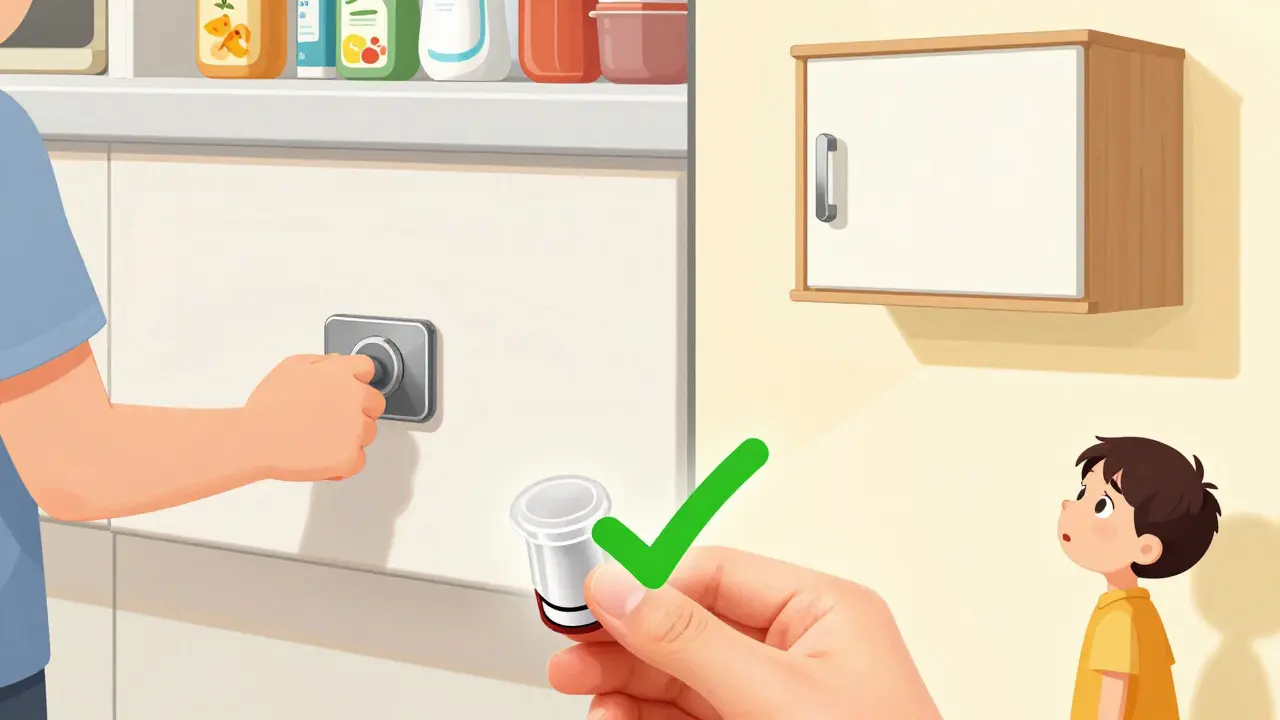
Willpower doesn't work against a determined two-year-old. You need physical barriers. Baby-proofing isn't just about outlet covers; it's about creating a fortress against toxins. The National Safety Council found that comprehensive child-proofing reduces access to toxic substances by 45%. Here is how to do it effectively:
- Elevate Storage: Keep all hazardous substances in locked cabinets at least 1.5 meters (5 feet) above floor level. This simple height restriction prevents 82% of access attempts by children under four, who simply cannot reach that high yet.
- Separate Categories: Never store household cleaners next to food. The National Safety Council reports that keeping these items in different cabinets reduces confusion-related ingestions by 37%. If bleach looks like juice, keep them worlds apart.
- Original Containers Only: Always keep chemicals in their original packaging. Repackaging substances into water bottles or food jars causes 29% of incidents where kids mistake poison for a snack.
- Lock It Up: Install cabinet locks. While they take time to set up (about 2.3 hours for a full kitchen), they are one of the most effective tools you have.
The Truth About Child-Resistant Packaging
You’ve seen those hard plastic caps on medicine bottles. They’re called "child-resistant," but let’s be clear: they are not child-proof. The Poison Prevention Packaging Act of 1970 mandated these containers, and they have reduced childhood deaths from aspirin poisoning by 45% since the 1970s. However, they fail when caregivers don't use them correctly.
A survey of 2,500 parents found that while 92% owned child-resistant caps, only 54% consistently resecured them after each use. Parents of toddlers aged 18-24 months had the lowest compliance rate at just 39%. Why? Because rushing in the morning makes convenience win over safety. Make it a habit: if the cap clicks, it stays clicked until you need it again.
| Strategy | Impact Metric | Source |
|---|---|---|
| High Storage (>1.5m) | Prevents 82% of access attempts | HealthyChildren.org (2022) |
| Child-Resistant Caps | Reduces aspirin deaths by 45% | FDA Data |
| Bittering Agents | Reduces multiple swallows by 68% | National Safety Council |
| Calibrated Dosing Devices | Reduces dosing errors from 76% to 12% | AAP Study (2021) |
Medication Safety: Beyond the Bottle Cap
Medications are among the most common culprits in pediatric ingestions. The American Academy of Pediatrics strongly advises against using kitchen spoons for medication. Their 2021 study showed that 76% of parents made dosing errors with kitchen utensils compared to just 12% with calibrated devices. Kitchen spoons vary wildly in size, leading to accidental overdoses even when administered by adults, which increases the amount available for a curious child to find later.
Also, watch out for button-cell batteries. These tiny discs are found in remotes, toys, and key fobs. If swallowed, tissue damage begins within 15 minutes. The AAP notes that 85% of severe injuries from these batteries occur in children under four. Treat every loose battery as an immediate emergency.
New Hazards: E-Liquids, Cannabis, and Laundry Pods
The landscape of household toxins changes faster than regulations. Three emerging risks demand your attention:
- E-Cigarette Liquids: Liquid nicotine is highly concentrated. Poison control calls related to e-cigarette refills increased by 1,500% between 2012 and 2020. Store these out of sight and locked away. Even a small spill on skin can cause toxicity.
- Cannabis Edibles: In states with legal recreational marijuana, cannabis edibles accounted for 7% of pediatric ingestions in 2022. Hospitalization rates for these cases are 3.2 times higher than traditional poisonings. They look like candy, so treat them like venom.
- Laundry Detergent Pods: Once a major crisis, pod ingestions dropped by 39% after manufacturers switched to opaque packaging and double-latch mechanisms. Still, keep them locked up. They are colorful, slimy, and attractive to toddlers.
Behavioral Strategies: Anticipating Development
Dr. Robert Palmer, Director of the California Poison Control System, suggests anticipating developmental milestones 3-6 months in advance. When your baby starts rolling, they can reach lower shelves. When they pull to stand (8-10 months), they can open low cabinet doors. When they walk (12-15 months), they can climb.
Check your home at "child’s-eye level" every three months. Get down on your hands and knees and crawl through the house. What do you see? Is there a pill on the coffee table? A cleaner under the sink? A backpack left on the floor? UCSF Benioff Children’s Hospital warns that handbags and backpacks contain medications responsible for 22% of poisoning incidents during visitor periods. Never leave bags on the floor.

When Disaster Strikes: Immediate Action Steps
If you suspect an ingestion, panic is your enemy. Speed is your friend. The Society for Academic Emergency Medicine states that 78% of optimal outcomes correlate with intervention within 30 minutes of exposure.
- Call Poison Control Immediately: Dial 1-800-222-1222 in the US. Do not wait for symptoms. Experts are available 24/7 and can tell you exactly what to do based on the substance and the child’s weight.
- Don’t Induce Vomiting: Unless instructed by a professional, do not make your child vomit. Some substances, like petroleum products or corrosives, cause more damage coming back up than going down.
- Bring the Container: Have the bottle or package ready when you call. The label provides critical information about ingredients and concentration.
- Use Technology: The Poison Control mobile app has a 4.7-star rating because it works. Users report accessing critical info within 90 seconds. Download it now, before you need it.
Note on activated charcoal: While historically common, recent clinical trials show gastrointestinal decontamination via charcoal hasn't been proven beneficial for many ingestions. Follow the advice of the poison control specialist, not old wives' tales.
Maintaining Consistency Across Caregivers
The biggest gap in safety isn't knowledge; it's consistency. A multi-center study published in Pediatrics found that 63% of households reported safety lapses when care transitioned between parents, grandparents, and babysitters. Grandparents’ homes are particularly vulnerable, with 71% of parents reporting inconsistent safety practices there.
Have a conversation. Show your parents and sitters where the locks are. Explain that "just for a second" is how accidents happen. Training caregivers takes about 27 minutes of focused instruction, but it saves lives. Use the "teach-back" method: ask them to show you how they would secure a medicine cabinet. If they can’t do it confidently, they aren’t ready.
Conclusion: Vigilance Saves Lives
Preventing pediatric exploratory ingestion overdoses isn't about living in fear. It's about living with awareness. By combining physical barriers like high storage and locks, behavioral strategies like anticipatory parenting, and rapid response protocols, you create a safety net. Remember, child-resistant means resistant, not proof. Stay alert, stay prepared, and never hesitate to call for help.
What should I do immediately if my child swallows a toxic substance?
Call Poison Control at 1-800-222-1222 immediately. Do not wait for symptoms to appear. Have the container of the ingested substance ready to provide details to the specialist. Avoid inducing vomiting unless specifically instructed by a medical professional, as this can worsen injuries from certain chemicals.
Are child-resistant caps actually effective?
Yes, but with caveats. They have reduced childhood deaths from aspirin poisoning by 45% since the 1970s. However, they are not child-proof. Effectiveness drops significantly if caregivers fail to reseal them properly after use. Consistency in closing the cap tightly is crucial for protection.
Why are liquid medications more dangerous than pills?
Liquid medications present a 69% higher injury incidence because they are easier to swallow quickly and often lack the bitter or burning taste that discourages children from consuming powdered solids. Many also come in sweet flavors designed to encourage adult consumption, which inadvertently attracts toddlers.
How high should I store hazardous substances?
Store hazardous substances in locked cabinets at least 1.5 meters (5 feet) above floor level. This height prevents approximately 82% of access attempts by children under four, as it exceeds their typical reach and climbing ability during early developmental stages.
What are the biggest new risks in pediatric poisoning today?
Current high-risk hazards include e-cigarette liquid nicotine (which caused a 1,500% increase in calls between 2012-2020), button-cell batteries (causing severe tissue damage in 15 minutes), and concentrated cannabis edibles. These items require strict locking and separation from food areas.
Morikeoluwa Ayodeji
August 10, 2026 AT 05:06Great read, but let's keep the perspective grounded in reality. In many parts of Africa, where resources are scarce, 'locked cabinets' are a luxury we can't always afford. The core issue isn't just storage; it's education and immediate access to poison control centers. We need global standards for packaging that don't rely on expensive hardware. If you're in a rural area, a simple high shelf is often the best defense, but community awareness is key. Let's stop blaming parents and start fixing systemic gaps in safety infrastructure.