
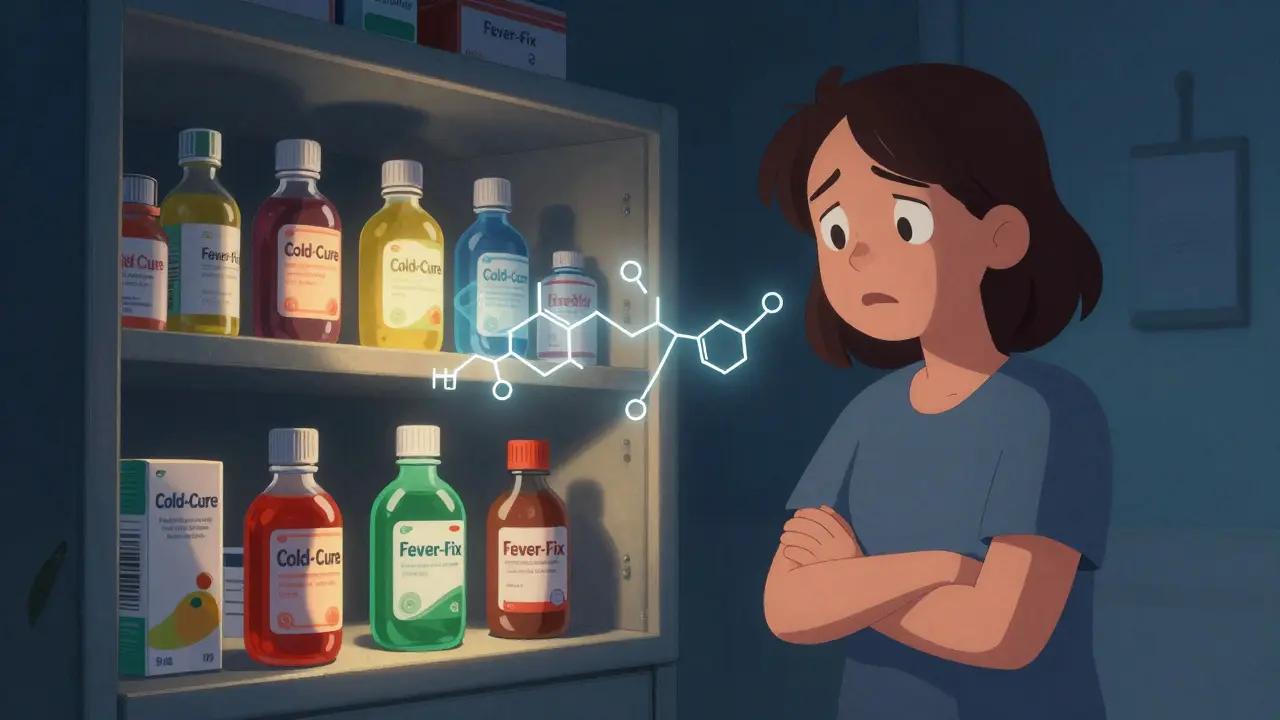
Imagine this: your child has a fever and a cough. You give them a dose of liquid paracetamol for the temperature. An hour later, they’re still coughing, so you reach for that multi-symptom cold syrup you bought last week. It’s a common scenario, but it hides a dangerous trap. That cold syrup likely contains more paracetamol. By giving both, you’ve just doubled-or even tripled-the dose without realizing it.
This isn’t just a hypothetical worry. Research published in Pediatrics shows that about 21% of parents have made at least one significant dosing error involving accidental doubling of medication. The American Association of Poison Control Centers reports that these errors account for roughly 10% of all pediatric poisoning cases every year. For young children, whose bodies process drugs differently than adults, this mistake can lead to serious liver damage or other severe side effects. The good news? This is entirely preventable if you know how to read labels correctly.
The Hidden Danger of Combination Medications
The biggest culprit in pediatric double dosing is the rise of "multi-symptom" products. Manufacturers create syrups and tablets that treat fever, congestion, and coughs all in one bottle. While convenient, these products often contain standard pain relievers like acetaminophen (also known as paracetamol) or ibuprofen.
Here is why this gets tricky: brands use different names for the same thing. Acetaminophen might be listed as APAP, Paracetamol, or N-acetyl-p-aminophenol on different labels. A study by the CDC found that 73% of parents fail to recognize that identical active ingredients are hiding behind different brand names. For example, a parent might give their child Panadol for a headache and then later give them NyQuil for a cold, unaware that both contain high levels of acetaminophen.
The risk is particularly high for children under five. The FDA reports that 60% of double-dosing incidents occur in this age group. Their metabolic systems are still developing, meaning the "therapeutic window"-the safe range between a helpful dose and a harmful one-is much narrower. For acetaminophen, exceeding 150 mg per kilogram of body weight can cause acute liver failure. In fact, acetaminophen overdose accounts for 45% of all acute liver failure cases in children under six years old.
| Product Type | Brand Examples | Hidden Active Ingredient | Risk if Doubled |
|---|---|---|---|
| Cold & Flu Syrup | NyQuil, Theraflu, Vicks DayQuil | Acetaminophen / Paracetamol | Liver damage |
| Allergy Relief | Benadryl, Zyrtec-D, Claritin-D | Diphenhydramine / Pseudoephedrine | Severe drowsiness, heart rate issues |
| Pain Reliever | Tylenol, Panadol, Calpol | Acetaminophen | Liver toxicity |
| Fever Reducer | Advil, Motrin, Nurofen | Ibuprofen | Stomach irritation, kidney stress |
Why Liquid Medications Are Riskier
If your child takes pills, you have a fixed dose. With liquids, the margin for error grows significantly. Dr. Robert Hiriart, a pediatric pharmacologist, notes that prescribed doses for children are exact calculations based on weight. Even a small extra amount can double the risk of adverse events in toddlers.
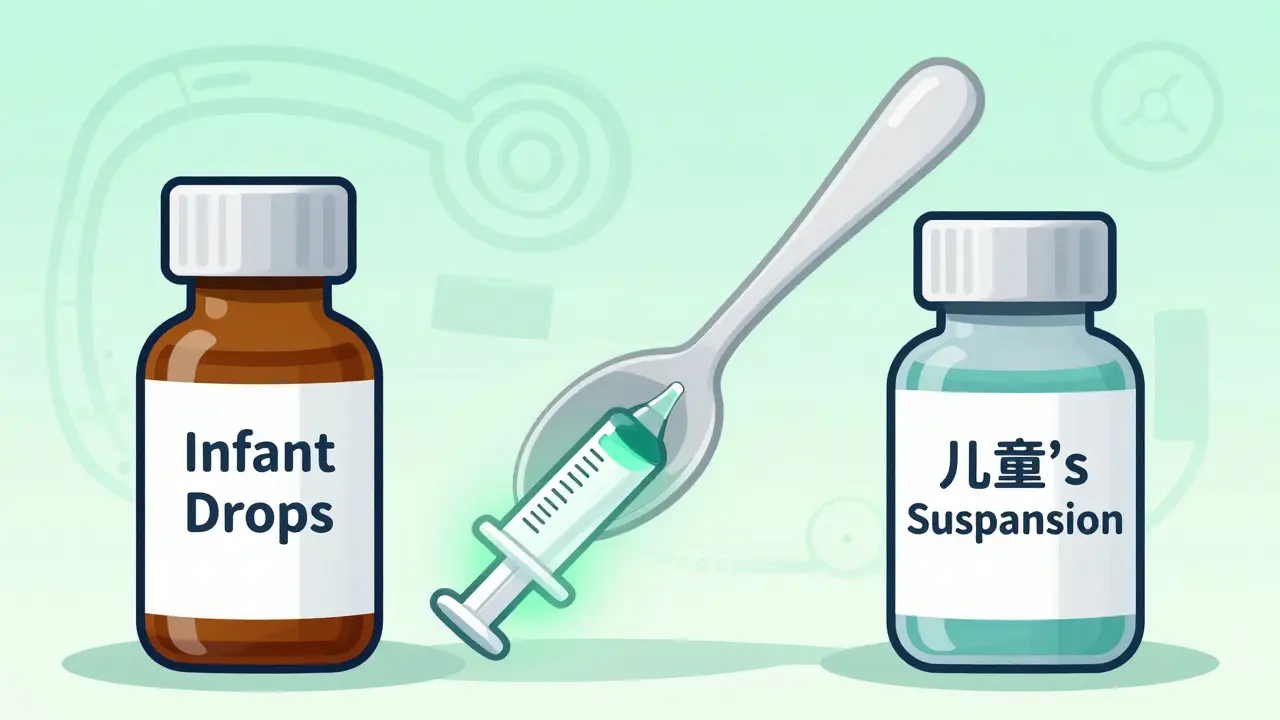
The problem starts with measuring tools. Many parents use kitchen spoons to measure medicine. But household teaspoons vary wildly in volume, ranging from 2.5ml to 7.5ml. That’s a difference of up to 200%. If the label says 5ml and you use a large tablespoon (15ml), you’ve just given three times the intended dose. The FDA strongly recommends using only the measuring device that comes with the product, such as an oral syringe or a marked cup.
Another issue is concentration confusion. Parents often buy different strengths of the same medication-for example, "Infant Drops" versus "Children’s Suspension." These look similar but have vastly different concentrations. A survey by SafeDose Inc. found that 68% of parents reported confusion between these formulations. Always check the milligrams per milliliter (mg/ml) on the label before administering any new bottle.
Practical Steps to Prevent Double Dosing
Avoiding these mistakes doesn’t require a degree in pharmacy. It requires a system. Here are the most effective strategies recommended by experts at St. Louis Children’s Hospital and the American Academy of Pediatrics.
- Adopt the "Ingredient First" Approach: Before buying or giving any medication, identify the active ingredient. Don’t look at the brand name first; look at what it actually does. Ask yourself: "Does my child already have something in their system with this ingredient?"
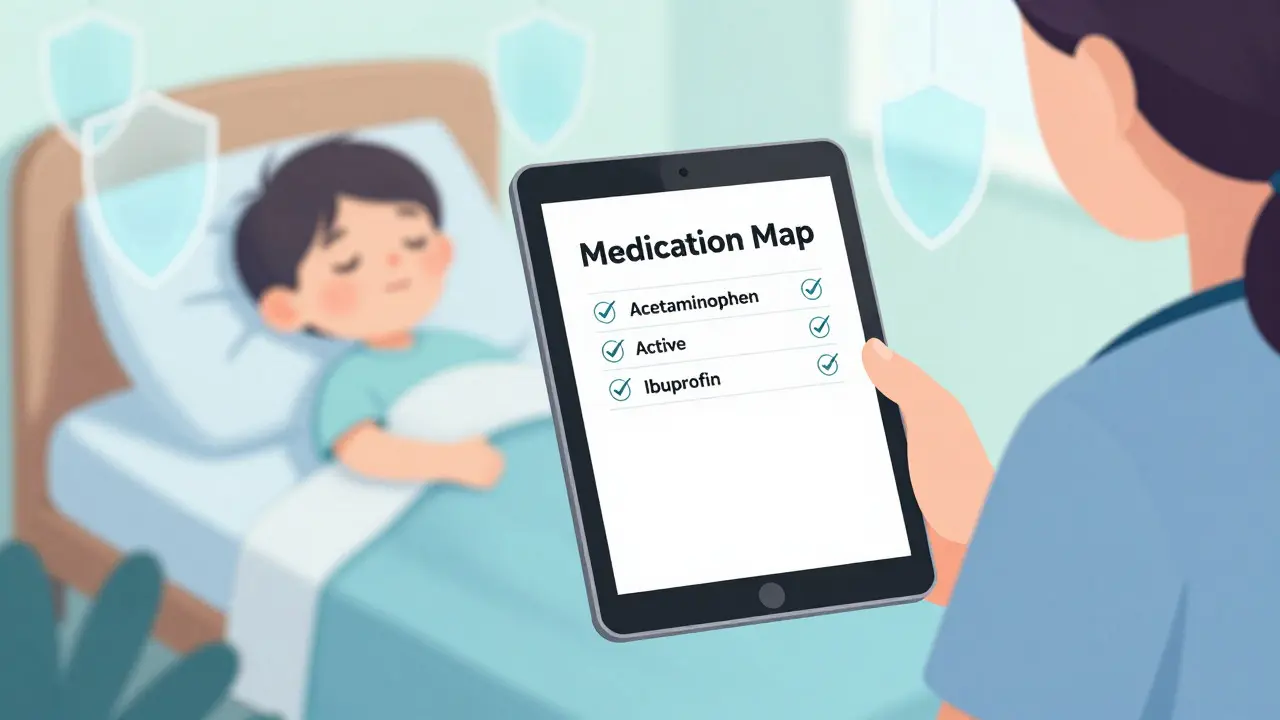
- Create a Medication Map: One parent on BabyCenter shared that creating a simple chart of all OTC meds in their house reduced errors by 100%. List each product, its active ingredient, and when it was last given. Keep this list in a visible place, like on the fridge.
- Assign One Caregiver: Communication breakdowns cause 38% of double-dosing incidents. When multiple people are involved-parents, grandparents, babysitters-it’s easy for someone to forget who gave what. Designate one person to administer all medications during a sick spell.
- Use Digital Tools: Apps like Medisafe or Round Health can track doses and alert you to potential conflicts. A 2023 Consumer Reports evaluation showed these apps reduce double-dosing risk by 52% when used consistently.
- Check for Overlapping Symptoms: If you are treating a fever with ibuprofen, do not automatically assume a cold medicine is safe. As Dr. Christopher Chang of UC Davis Health points out, 89% of multi-symptom cold medications contain acetaminophen. Treat symptoms individually rather than bundling them.
When to Seek Immediate Help
Even with the best precautions, mistakes happen. If you suspect your child has received a double dose, stay calm but act quickly. Symptoms of overdose depend on the drug. For acetaminophen, early signs may include nausea, vomiting, or sweating. For ADHD medications like methylphenidate, watch for rapid heart rate or agitation. For antihistamines like diphenhydramine, extreme drowsiness or confusion are red flags.
Contact your local poison control center immediately. In the US, the number is 1-800-222-1222. In the UK, call 111 or go to NHS.uk/poisons. Have the medication bottles ready so you can report the exact active ingredients and amounts given. Do not wait for symptoms to appear, especially with acetaminophen, where liver damage can develop silently over several days.
The Future of Pediatric Safety
Regulators are taking notice. The FDA’s 2023 final rule requires all OTC products to list active ingredients in a standardized, bold format by December 2025. The American Academy of Pediatrics launched the "Know Your Ingredients" campaign in 2024, introducing standardized icons on packaging to help parents spot overlaps faster. Pilot studies show these icons improve parental recognition by 57%.
Technology is also stepping in. Amazon Pharmacy’s "MedCheck" feature scans purchased medications to alert users to potential conflicts, preventing thousands of potential incidents in its first six months. However, until these systems are universal, the responsibility remains largely on caregivers. The average child’s medicine cabinet now holds 4.2 different OTC medications, each with an average of 2.7 active ingredients. That creates a complex matrix of potential interactions that only careful checking can navigate.
By slowing down, reading the fine print, and focusing on active ingredients rather than brand names, you can protect your child from one of the most common-and most preventable-household medical emergencies.
What are the signs of an acetaminophen overdose in children?
Early symptoms may include nausea, vomiting, loss of appetite, and sweating. In some cases, there may be no immediate symptoms, which makes it dangerous. Liver damage can occur 24 to 72 hours after ingestion. If you suspect an overdose, seek medical help immediately even if your child seems fine.
Can I alternate ibuprofen and acetaminophen for fever?
The American Academy of Family Physicians warns against alternating these medications for children under 3 years old, as it increases the risk of dosing errors by 47%. If you must alternate, keep a strict written log of times and doses, and consult your pediatrician first.
Is it safe to use kitchen spoons to measure liquid medicine?
No. Household teaspoons vary in size from 2.5ml to 7.5ml. The FDA recommends using only the oral syringe or dosing cup provided with the medication to ensure accurate measurement.
How can I tell if two different medicines contain the same active ingredient?
Look at the "Drug Facts" panel on the back of the box. Ignore the brand name. Compare the list of active ingredients. For example, Tylenol, Panadol, and many cold medicines all list acetaminophen (or paracetamol) as the active ingredient.
What should I do if I accidentally double-dosed my child?
Do not panic. Contact your local poison control center or healthcare provider immediately. Have the medication bottles handy to provide details on the active ingredients and the amount given. Follow their instructions precisely.
Lilith Stepanyan
August 3, 2026 AT 20:09Most parents are just walking around with a ticking time bomb in their medicine cabinet and have no clue. The article is right but it’s too late for most of them once they start panicking. You give the fever reducer, then you see the cough isn’t gone so you grab the multi-symptom syrup because convenience overrides basic biology. It’s stupidly simple yet people fail at it constantly.
charlie student
August 4, 2026 AT 17:38I always wonder why we complicate things so much when nature has its own ways. Maybe if we trusted the body more to heal itself we wouldn't be so obsessed with masking every symptom immediately. But I guess that's a philosophical debate for another day. Still good info though.
Josh Atkinson
August 4, 2026 AT 20:18Look folks, this is really important stuff :). I’ve seen too many people ignore the fine print and end up in ERs over silly mistakes. The part about kitchen spoons is huge because everyone thinks their teaspoon is accurate but it’s not. Just use the syringe that comes with the meds okay? It’s not rocket science but sure seems like it for some. Thanks for sharing this vital info!
Gary Browne
August 6, 2026 AT 05:52So let me get this straight you’re telling me I can’t just throw whatever looks colorful at my kid until they stop crying? Who made you the expert on parenting anyway. I’ve been doing this for years without reading labels. Seems like fear mongering to me honestly. But sure keep telling yourself that.
Christina Thygesen
August 7, 2026 AT 17:18i feel like this happens all the time and nobody talks about how scary it is. my sister gave her son two different cold meds once and he ended up vomiting for hours. she was so stressed out and felt terrible about it. we should be kinder to each other when these mistakes happen because panic makes it worse
Minal Aditi
August 8, 2026 AT 09:32Oh wow, ground breaking discovery that chemicals kill you if you take too many. Truly mind-blowing stuff here. I bet you didn’t know that water can drown you either. Let’s all sit down and clap for the genius who figured out that acetaminophen is in multiple bottles. My life is changed forever by this revelation. Can we move on now?
Tegan Morey
August 10, 2026 AT 03:25This is such a helpful reminder! I actually started using that medication chart idea mentioned in the post and it’s been a game changer for our household. Having one person designated as the 'medication manager' during sick days has stopped so many mix-ups between my partner and me. Highly recommend trying it out if you’re feeling overwhelmed by all the options.
Diane Nash
August 11, 2026 AT 12:54It is imperative that caregivers understand the pharmacological implications of concurrent administration. The therapeutic window for pediatric patients is indeed narrow, and ignorance is not an acceptable defense against toxicity. One must scrutinize the Drug Facts panel with rigorous attention to detail. Standardization efforts by the FDA are commendable but insufficient without individual diligence. We must elevate our standards of care.
Alli Crumley
August 11, 2026 AT 19:01The epistemological crisis surrounding OTC nomenclature is fascinating yet terrifying. When semiotics fail us, physiology suffers. We see a brand name but miss the ontological reality of the active ingredient. It is a cognitive bias trap set by marketing departments. We must deconstruct the label to find truth. Use your critical thinking skills people! :) Don’t let the corporate veil blind you to the chemical reality.
Marc H
August 13, 2026 AT 08:35Blimey, talk about a nightmare scenario. I nearly had a heart attack reading that bit about liver damage in toddlers. It’s absolutely bonkers that we leave this to chance. Why aren’t these bottles color-coded or something? It feels like we’re setting parents up to fail. Proper shocking really.
Chris McQuaid
August 14, 2026 AT 04:18Actually, the study cited from Pediatrics has some methodological flaws if you look closely at the sample size. Also, alternating ibuprofen and acetaminophen is still debated among pediatricians despite what the AAP says. People need to do their own research instead of blindly following guidelines. But yeah, don’t double dose, duh.
sam howard
August 16, 2026 AT 04:17just read the label. seriously. it’s that simple. stop making excuses.