
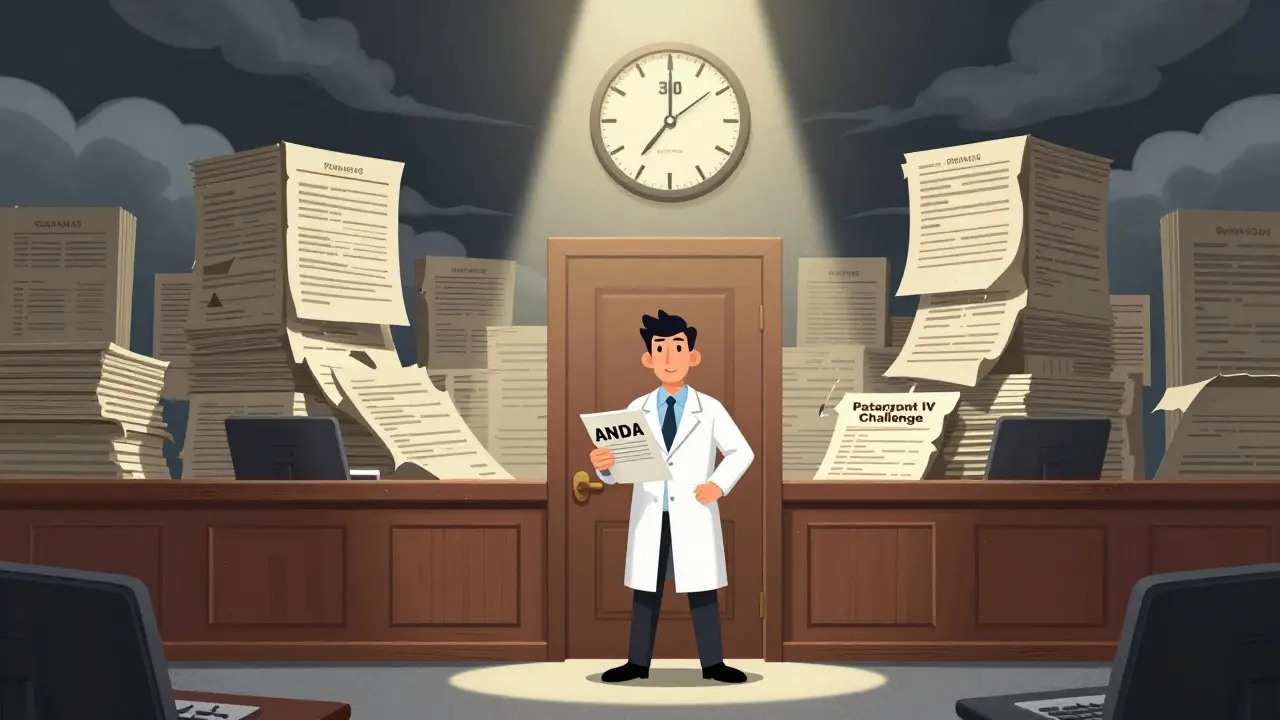
When a brand-name drug loses its patent protection, generic versions should be able to hit the market quickly. But in reality, it’s not that simple. Many brand companies use patents-not just one, but dozens-to delay generic competition. That’s where Paragraph IV comes in. It’s the legal tool that lets generic drug makers challenge those patents head-on and get their products approved faster. This isn’t a backdoor trick. It’s a carefully designed part of U.S. drug law that balances innovation with affordability.
What Is Paragraph IV and Where Did It Come From?
Paragraph IV isn’t a standalone law. It’s part of the Hatch-Waxman Act is a 1984 U.S. law created to balance drug innovation with affordable access by establishing a pathway for generic drugs to enter the market while respecting patent rights. Before 1984, generic companies had to repeat all the clinical trials that brand-name makers did, even if the drug was already proven safe and effective. That made generics too expensive and slow to develop. The Hatch-Waxman Act changed that. It let generics file an Abbreviated New Drug Application (ANDA), skipping most of the testing-but only if they respected existing patents.
Here’s the twist: Paragraph IV lets a generic company say, "I’m not infringing your patent. Your patent is invalid, or my drug doesn’t even touch it." That’s not just a claim. Legally, it counts as an act of patent infringement. That triggers a lawsuit from the brand company. The system was designed to force these fights into court, not let them drag on forever.
How the Paragraph IV Process Actually Works
Let’s say a generic manufacturer wants to make a cheaper version of a popular drug like Prozac or Lyrica. First, they check the FDA’s Orange Book is a public list of approved drug products with their patent and exclusivity information, used to identify barriers to generic entry.. This is the official record of every patent tied to the brand drug. If they find a patent they think they can beat, they file an ANDA with a Paragraph IV certification.
The certification isn’t just a form. It must include detailed arguments: Why is the patent invalid? Maybe prior art already existed. Is the patent unenforceable? Maybe it was obtained through fraud. Or, does their drug simply not fall within the patent’s claims? The FDA requires this to be specific. A vague notice gets rejected.
Once filed, the generic company must notify the brand company within 20 days. That’s the starting gun. The brand has exactly 45 days to sue. If they do, the FDA can’t approve the generic for 30 months. That’s the 30-month stay is a legal delay in FDA approval triggered when a brand company sues a generic filer over a Paragraph IV certification, giving the patent holder time to litigate.. It’s not a guarantee the brand will win-but it’s a big delay tactic.
During those 30 months, both sides dig into the patent. Lawyers and scientists go line by line through the patent claims. Courts hold Markman hearings is a pretrial proceeding where a judge interprets the technical language of a patent’s claims to determine infringement or validity. to decide what the patent actually covers. This is often the make-or-break moment. If the court says the patent only protects a specific chemical form, and the generic uses a different one, the generic wins.
Why the First-to-File Gets a Huge Advantage
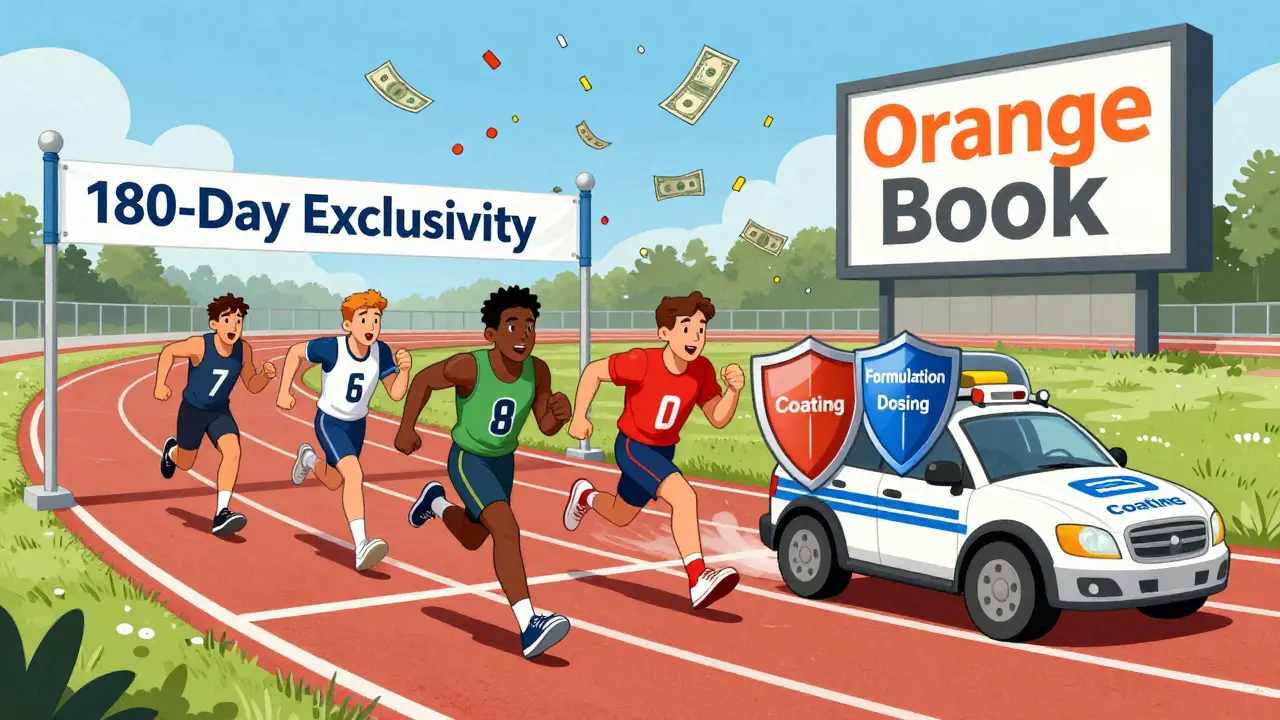
Here’s the real incentive: the first generic company to file a successful Paragraph IV challenge gets 180 days of exclusive market access. No other generics can enter during that time. That’s not a small perk. It’s a gold mine.
During those 180 days, the first filer typically captures 70 to 80% of the generic market. When Barr Labs beat Eli Lilly’s Prozac patent in 2000, they became the only generic seller for half a year. Prices dropped 79% on average, and Barr made hundreds of millions before others could join. That’s why so many generic companies race to be first. In 2014, the FTC found 87% of Paragraph IV filings were from companies trying to be first-to-file.
But there’s a catch. If you’re first and you lose the lawsuit? You’re out. No second chances. That’s why companies spend millions on legal and scientific prep before filing. One misstep, and you could owe over a billion in damages-like Mylan did in 2017 after losing a challenge against Novartis’ Gleevec.
How Often Do These Challenges Succeed?
They win more often than you’d think. A 2021 study of 1,783 Paragraph IV cases from 1985 to 2010 found that generics succeeded in about 65% of cases. That’s higher than the success rate for patent challenges at the Patent Trial and Appeal Board (PTAB), which is around 35%.
Why? Because in district court, the burden of proof is lower. The brand company has to prove infringement by a preponderance of evidence-not the "clear and convincing" standard used in PTAB proceedings. Also, generic companies can focus on weak patents: secondary ones covering drug formulations, delivery methods, or dosing schedules. These are often easier to challenge than the original chemical patent.
Take Teva’s 2019 challenge to Pfizer’s Lyrica patent. The court agreed that the method-of-use patent was obvious based on prior research. Teva got in early, and prices for Lyrica generics dropped by over 90%. But not all challenges work. AbbVie’s Humira had over 100 patents. Many Paragraph IV challenges failed because the generics couldn’t prove their version didn’t infringe on the complex formulation patents.
The Dark Side: Pay-for-Delay and Patent Thickets
It’s not all fair play. In 76% of Paragraph IV cases, the two sides settle before trial. Some of those settlements are legitimate. But many aren’t. The FTC found that brand companies sometimes pay generics to delay their entry. That’s called a "pay-for-delay" deal. In 2013, the Supreme Court ruled these deals could violate antitrust laws in FTC v. Actavis.
Still, they happen. Why? Because the 30-month stay gives brand companies leverage. A generic company might rather take $50 million to wait six months than risk losing everything in court.
And then there’s patent thickets. In 1984, a typical drug had 1.2 patents listed in the Orange Book. By 2020, that number jumped to 4.8. Today, 72% of new drugs have three or more patents. That’s not innovation-it’s obstruction. These patents cover tiny changes: a new coating, a different pill shape, a slightly altered dosing schedule. They’re not groundbreaking. But they’re enough to keep generics out for years.
What’s Changing Now?
The system is under pressure. The FDA’s 2022 rule on citizen petitions makes it harder for brand companies to use regulatory delays to block generics. The 2023 CREATES Act lets generics get the drug samples they need for testing without waiting on brand companies. Both are aimed at closing loopholes.
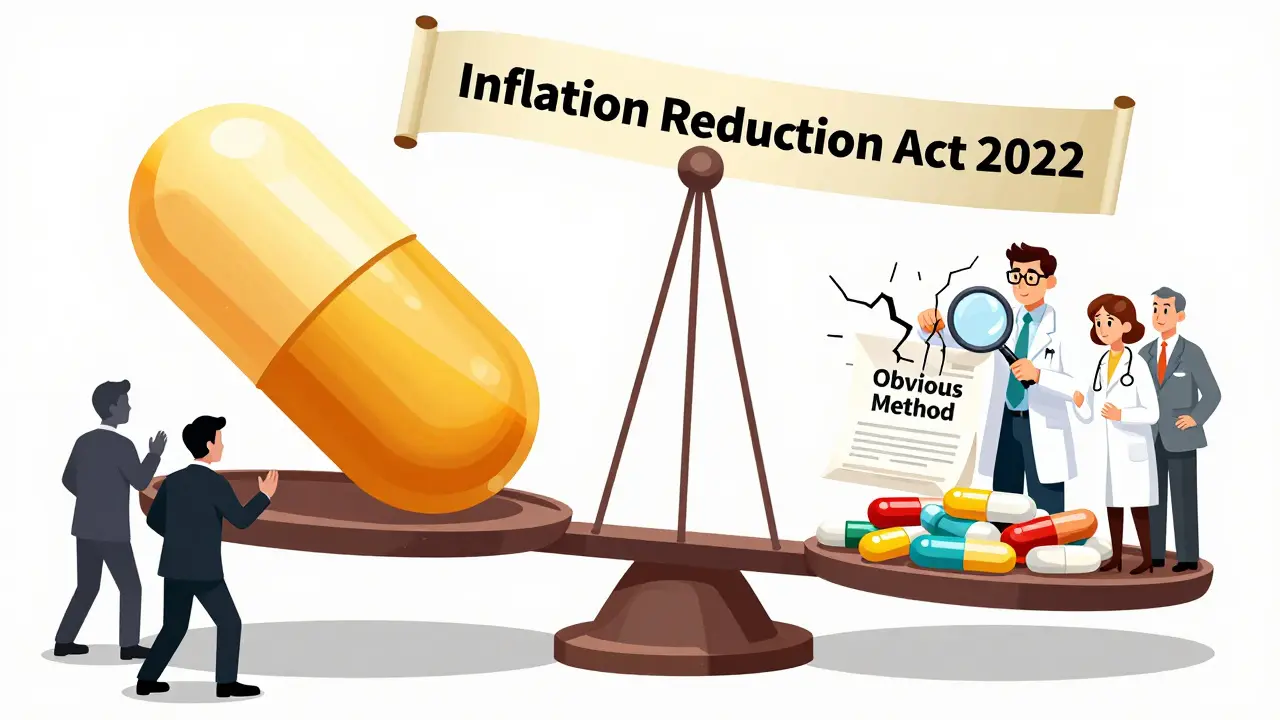
Also, the Inflation Reduction Act of 2022 lets Medicare negotiate prices for some high-cost drugs. That changes the game. If a brand company knows Medicare will cut its price anyway, it might be less willing to fight a Paragraph IV challenge. It’s a subtle shift, but it matters.
And now, some generic companies are combining Paragraph IV with PTAB challenges. They file in court and at the USPTO at the same time. It’s expensive, but it increases pressure on the brand. In 2022, coordinated filings rose 47% year over year.
Why This Matters to You
If you take a generic drug, you’re benefiting from Paragraph IV. Between 2009 and 2019, these challenges saved U.S. consumers $1.68 trillion. In 2021 alone, they enabled $98.3 billion in generic sales. Without Paragraph IV, drugs like Lipitor, Zoloft, and Humira would still cost 10 times more than they do today.
But the system is fragile. When brand companies pile on patents, when they pay generics to stay quiet, or when the legal process drags on for years, patients pay the price. The law was meant to speed up access-not delay it. The challenge now is to keep Paragraph IV working as intended: a fair, fast, and effective way to bring affordable drugs to the market.
What triggers a Paragraph IV challenge?
A Paragraph IV challenge is triggered when a generic drug manufacturer files an Abbreviated New Drug Application (ANDA) with the FDA and certifies that one or more patents listed for the brand drug in the Orange Book are invalid, unenforceable, or won’t be infringed by the generic product. This certification legally counts as an act of infringement, prompting the brand company to sue.
Can a generic company file a Paragraph IV challenge before the patent expires?
Yes. Generic companies can file a Paragraph IV challenge as soon as the patent is listed in the Orange Book-even if the patent has years left. The key is filing before any other generic. The first to file gets the 180-day exclusivity window if they win, making timing critical.
What happens if the brand company doesn’t sue within 45 days?
If the brand company doesn’t file a lawsuit within 45 days of receiving the Paragraph IV notice, the 30-month stay doesn’t activate. The FDA can then approve the generic drug immediately, assuming all other requirements are met. This rarely happens, because most brand companies do sue to protect their market.
Why do generic companies spend so much before filing?
They invest $2 million or more in legal and scientific analysis to ensure their challenge has a strong chance of success. This includes analyzing patent claims, identifying prior art, and modeling how their drug differs. A weak filing leads to rejection, and losing in court can cost billions in damages.
How does Paragraph IV differ from biosimilar patent disputes?
Biosimilars follow the BPCIA process, which has no automatic 30-month stay and a more complex "patent dance" negotiation step. Biosimilars also get only 12 months of exclusivity after approval, compared to 180 days for generics. The legal tools and timelines are fundamentally different.
What’s Next for Paragraph IV?
The FTC and Congress are watching closely. With patent thickets growing and pay-for-delay deals still happening, there’s pressure to reform the system. Some proposals aim to limit how many patents can be listed in the Orange Book. Others want to shorten the 30-month stay or ban settlements that delay entry.
For now, Paragraph IV remains the most powerful tool we have to bring down drug prices. It’s not perfect-but without it, generics wouldn’t be able to challenge the patent walls that keep prices high. The goal isn’t to eliminate patents. It’s to make sure they don’t become tools for monopoly.