
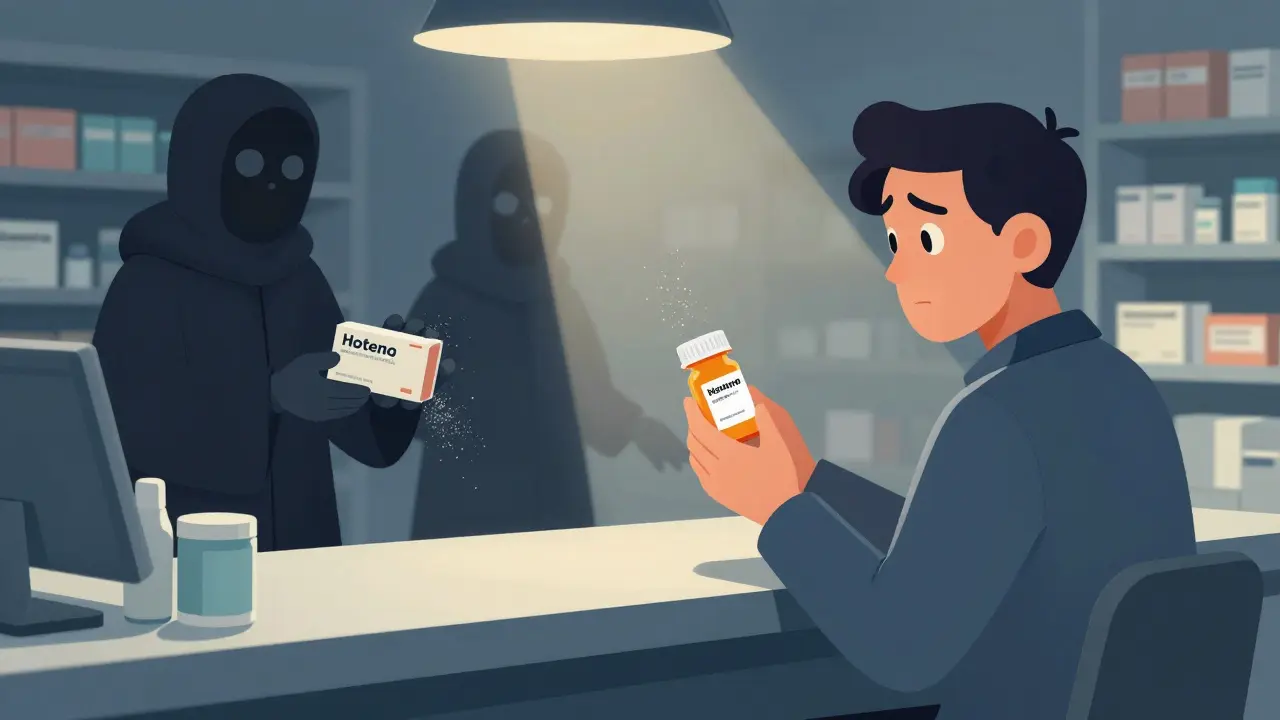
Imagine buying your life-saving heart medication, only to discover it contains chalk instead of active ingredients. This isn't a scene from a thriller; it is a terrifying reality for millions of people worldwide. The World Health Organization estimates that one in ten medical products in low- and middle-income countries is substandard or falsified. But even in developed nations, the threat looms large. Counterfeit drugs are not just a financial loss for manufacturers; they are a silent killer, eroding trust in healthcare systems and putting lives at risk every single day.
The fight back has evolved far beyond simple holograms on blister packs. We are entering an era where anti-counterfeit technologies leverage the same digital infrastructure that powers our smartphones and bank accounts. From unique digital identities for every pill bottle to blockchain ledgers that track temperature and location in real-time, the industry is undergoing a massive transformation. This shift is driven by urgent regulatory mandates like the U.S. Drug Supply Chain Security Act (DSCSA) and the EU Falsified Medicines Directive (FMD), which demand unit-level traceability by late 2025.
The Shift from Visual Checks to Digital Verification
For decades, pharmacists and patients relied on overt security features-things you could see with the naked eye. Tamper-evident seals, induction bands, and specialized shrink films provided visible evidence if a package had been opened. While these methods still play a role, they are no longer enough. Counterfeiters have become sophisticated, replicating high-quality packaging materials with alarming accuracy.
The modern approach relies on covert and forensic layers combined with digital verification. Covert technologies include security inks that react to UV light or infrared scanners, and holographic solutions like diffractive optical elements that are nearly impossible to copy without specialized equipment. Forensic authentication takes this further, using molecular-level markers. Imagine embedding unique DNA sequences into the ink used for printing labels. These biological markers can only be verified through specialized testing labs, providing a level of security that physical replication cannot breach.
However, the true game-changer is the move toward item-level tracking. Mass serialization assigns a unique identifier to every single unit of medication. This means your specific bottle of antibiotics has a digital twin that travels with it from the factory floor to your pharmacy shelf. In 2025, mass serialization captured 34% of the anti-counterfeit market share because it satisfies strict regulatory requirements while offering granular visibility. When integrated with Enterprise Resource Planning (ERP) systems, these serialized codes can reduce recall execution time by nearly 60%, ensuring that dangerous batches are pulled quickly and precisely.
NFC vs. QR Codes: The Battle for Patient Trust
If you look at recent pharmaceutical packaging, you will likely see a QR code. It seems convenient: scan the code, verify the drug. But here is the catch-QR codes are easily copied. A study by ForgeStop revealed that 78% of pharmaceutical QR code implementations fail basic security audits because they lack cryptographic protection. Fraudsters simply photograph legitimate QR codes and print them onto fake packages. If the underlying database isn't secured, the scanner tells the user the product is genuine, even when it is not.
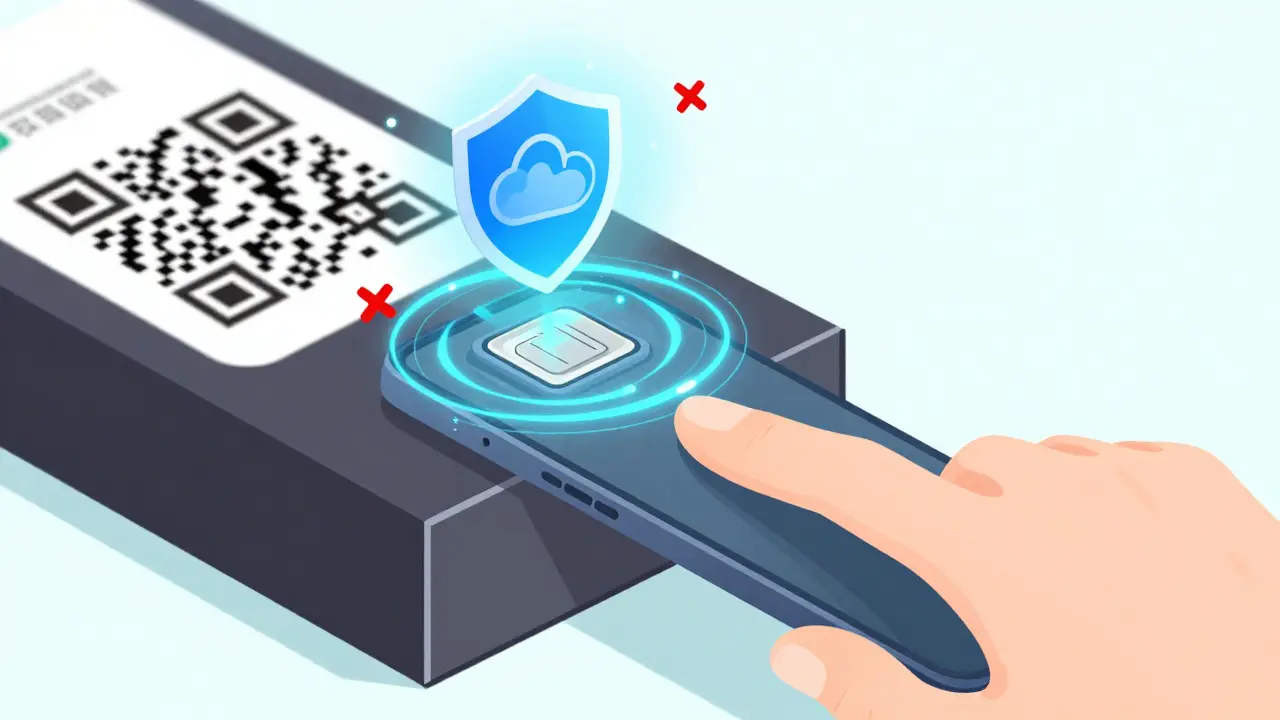
This vulnerability has accelerated the adoption of Near Field Communication (NFC) technology. Unlike QR codes, which are passive images, NFC chips embedded in packaging contain secure memory that requires a handshake protocol to read. When you tap your smartphone against an NFC-enabled box, the chip communicates encrypted data directly to your device. According to demonstrations at CPHI Frankfurt in 2025, this process authenticates products in under two seconds with 99.98% accuracy.
Why does this matter to you? Because NFC turns every smartphone into a verification tool. With 89% of global smartphone shipments supporting NFC in 2025, the barrier to entry is virtually non-existent. Pharmacists in Latin America using ForgeStop’s platform reported verifying over 1,200 products daily, adding only three to five seconds per check. This speed is crucial in busy clinics where workflow efficiency cannot be compromised for security checks.
| Technology | Security Level | Verification Speed | User Experience | Cost Per Unit |
|---|---|---|---|---|
| QR Code | Low (easily cloned) | Fast | High (universal camera use) | $0.01 - $0.02 |
| NFC Chip | High (cryptographic) | Very Fast (<2s) | Medium (requires NFC phone) | $0.05 - $0.10 |
| RFID Tag | Medium-High | Instant (bulk scan) | Low (consumer inaccessible) | $0.08 - $0.15 |
| DNA Markers | Very High | Slow (lab test) | None (professional only) | $0.15 - $0.25 |
Blockchain: Creating an Immutable History
Serialization gives each drug an ID, but blockchain ensures that ID’s history cannot be altered. Think of blockchain as a shared digital ledger that records every transaction-from manufacturing to shipping to dispensing. Once data is entered, it cannot be deleted or changed without consensus from the network. For pharmaceuticals, this creates an immutable provenance record.
Companies are adapting platforms originally designed for luxury goods, like De Beers’ Tracr system for diamonds, to track medicines. The difference is stakes. In pharma, blockchain nodes don’t just record location; they ingest data from Internet of Things (IoT) sensors. Did the insulin stay below 8°C during transit? Did the humidity spike in the warehouse? These environmental conditions are hashed onto the blockchain alongside movement data. If a patient scans their medication, they aren’t just seeing who made it; they are seeing proof that it remained potent throughout its journey.
However, implementation is not trivial. Gartner estimates that enterprise blockchain deployments for pharmaceutical traceability take 18 to 24 months to fully integrate, compared to six to twelve months for traditional serialization. The complexity lies in connecting disparate legacy systems across global supply chains. Yet, the payoff is significant: regulators gain unprecedented audit capabilities, and consumers gain transparency. As Ennoventure’s 2025 analysis notes, blockchain enables the track-and-trace compliance that regulators now mandate, giving each product a unique digital identity that moves with it.
AI and Robotics: The Eyes on the Factory Floor
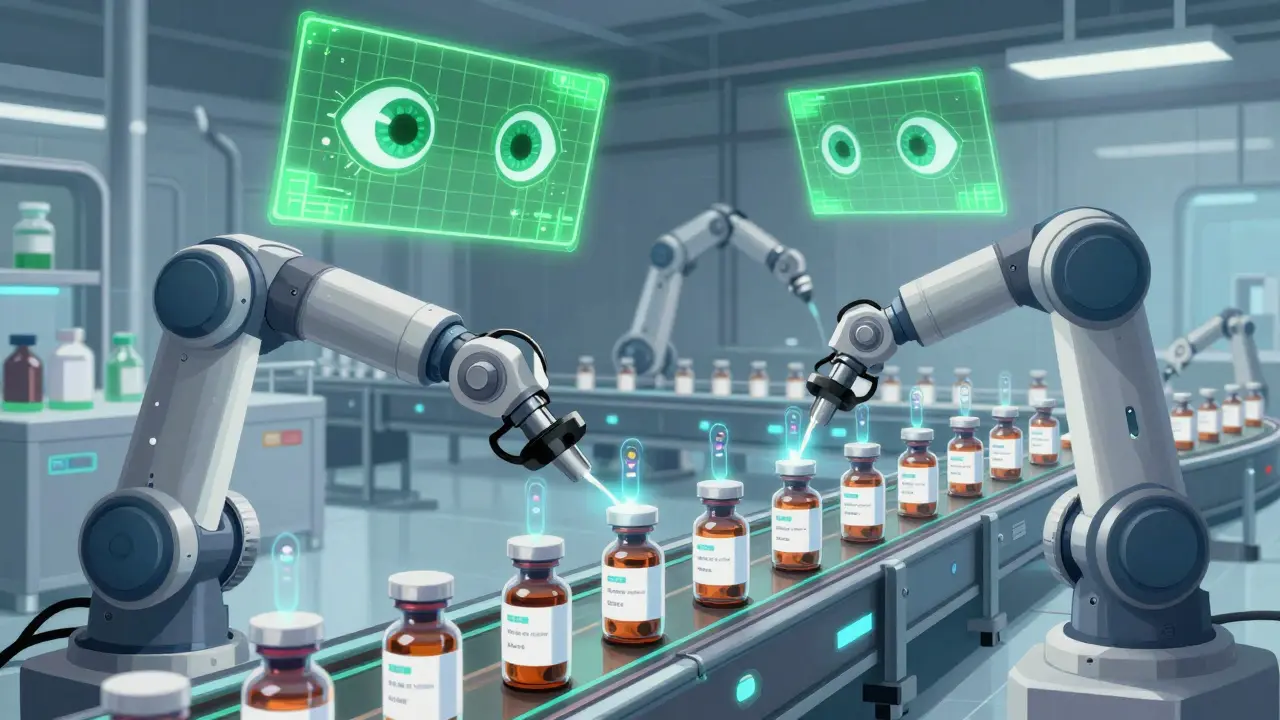
Before a drug leaves the factory, artificial intelligence is already working to keep fakes out. AI-driven visual inspection systems use computer vision to detect microscopic defects or anomalies in packaging that human eyes would miss. In controlled environments, these systems achieve 99.2% counterfeit detection accuracy. They can identify subtle differences in label alignment, ink density, or seal integrity that indicate tampering or poor-quality imitation.
These systems are evolving rapidly. Deployments increased by 68% in 2025, and accuracy improved from 89.7% in 2024 to 94.3% in the second quarter of 2025. The challenge remains real-world variability. Lighting conditions in warehouses differ from clean labs, and packaging materials can degrade slightly over time. Advanced machine learning models are being trained to recognize these nuances, reducing false positives that previously slowed down production lines.
Robotics also play a role in serialization. Automated labeling machines apply serialized barcodes and NFC tags at high speeds, ensuring consistency and reducing labor costs. For large manufacturers, this automation is essential to meet the volume demands of new regulations without sacrificing throughput.
Implementation Challenges and Real-World Friction
While the technology promises safety, rolling it out is messy. Regulatory pressure is forcing rapid adoption, but many companies are struggling. The DSCSA deadline of November 2025 has created a scramble among U.S. manufacturers. Small and mid-sized producers lag behind, with only 43% adoption rates due to cost constraints, compared to 97% among the top 100 pharmaceutical companies.
Integration headaches are common. A warehouse manager for a major European distributor shared on Reddit’s r/PharmaTech forum that implementing serialization under EU FMD required 14 months of system integration, cost approximately €2.3 million, and initially reduced throughput by 37%. It took months of optimization to recover efficiency. Software platforms like TraceLink receive high marks for compliance features but are criticized for steep learning curves requiring three to four months of staff training.
There are also geopolitical risks. Tariffs introduced in April 2025, ranging from 10% to 46% on pharmaceutical products and packaging from China and India, disrupted global trade. Production costs rose by 12-18%, and supply chain delays stretched from 21 to 45 days. These economic pressures force manufacturers to make hard choices about where to invest in security technology versus maintaining margins.
The Future: Sustainability Meets Security
As we look ahead, the industry is balancing security with sustainability. Consumers and regulators alike are demanding eco-friendly packaging. Fortunately, these goals are converging. Sixty-two percent of new anti-counterfeit packaging solutions launched in 2025 incorporate recyclable materials. Innovators are developing non-intrusive traceable markers that do not compromise the recyclability of cardboard or plastic.
We are also seeing the rise of multi-layered security strategies. No single technology is foolproof. The future standard involves combining overt features (like holograms), covert features (like UV inks), and digital verification (NFC/Blockchain). By 2027, 83% of pharmaceutical executives plan to implement these hybrid approaches. This defense-in-depth strategy makes it exponentially harder for counterfeiters to replicate every layer simultaneously.
Ultimately, these innovations are about more than protecting profits. They are about preserving trust. When a patient picks up a prescription, they need to know it is safe. As technology advances, the gap between suspicion and certainty narrows, bringing us closer to a world where fake drugs are detected before they ever reach the counter.
How can I tell if my medication is counterfeit?
Look for obvious signs like misspellings, damaged packaging, or unusual texture/color of pills. However, modern fakes are sophisticated. The best method is digital verification. If your medication has an NFC tag or QR code, use the manufacturer’s official app to scan it. If the code fails to verify or shows previous scans, do not consume the drug and contact your pharmacist immediately.
What is the difference between serialization and blockchain in pharma?
Serialization assigns a unique ID to each product unit for tracking. Blockchain is the underlying technology that records the history of that ID in an immutable, decentralized ledger. Serialization identifies the product; blockchain proves its journey and condition without tampering.
Are NFC tags safe for recycling?
Yes, newer NFC technologies are designed with sustainability in mind. Many modern tags are thin, flexible, and made from recyclable materials that separate easily during the recycling process. Over 60% of new anti-counterfeit solutions in 2025 prioritize eco-friendly materials.
Why are QR codes considered less secure than NFC?
QR codes are static images that can be photographed and copied easily. Without strong backend encryption, anyone can clone a legitimate QR code and paste it on a fake box. NFC chips require a cryptographic handshake, making cloning extremely difficult and ensuring the data comes from a genuine source.
When did the U.S. require full drug traceability?
The Drug Supply Chain Security Act (DSCSA) mandated unit-level traceability for all prescription drugs by November 2025. This deadline forced widespread adoption of serialization and interoperable tracking systems across the U.S. supply chain.