
You scratch your foot, and it burns. You look in the mirror, and that red patch on your shoulder looks suspiciously like a ring. Or maybe you’re dealing with an itch in a skin fold that just won’t go away. It’s annoying, it’s persistent, and honestly, it happens to about one in four people at some point. Fungal skin infections are incredibly common, but they are also highly treatable if you know what you’re looking at.
The problem is that these infections often get misdiagnosed as eczema or psoriasis. If you’ve been slathering on hydrocortisone cream for weeks with no luck, you might be feeding the fungus instead of killing it. Understanding the difference between ringworm (tinea) and Candida is the first step to getting rid of them. Let’s break down what causes these rashes, how to spot them, and which antifungals actually work.
What Exactly Are Fungal Skin Infections?
Fungi are everywhere. They live in soil, on plants, and even on our own skin without causing harm most of the time. Problems start when certain types of fungi grow out of control. We generally group these into two main camps: dermatophytes and yeasts.
Dermatophytes are molds that feed on keratin, the protein found in your skin, hair, and nails. When these invade, we call it tinea or ringworm. Despite the name, there are no worms involved; the term comes from the circular shape of the rash.
Candida, on the other hand, is a yeast. Specifically, Candida albicans is the usual suspect. Unlike dermatophytes, Candida loves warm, moist environments. It thrives in skin folds, under breasts, in the groin area, and in diaper regions.
Knowing which one you have matters because the treatment strategies differ slightly. Dermatophytes attack the outer layers of skin and hair shafts, while Candida tends to cause deeper, more inflamed reactions in moist areas.
Ringworm (Tinea): Signs, Types, and Spread
Ringworm is caused by three main genera of fungi: Trichophyton, Microsporum, and Epidermophyton. Trichophyton is responsible for 80-90% of cases, making it the most common culprit.
The classic sign of tinea corporis (body ringworm) is a red, scaly, ring-shaped patch with a raised border and clearer skin in the center. It itches. A lot. But ringworm isn’t just one thing; it changes based on where it lands:
- Tinea Capitis (Scalp): Common in children. It causes patchy hair loss and scaling. This usually requires oral medication because topical creams can’t penetrate the hair follicle deeply enough.
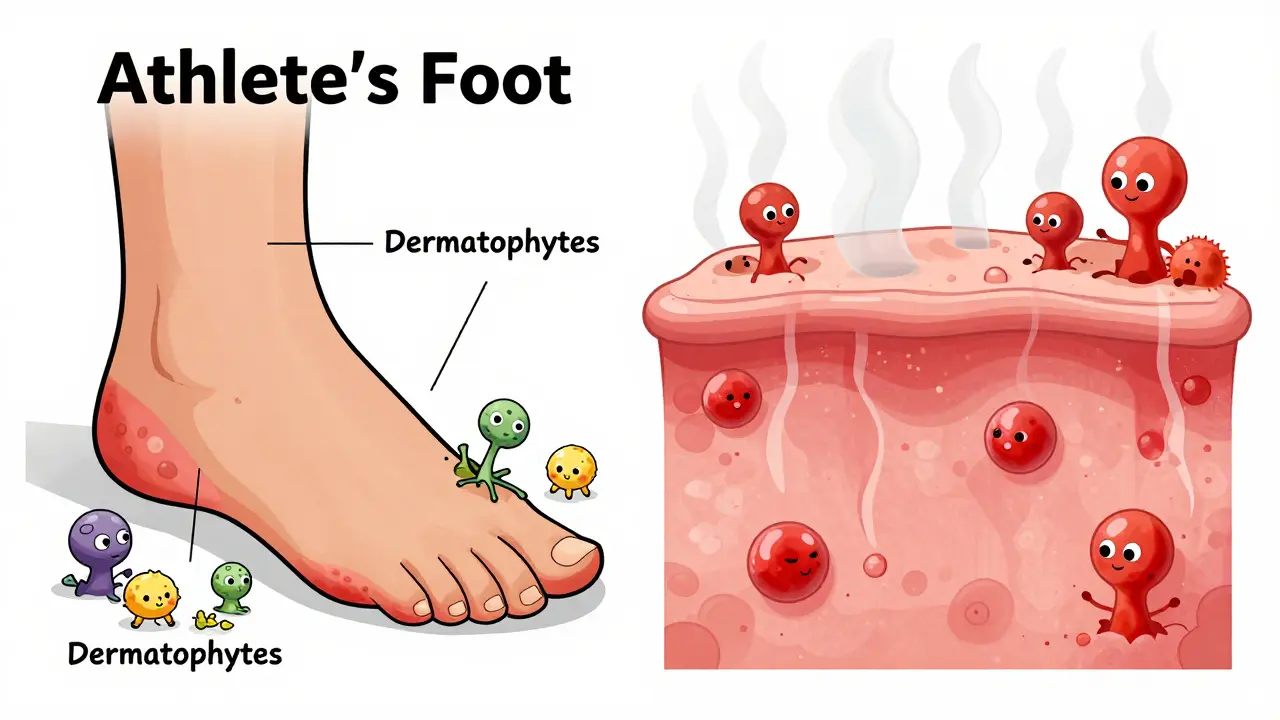
- Tinea Pedis (Athlete’s Foot): Affects about 15% of the global population. Look for itching, burning, and peeling between the toes or on the soles of the feet.
- Tinea Cruris (Jock Itch): Found in the groin and inner thighs. It has a sharp border and spares the scrotum. It’s very common in athletes and people who sweat heavily.
- Tinea Unguium (Onychomycosis): Nail fungus. Nails become thick, yellow, and brittle. This is the hardest type to treat and often requires months of oral therapy.
How do you catch it? Mostly through direct contact. About 85-90% of athlete’s foot cases come from person-to-person transmission, often via shared floors in locker rooms or pools. Zoophilic transmission (from animals) accounts for 20-30% of body ringworm cases in kids, usually from infected cats or dogs. If your pet has bald patches, check them too.
Candida Infections: The Moisture Problem
If ringworm is dry and scaly, Candida infections are wet and angry. These infections occur where skin rubs against skin or where moisture gets trapped. You’ll see them in armpits, under breasts, in the groin, and in infants’ diaper areas.
The rash looks different than ringworm. Instead of a clear ring, you get a "beefy" red, shiny plaque. The key identifier? Satellite lesions. These are small red pustules or spots that sit just outside the main rash boundary. That’s a dead giveaway for Candida.
Who is at risk? Anyone with compromised skin barriers or immune systems. People with diabetes are 2.5 times more likely to get fungal infections because higher blood sugar feeds the yeast. Infants are also prime targets; diaper dermatitis affects 7-25% of babies in their first year. Antibiotic use is another major trigger, as it wipes out the good bacteria that keep Candida in check.
Diagnosis: Is It Eczema or Fungus?
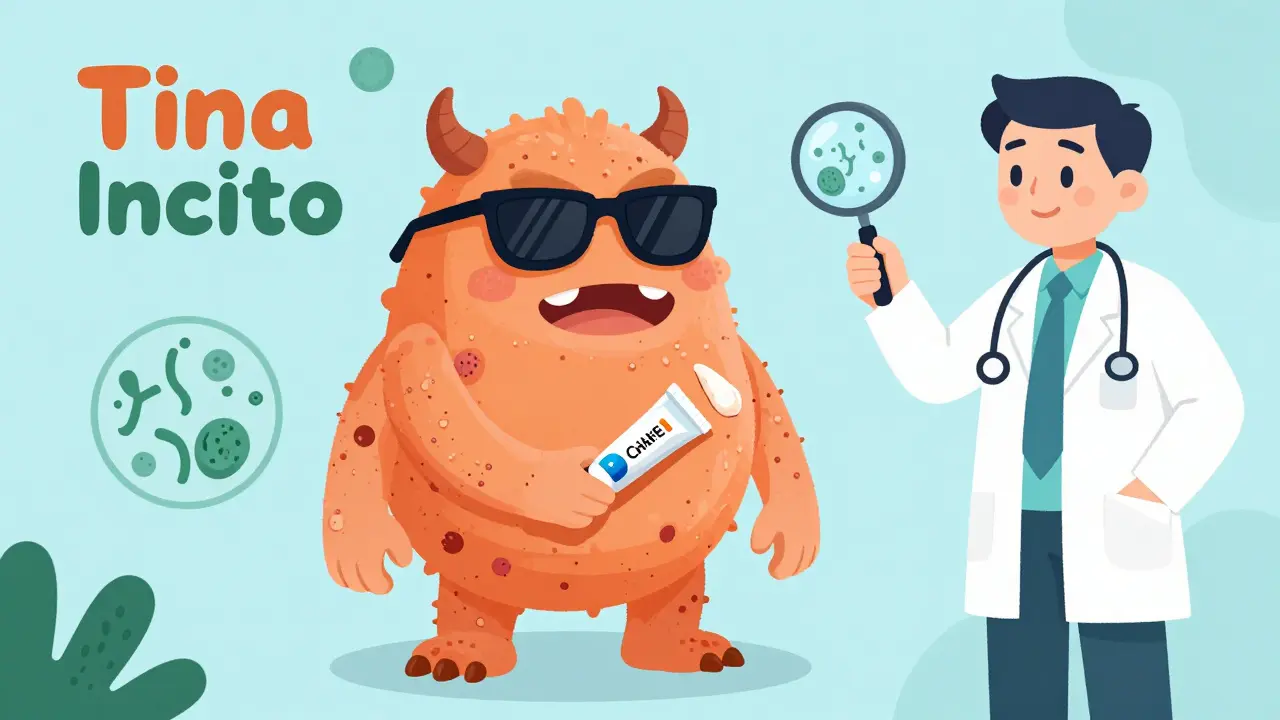
This is where things get tricky. Primary care doctors misdiagnose fungal infections as eczema or psoriasis in up to 40% of cases. Why does this matter? Because steroids (like hydrocortisone) reduce inflammation temporarily, making the rash look better, but they also suppress the local immune response. This allows the fungus to grow unchecked, leading to a condition called tinea incognito.
If OTC antifungals aren’t working after two weeks, stop guessing. See a doctor. They can perform a simple test:
- KOH Preparation: They scrape a bit of skin, mix it with potassium hydroxide, and look under a microscope. It takes minutes. It’s positive in 70-80% of cases.
- Fungal Culture: More accurate but slower. It takes 2-4 weeks to grow the fungus in a lab.
- Wood’s Lamp: Some fungi fluoresce under UV light, though this is less common now.
Don’t ignore recurrent infections. If you’re getting fungal rashes repeatedly, ask about underlying issues like undiagnosed diabetes or immune system concerns.
Treatment Options: Topical vs. Oral Antifungals
Most fungal skin infections can be treated with over-the-counter creams. However, picking the right class of drug makes a difference in speed and effectiveness.
| Class | Common Drugs | Best For | Treatment Duration | Efficacy Notes |
|---|---|---|---|---|
| Allylamines | Terbinafine (Lamisil) | Ringworm (Dermatophytes) | 1-2 weeks | Fungicidal (kills fungus). Faster cure rates than azoles for tinea. |
| Azoles | Clotrimazole, Miconazole | Candida & Ringworm | 2-4 weeks | Fungistatic (stops growth). Broader spectrum, good for mixed infections. |
| Polyenes | Nystatin | Candida (Mucosal/Skin) | 1-2 weeks | Not absorbed well, so only for surface infections. Great for diaper rash. |
| Oral Allylamines | Oral Terbinafine | Nail Fungus, Scalp Ringworm | 1-3 months | Required for deep infections. Requires liver function monitoring. |
For Ringworm (Tinea): Terbinafine is often the gold standard for body and foot infections. It kills the fungus rather than just stopping its growth. Apply twice daily for 1-2 weeks. Continue for a week after the rash disappears to prevent rebound.
For Candida: Azoles like clotrimazole or miconazole work well. Nystatin is excellent for diaper rash or oral thrush. Keep the area dry! Fungus needs moisture. Use absorbent powders or barrier creams like zinc oxide.
When to Go Oral: If the infection is on your scalp, nails, or covers a large area of your body, topicals won’t cut it. Oral terbinafine or fluconazole is needed. Note that oral antifungals carry risks, including potential liver strain. Your doctor will likely order blood tests before starting a long course.
Prevention and Lifestyle Changes
Treating the infection is half the battle. Preventing it from coming back is the other. Fungi love dark, damp places. Your job is to make your skin inhospitable to them.
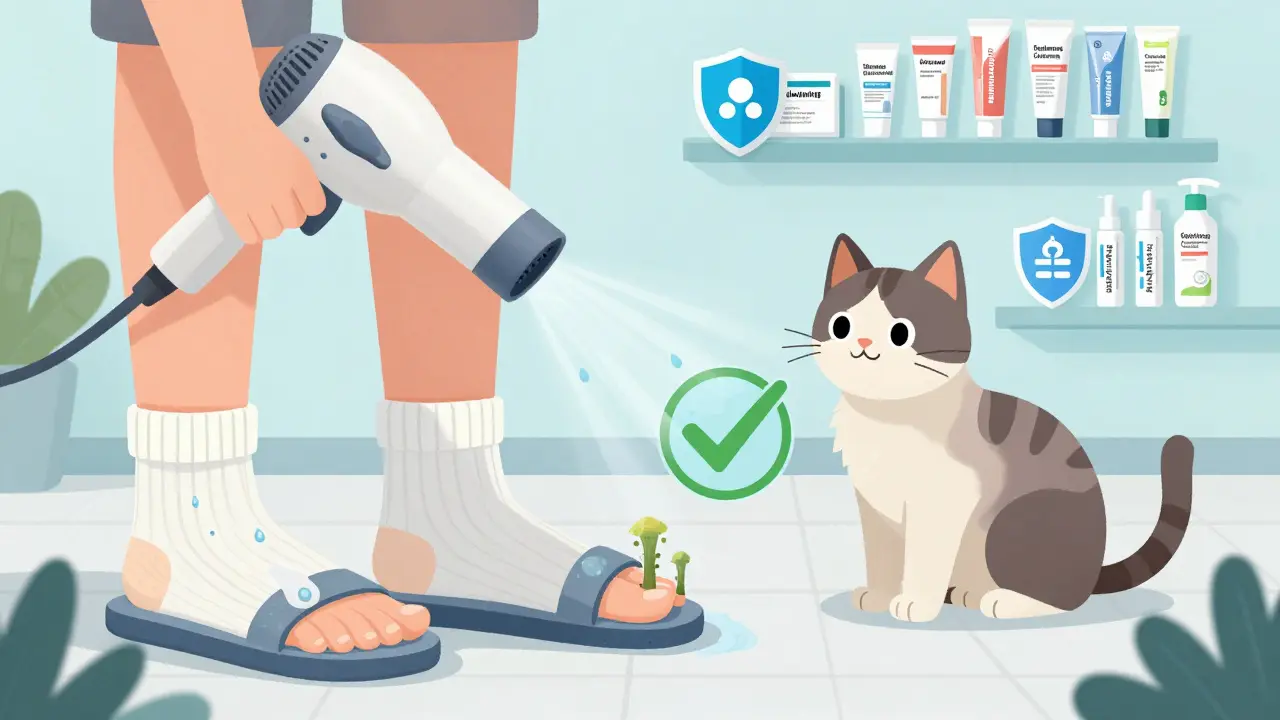
- Dry Off Completely: After showering, pay special attention to toe webs, groin folds, and under breasts. Use a hair dryer on cool setting if needed.
- Breathable Fabrics: Swap synthetic workout gear for cotton or moisture-wicking materials. Tight clothing traps sweat.
- Foot Hygiene: Change socks daily. Wear sandals in public showers and pool decks. Never share towels or nail clippers.
- Pet Checks: If you have a cat or dog with patchy fur, get them checked by a vet. Zoonotic ringworm is real.
- Probiotics: Emerging user data suggests that taking Lactobacillus probiotics may help reduce recurrence of Candida infections by restoring healthy bacterial balance, especially after antibiotic use.
Emerging Concerns: Resistance and New Threats
We need to talk about resistance. Fungi are evolving. Studies show that 5-7% of Trichophyton rubrum isolates in North America are showing reduced susceptibility to terbinafine. This means standard treatments might fail more often in the future.
There’s also Candida auris, a multidrug-resistant yeast that has spread to healthcare settings globally. While rare in the general community, it highlights why we shouldn’t misuse antifungals. Don’t use antifungal creams for every red rash. Overuse drives resistance.
New drugs are in the pipeline. Ibrexafungerp was recently approved for recurrent vaginal candidiasis, offering a new mechanism of action. Researchers are also exploring microbiome-based therapies, aiming to restore skin health rather than just blasting fungi with chemicals.
Can I use steroid cream on a fungal infection?
No. Steroids like hydrocortisone reduce inflammation and itching, which might make the rash look better temporarily. However, they suppress your local immune system, allowing the fungus to grow deeper and spread wider. This leads to tinea incognito, a harder-to-treat form of the infection. Always confirm it’s not fungal before using steroids.
How long does it take for ringworm to go away?
With proper topical treatment (like terbinafine), most body ringworm clears up in 1-2 weeks. Athlete’s foot may take 2-4 weeks. Nail fungus is much slower, requiring 1-3 months of oral medication. Stop treatment only after the skin looks normal and stays that way for a week to prevent recurrence.
Is Candida contagious?
Yes, but it’s less contagious than ringworm. Candida spreads through direct skin-to-skin contact or sexual contact. It’s also opportunistic, meaning it often flares up due to internal factors like antibiotics, diabetes, or weakened immunity rather than just catching it from someone else.
Why does my fungal infection keep coming back?
Recurrence usually points to environmental factors or incomplete treatment. Are you re-exposing yourself to contaminated shoes, towels, or pets? Did you stop medication too early? Underlying conditions like diabetes or immune suppression also increase risk. If it persists, see a doctor for culture testing and possible oral therapy.
Are natural remedies effective for fungal infections?
Some natural substances like tea tree oil have mild antifungal properties, but they are not as reliable or fast-acting as clinical antifungals. Relying solely on home remedies can delay proper treatment, leading to worse outcomes. Use them only as complementary measures, not replacements for proven medication.