
Medication & Calcium Juice Interaction Checker
Enter Your Medication
Type the name of your prescription or common drug class.
Select a Medication
Find out if calcium-fortified juice reduces the effectiveness of your medicine and how long to wait before drinking it.
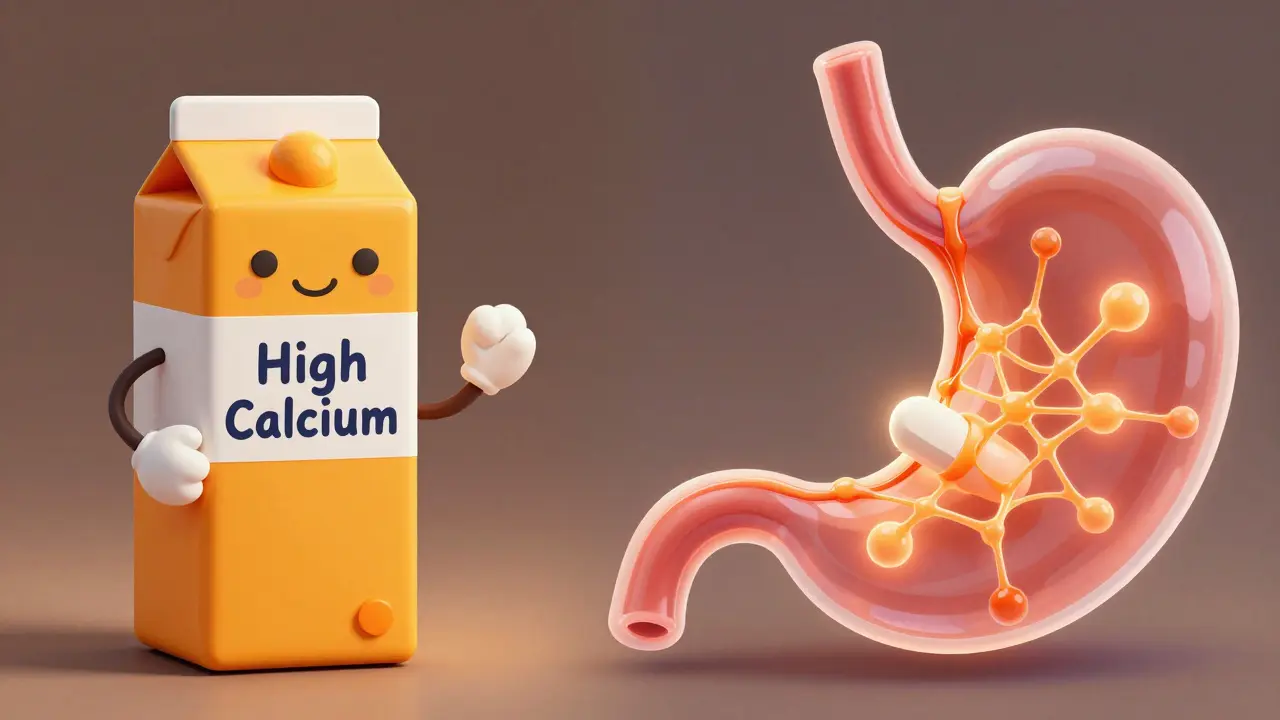
You reach for a glass of orange juice to wash down your morning pill. It feels like a harmless habit, maybe even a healthy one if the carton says "High Calcium." But what if that drink is quietly neutralizing the medicine you just took? For millions of people, this daily routine isn't just ineffective-it’s dangerous. Calcium-fortified juices are not just beverages; they are potent chemical agents in the stomach that can bind to medications, preventing your body from absorbing them. This isn't a rare side effect. It is a widespread, under-recognized crisis in community pharmacy practice.
The problem isn't limited to milk or cheese. While dairy interactions are well-known, fortified juices present a unique double threat. They contain high concentrations of elemental calcium-often comparable to a full cup of milk-and acidic compounds that alter stomach pH. When these elements meet certain drugs, they form insoluble clumps that your intestines simply cannot process. The result? Your medication passes through you unused, leaving you vulnerable to treatment failure, uncontrolled conditions, and unnecessary medical costs.
How Calcium Steals Your Medicine
To understand why this happens, we need to look at what occurs inside your digestive tract. Calcium carbonate and calcium citrate, the forms added to most juices, release free calcium ions when they hit your stomach acid. These ions are positively charged magnets looking for negative partners. Many drug molecules have structures that attract these ions.
When calcium binds to a drug molecule, it creates a large, heavy complex called a chelate. Think of it like trying to push a boulder through a straw. Your intestinal lining is designed to absorb small, soluble molecules. It cannot absorb these massive calcium-drug complexes. In laboratory studies published in the Journal of Pharmaceutical Sciences, researchers found that exposing certain drugs to calcium concentrations similar to those in fortified juice reduced drug dissolution by up to 80%. That means only a fraction of your dose ever enters your bloodstream.
This mechanism is classified as a Class 1 food-drug interaction by the U.S. Pharmacopeia, meaning it is major and clinically significant. The risk spikes when calcium intake exceeds 200 mg per serving. Most 8-ounce servings of fortified juice contain between 300 and 350 mg of elemental calcium. You are essentially taking a heavy buffer with your meds without realizing it.
The Drugs at Highest Risk
Not every medication reacts this way, but several critical classes are highly susceptible. If you take any of the following, you need to be extremely careful about what you drink with your pills.
| Drug Class | Common Examples | Effect of Interaction | Required Separation Time |
|---|---|---|---|
| Tetracycline Antibiotics | Doxycycline, Minocycline | Up to 80% reduction in absorption | 2-3 hours before or after |
| Fluoroquinolone Antibiotics | Ciprofloxacin, Levofloxacin | Significant decrease in efficacy | 2-4 hours before or after |
| Thyroid Hormones | Levothyroxine (Synthroid) | 35-55% reduction in absorption | Minimum 4 hours after |
| Bisphosphonates | Alendronate (Fosamax) | Prevents proper bone uptake | 30 minutes to 2 hours after |
| Antifungals | Ketoconazole | Reduced systemic availability | 2-4 hours separation |
For patients on Levothyroxine, the stakes are particularly high. A study in Thyroid showed that concurrent consumption with calcium-fortified juice can reduce absorption by over half. Patients often respond by increasing their dose unnecessarily, leading to potential heart rhythm issues and anxiety, all because they were drinking fortified OJ with their morning pill.

The Orange Juice Double Threat
Why is orange juice worse than water with calcium? It comes down to chemistry. Fortified orange juice contains both calcium and citric acid. The acidity lowers the pH of your stomach environment temporarily. Some drugs require specific pH levels to dissolve properly. The acid can interfere with this process while the calcium binds the drug.
A comparative study in the European Journal of Drug Metabolism and Pharmacokinetics highlighted this additive effect. They found that calcium-fortified orange juice reduced ciprofloxacin absorption by 42%, whereas plain calcium-fortified water only reduced it by 31%. The fruit juice itself makes the interaction stronger. This means swapping milk for fortified juice doesn't solve the problem-it might actually make it worse depending on the medication.
Real-World Consequences
This isn't just theoretical chemistry. It has real, costly consequences for patients and the healthcare system. A retrospective cohort study of nearly 1,900 patients published in JAMA Internal Medicine found that levothyroxine users who drank calcium-fortified juice regularly had 2.3 times higher odds of having thyroid-stimulating hormone (TSH) levels outside the therapeutic range. Their condition was uncontrolled despite being "compliant" with their medication schedule.
Consider urinary tract infections treated with ciprofloxacin. When patients take this antibiotic with calcium-fortified juice, treatment failure rates jump to 25-30%, compared to 8-10% when taken correctly. That means one in four people thinks they are getting better, but the infection is still brewing, potentially spreading to the kidneys. The economic impact is staggering. An analysis in the Journal of Managed Care & Specialty Pharmacy estimated that these interactions cost the U.S. healthcare system approximately $417 million annually in repeat visits, additional testing, and hospitalizations.
Why Don't We Know More?
If the risk is so high, why are doctors and pharmacists not shouting about it? Part of the problem is labeling. A study analyzing 47 popular calcium-fortified juice products found that 92% contained no warnings about medication interactions on the packaging. Consumers see "High Calcium" and think "Bone Health," not "Drug Interference."
There is also a knowledge gap among providers. A survey by the National Community Pharmacists Association revealed that 68% of patients mistakenly believe fortified juices are safe to take with medications. Even more concerning, only 28% of patients recall receiving specific counseling about this interaction from their healthcare team. Doctors often warn against "dairy," assuming patients will generalize that to all calcium sources. They don't always realize that a carton of Tropicana High Calcium is chemically equivalent to a glass of milk in terms of drug binding.
The Institute for Safe Medication Practices (ISMP) recognized this danger, adding calcium-fortified beverages to its 2023 List of High-Alert Food-Drug Combinations. They reported a 37% increase in incidents related to these interactions between 2022 and 2023. Patient forums are filled with stories of frustration. One user on Drugs.com shared, "My doctor never mentioned calcium OJ would interfere with my Synthroid-I was drinking two glasses daily with my morning pill for six months before my TSH levels finally got checked and were sky-high."
How to Protect Your Health
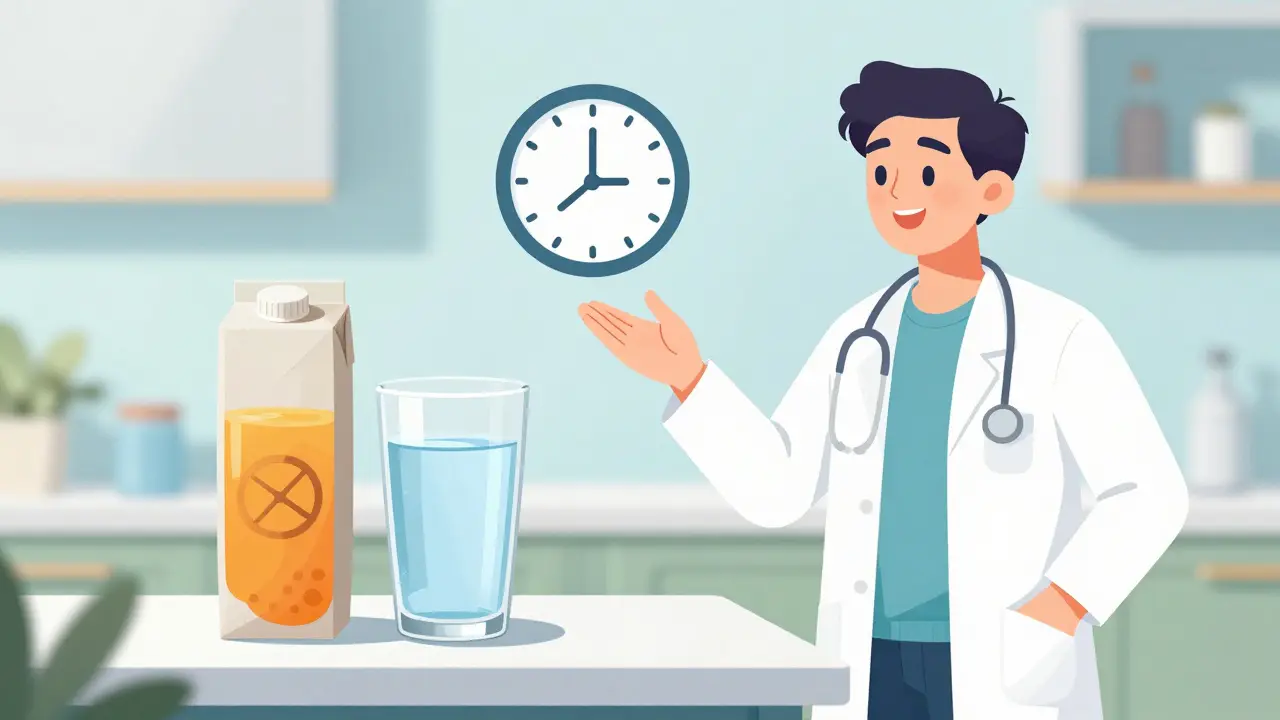
You don't have to give up fortified juice entirely, but you must change how you consume it. Timing is everything. Here is your action plan:
- Check the Label: Look for "Calcium Carbonate" or "Calcium Citrate" in the ingredients list. If it's there, treat it like a supplement, not a snack.
- Separate by Hours: For thyroid meds like levothyroxine, wait at least 4 hours after your pill before drinking fortified juice. For antibiotics like doxycycline, keep a 2-3 hour window on either side.
- Switch Beverages: Take your morning meds with plain water. Save the juice for lunch or dinner, far removed from your dosing time.
- Ask Your Pharmacist: Don't assume. Ask specifically: "Does my medication interact with calcium-fortified foods or drinks?" Mention juice explicitly.
- Monitor Levels: If you take chronic medications, ensure your blood tests reflect stable levels. Unexplained fluctuations might be dietary, not dosage-related.
New solutions are emerging. Companies like Nestlé Health Science are researching "chelation-resistant" calcium complexes that might bind less aggressively. Meanwhile, health systems are piloting QR codes on prescription labels that link directly to food interaction guides. Until then, the responsibility falls on us to read labels and respect the chemistry in our cups.
Can I drink calcium-fortified juice if I take vitamins?
It depends on the vitamin. Iron supplements are heavily affected by calcium, which blocks iron absorption. Vitamin D is fat-soluble and generally not affected by calcium binding, but taking high-dose calcium with other minerals can compete for absorption. Always separate iron supplements from calcium-rich drinks by at least 2 hours.
Is fresh-squeezed orange juice safer than fortified juice?
Yes, regarding calcium content. Fresh-squeezed orange juice naturally contains very little calcium (about 10-15 mg per cup). However, it is still acidic. While it won't cause the same severe binding issues as fortified juice, the acidity can still affect the absorption of some medications like antifungals or protease inhibitors. Plain water remains the safest option for taking pills.
Do calcium-fortified waters have the same risk?
Yes. Any beverage fortified with calcium carbonate or citrate poses the same binding risk. The vehicle (water vs. juice) matters less than the calcium content. If the label states it provides 20-30% of your daily value of calcium, it contains enough elemental calcium to interfere with sensitive medications.
What should I do if I accidentally took my med with fortified juice?
Don't panic. Do not take another dose immediately unless instructed by your doctor, as this could lead to an overdose once the first dose eventually dissolves. Monitor for symptoms of low efficacy (e.g., return of infection symptoms, fatigue for thyroid patients). Contact your pharmacist or doctor to discuss whether you need a follow-up blood test or adjusted timing for future doses.
Are there any medications that benefit from calcium-fortified juice?
Generally, no. Most medications are best absorbed on an empty stomach with water. Some drugs, like bisphosphonates, actually require an empty stomach to avoid esophageal irritation and poor absorption. There are very few drugs that require calcium for activation. Always check your specific prescription leaflet or ask your pharmacist.
rebecca torres
June 8, 2026 AT 04:30honestly this is why i always just take meds with water. people think fortified juice is some superfood hack but its literally just liquid chalk in a fancy bottle. the chemistry doesnt lie calcium binds to shit. if you are on synthroid or antibiotics and drinking high calcium oj you are basically flushing your money down the toilet. read the label next time.
Erin Livengood
June 8, 2026 AT 17:24It is truly fascinating how our daily rituals can become silent saboteurs of our health. We view orange juice as a beacon of morning vitality, yet it harbors this chemical quirk that turns our prescribed remedies into inert sludge. The irony is palpable when one considers that we seek wellness through diet only to undermine it with ignorance of basic pharmacokinetics. This interaction is not merely a footnote in medical journals; it is a widespread phenomenon affecting millions who trust their gut feelings over scientific data. The acidic environment combined with the chelating power of calcium creates a perfect storm for drug failure. One must ponder the broader implications of such dietary blind spots in an era where personalized medicine is touted as the future. Perhaps we need a cultural shift towards viewing beverages not just as refreshments but as active participants in our metabolic processes. It is a humbling reminder that nature’s sweetness can sometimes mask a bitter pill-literally speaking.
Daniella Renzon
June 10, 2026 AT 06:11thanks for sharing this info. i never realized that the juice could be so problematic especially with thyroid meds. it makes sense now why my levels were fluctuating even though i was taking everything exactly as prescribed. i will definitely switch to water in the morning and save the juice for later. good to know about the separation times too.
Cecilia McGuinness
June 10, 2026 AT 11:19wow i had no idea about this. i drink fortified oj every day with my vitamins. guess i better stop doing that then lol. thanks for the heads up everyone
Talilla Bailey
June 12, 2026 AT 05:14The clinical significance of these interactions cannot be overstated. Patients must adhere strictly to the recommended separation intervals to ensure therapeutic efficacy. Ignorance of these mechanisms leads to suboptimal treatment outcomes and increased healthcare burdens. It is imperative that individuals consult their pharmacists regarding potential food-drug interactions rather than relying on anecdotal evidence. The data presented here underscores the necessity of informed medication management.
Aditya Singh
June 13, 2026 AT 17:56This is a critical insight into the bioavailability challenges posed by concurrent ingestion of divalent cations and specific pharmacological agents. The chelation mechanism described herein significantly impacts the dissolution kinetics of tetracyclines and fluoroquinolones, thereby reducing their systemic exposure. In the Indian context, where self-medication with antibiotics is prevalent, this knowledge gap poses a severe public health risk. We must emphasize the importance of pharmaceutical counseling to mitigate these adverse drug events. The economic burden attributed to treatment failures due to such interactions is substantial and warrants immediate attention from regulatory bodies and healthcare providers alike.
Brett Webster
June 15, 2026 AT 14:45I work in community pharmacy and I see this all the time. Patients come in asking why their infection isn't clearing up or why their thyroid levels are off. They swear they took their meds correctly. Then I ask what they drank with it. Almost always it's fortified juice or milk. I try to explain the binding issue but it takes a lot of education to change habits. Water is really the best bet for most pills. If you have questions about your specific meds please ask your pharmacist directly.
Sherry Wheeler
June 16, 2026 AT 17:02This is absolutely terrifying! How many of us have been unknowingly sabotaging our own health for years? The thought that my morning routine has been rendering my medication useless sends shivers down my spine. We place so much trust in our doctors and pharmacists, yet they don't always catch these subtle dietary conflicts. It feels like we are fighting a battle on two fronts-one against our illness and another against our own ignorance. We must wake up to these hidden dangers before it is too late. Our bodies are delicate ecosystems, and we cannot afford to treat them with such casual disregard. Let this be a wake-up call to everyone reading this. Check your labels, check your timing, and protect your health fiercely!