

You wake up, swallow your thyroid pill, drink a glass of water, and head to the kitchen for breakfast. Maybe you grab a cup of coffee, some yogurt, or an iron supplement because your doctor mentioned your levels were low last month. It sounds like a normal morning routine, but if you have hypothyroidism, that simple habit might be quietly sabotaging your treatment.
Thyroid hormone replacement medications, specifically levothyroxine, which is a synthetic form of thyroxine (T4) used to treat underactive thyroid conditions, are notoriously finicky about what they share space with in your stomach. Two of the most common supplements-calcium and iron-are notorious blockers. They don't just slightly reduce effectiveness; they can prevent your body from absorbing enough medication to keep your metabolism running smoothly. This isn't a minor side effect note buried in the fine print. It is a critical interaction that affects millions of patients daily.
Why Your Stomach Rejects Thyroid Pills
To understand why this happens, we need to look at basic chemistry inside your gastrointestinal tract. Levothyroxine is a large molecule that requires specific conditions to pass through the intestinal wall into your bloodstream. Calcium and iron are minerals that exist as positively charged ions (cations) in your digestive system. When these positive ions meet the negative charges on the levothyroxine molecule, they bind together tightly.
This binding creates insoluble complexes-essentially clumps that your body cannot break down or absorb. Instead of entering your blood to regulate your heart rate, energy levels, and temperature, the medication stays trapped in your gut and leaves your body unchanged. Research published in the Journal of Clinical Endocrinology & Metabolism has shown that taking calcium carbonate with levothyroxine can reduce absorption by 22% to 36%. That means nearly one-third of your dose never reaches its target. For a condition where dosage precision is measured in micrograms, losing even 10% of efficacy can push your TSH (Thyroid Stimulating Hormone) levels out of range, causing symptoms like fatigue, weight gain, and brain fog to return.
The Calcium Connection
Calcium is essential for bone health, especially for older adults or those managing osteoporosis. However, it is also one of the strongest inhibitors of thyroid medication absorption. The issue isn't limited to chalky pills. Calcium-fortified foods play a huge role here too. Many people start their day with orange juice or almond milk, not realizing these beverages often contain significant amounts of added calcium carbonate.
A study involving twenty hypothyroid patients found that taking 1,200 mg of calcium carbonate concurrently with levothyroxine caused serum free T4 levels to drop significantly. Within months, 20% of those patients developed elevated TSH levels, indicating their thyroid medication was no longer working effectively. The good news? The effect is reversible. Once the calcium intake was separated from the medication time, thyroid levels normalized.
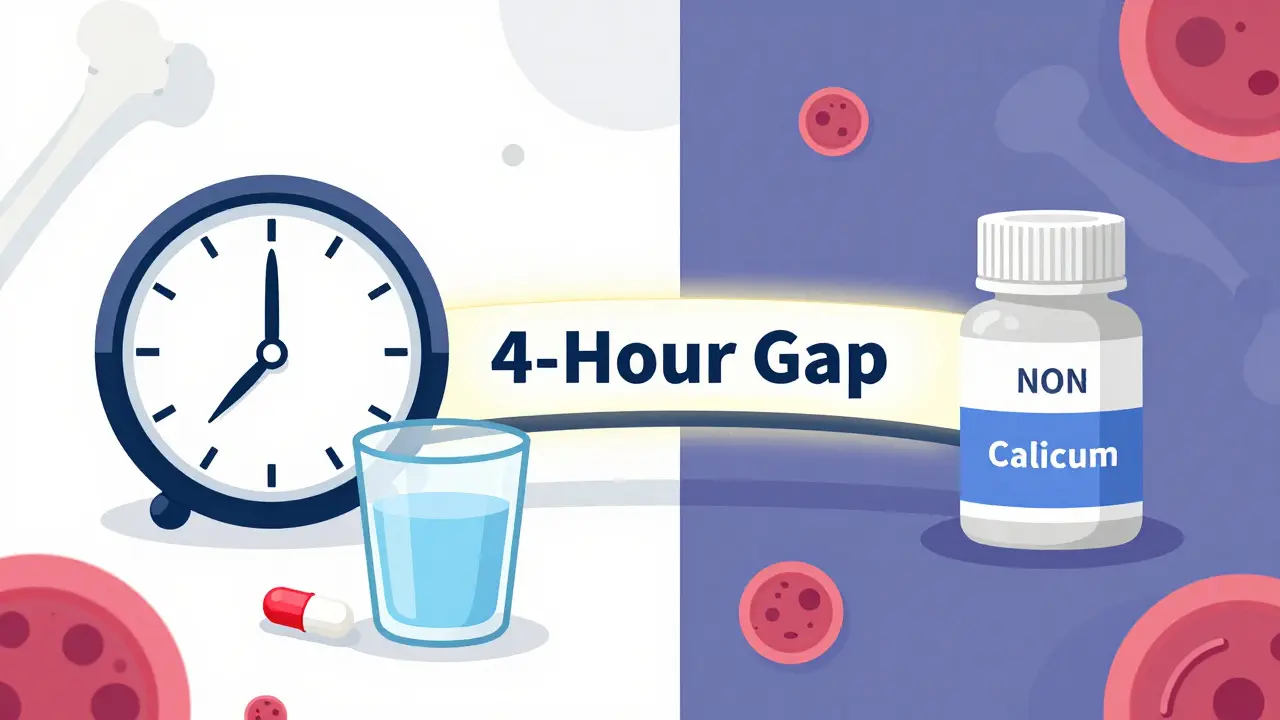
Current guidelines from the Mayo Clinic recommend separating calcium supplements from thyroid medication by at least four hours. If you take a calcium pill at 8:00 AM, do not take your thyroid medication until noon, or vice versa. This four-hour window allows the first substance to move through the stomach and into the intestines, minimizing the chance of them meeting and binding.
Iron Supplements: A Silent Saboteur
Iron deficiency is common, particularly among menstruating women and pregnant individuals. Doctors frequently prescribe ferrous sulfate, ferrous fumarate, or ferrous gluconate to boost hemoglobin levels. But iron shares the same problematic chemistry as calcium. It binds to levothyroxine in the gut, forming those same unabsorbable clumps.
A 2008 study demonstrated that taking 325 mg of ferrous sulfate with levothyroxine reduced absorption by 21%. While this percentage seems lower than calcium's impact, it is still clinically significant. The American Association of Clinical Endocrinologists notes that taking iron within two hours of levothyroxine can reduce absorption by up to 39%, depending on the formulation and individual gut pH. Pregnant women are especially vulnerable because they often require both high-dose iron for fetal development and stable thyroid hormones for cognitive development in the baby. In one documented case, a pregnant woman took her iron four to six hours after her thyroid pill and still experienced elevated TSH levels, requiring a dosage adjustment. This highlights that while separation helps, individual biology varies.
Other Common Culprits
While calcium and iron get the most attention, they are not alone. Several other everyday substances interfere with thyroid medication absorption:
- Soy Products: Soy protein can increase the required dose of levothyroxine by 18-30%. If you eat tofu, drink soy milk, or take soy supplements, try to separate them from your medication by several hours.
- Walnuts: Eating walnuts within four hours of taking levothyroxine can reduce absorption by 24%. Keep them as a snack for later in the day.
- Coffee and Tea: Caffeine itself isn't the main problem, but the tannins and other compounds in coffee and tea bind to the medication. Wait at least one hour after your pill before sipping your morning brew.
- Biotin: Biotin doesn't stop absorption, but it interferes with lab tests. High doses (above 5 mg daily) can cause falsely elevated thyroid function results, leading doctors to mistakenly lower your dose when you actually need more. Stop biotin three days before any blood test.
- High-Fiber Foods: Consuming more than 30 grams of fiber within an hour of medication can increase TSH levels by 15-25%. Fiber moves food through the gut quickly, giving the medication less time to dissolve and absorb.
| Substance | Minimum Separation Time | Impact Level |
|---|---|---|
| Calcium Supplements | 4 Hours | High (22-36% reduction) |
| Iron Supplements | 2-4 Hours | High (21-39% reduction) |
| Antacids (Aluminum/Magnesium) | 4 Hours | High |
| Soy Products | 4 Hours | Moderate-High |
| Coffee/Tea | 1 Hour | Moderate |
| Fiber-Rich Meals | 1 Hour | Moderate |
Creating a Routine That Works
Knowing the science is one thing; living with it is another. A 2022 survey by Thyroid UK revealed that 68% of patients struggle with these timing requirements, especially when juggling multiple medications for conditions like osteoporosis or anemia. Here is how to build a sustainable routine:
- Take Thyroid Meds First Thing: Swallow your levothyroxine with a full glass of water immediately upon waking. Do not eat or drink anything else yet.
- Wait 30-60 Minutes: Use this time to brush your teeth, get dressed, or read. Avoid coffee, juice, or food during this window.
- Breakfast Without Blockers: Eat a meal that does not include fortified cereals, soy milk, or large amounts of walnuts. Black coffee is okay after the one-hour mark.
- Delay Supplements: Schedule your calcium and iron for lunch or dinner. If you take them at noon, ensure your last thyroid pill was taken before 8:00 AM. If you take them at night, wait until at least 8:00 PM if you take your thyroid med at 4:00 PM (though morning dosing is preferred).
- Consider Bedtime Dosing: Some patients find success taking levothyroxine at bedtime, provided they haven't eaten for three to four hours prior. This can simplify the morning schedule, but you must discuss this with your doctor first, as absorption rates can vary between morning and night for some individuals.
When Timing Isn't Enough
Despite best efforts, some patients continue to struggle with stable TSH levels. This may be due to underlying gut issues like celiac disease, H. pylori infection, or atrophic gastritis, which affect absorption independently of supplements. In these cases, your doctor might consider alternative formulations.
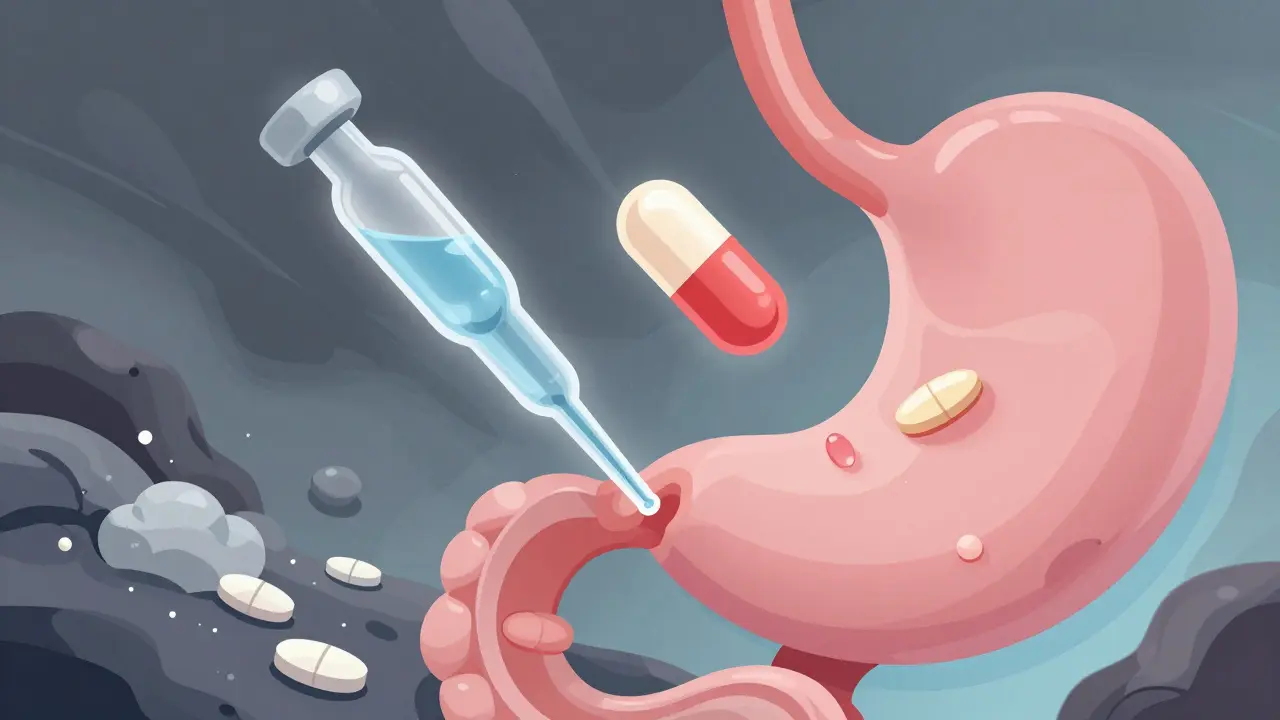
Newer liquid or gel-cap formulations of levothyroxine are less susceptible to mineral interactions because they bypass the initial breakdown phase in the stomach. One study showed a liquid formulation had only an 8% reduction in absorption when taken with calcium, compared to 32% for standard tablets. However, these options are significantly more expensive-often $350 per month versus $15 for generic tablets. Insurance coverage varies, so ask your provider if clinical instability justifies the switch.
Another emerging solution is enteric-coated levothyroxine, designed to release the medication in the small intestine rather than the stomach. Phase III trials have shown promise in reducing the need for strict timing separations. Until these become widely available and affordable, mastering the art of scheduling remains the most effective tool for patients.
Monitoring and Adjusting
If you recently started taking calcium or iron, do not assume your current thyroid dose is correct. Request a TSH test six to eight weeks after starting the new supplement. If your TSH is elevated, your doctor will likely increase your levothyroxine dose. Conversely, if you stop taking calcium or iron, your absorption will improve, and you may need a lower dose to avoid becoming hyperthyroid. Never adjust your medication without medical supervision.
Remember, consistency is key. Take your thyroid medication at the same time every day, with the same routine. Variability in timing leads to variability in blood levels, making it hard for your doctor to find the right balance. By respecting the chemistry of your gut and planning your day around your medication, you can ensure your body gets the full benefit of your treatment.
Can I take my thyroid medication with water and then eat breakfast immediately?
Ideally, you should wait 30 to 60 minutes after taking levothyroxine before eating. Food, especially high-fiber or protein-rich meals, can slow down gastric emptying and reduce the absorption of the medication. Water is the only recommended beverage during this waiting period.
Does multivitamin powder interact with thyroid medication?
Yes, if the multivitamin contains calcium or iron. Most standard multivitamins include these minerals. Check the label. If it does, treat it like a standalone calcium or iron supplement and separate it from your thyroid medication by at least four hours.
Why does biotin affect my thyroid lab results?
Biotin interferes with the laboratory assays used to measure TSH and thyroid hormones. It can cause falsely low TSH and falsely high T4/T3 results, mimicking hyperthyroidism. This does not mean your actual thyroid function has changed, but the test reading is inaccurate. Stop biotin at least 3 to 7 days before blood work.
Is it better to take levothyroxine in the morning or at night?
Morning dosing on an empty stomach is the traditional standard and works well for most people. However, some studies suggest bedtime dosing (after a 3-4 hour fast) may offer slightly better absorption stability for certain individuals. Discuss switching to bedtime dosing with your endocrinologist if you struggle with morning routines or persistent absorption issues.
How long does it take for thyroid levels to stabilize after changing supplement timing?
Thyroid hormones have a long half-life, so changes in absorption take time to reflect in blood tests. Typically, it takes 6 to 8 weeks for TSH levels to fully stabilize after adjusting medication timing or dosage. Retesting sooner than this may show incomplete data.