
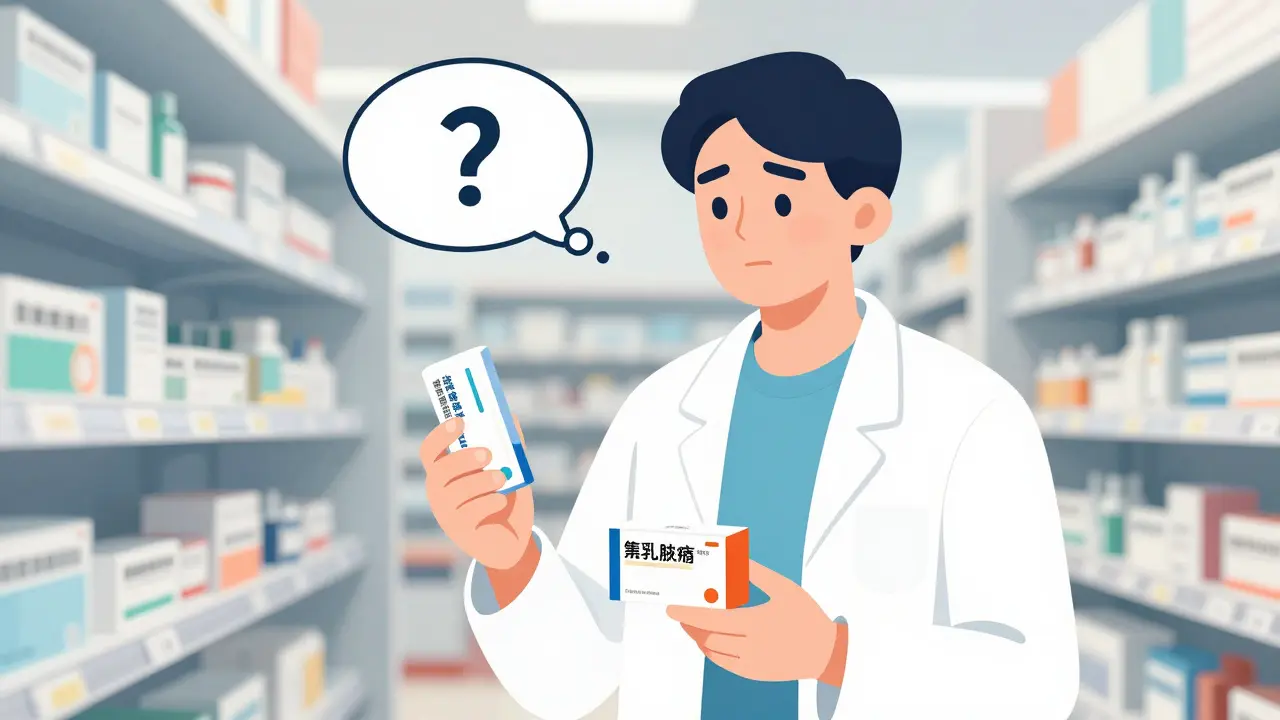
You’ve been on the same biologic drug for years. It works. Your inflammation is down, your joints don’t scream in pain, and you have a routine. Then, one day, your pharmacy hands you a box with a different name, a different manufacturer, but supposedly the same medicine. This is biosimilar switching. It’s happening everywhere right now as healthcare systems push to cut costs, but it leaves patients with a nagging question: Is this new bottle actually the same as the old one, or am I rolling the dice?
The short answer is that for most people, nothing bad happens. The data shows biosimilars are highly similar to their reference products. But biology is messy, and “similar” isn’t always the same as “identical” in how our bodies react. Let’s look at what the science says about switching from an originator biologic to a biosimilar, or even from one biosimilar to another.
Biosimilars Are Not Generics: Why That Matters
First, we need to clear up a huge misconception. If you’re used to swapping generic ibuprofen for brand-name Advil without a second thought, you might assume biosimilars work the same way. They don’t. Generic drugs are chemical copies. They are small molecules, simple structures, and identical to the original down to the atom. Biosimilars, however, are biological products. They are large, complex proteins made inside living cells-like yeast or hamster ovary cells.
Because they are made by living things, every batch of a biologic has tiny natural variations. A biosimilar cannot be an exact copy of the originator; it can only be "highly similar." Regulatory agencies like the U.S. Food and Drug Administration (FDA) and the European Medicines Agency (EMA) require manufacturers to prove there are no clinically meaningful differences in purity, potency, or safety. But minor differences in inactive components-like stabilizers or preservatives-are allowed. These tiny differences usually don’t matter, but they are the root of why switching feels riskier than swapping a generic pill.
| Feature | Generic Drug | Biosimilar |
|---|---|---|
| Molecule Type | Small, simple chemical molecule | Large, complex protein |
| Manufacturing | Chemical synthesis (exact copy) | Living cells (highly similar) |
| Regulatory Standard | Identical active ingredient | No clinically meaningful differences |
| Switching Risk | Negligible | Low, but requires monitoring |
What the Clinical Data Says About Safety
If you’re worried about losing efficacy or getting sick after a switch, the bulk of clinical evidence should reassure you. Extensive research, including dozens of randomized controlled trials and observational studies, confirms that switching from an originator to a biosimilar maintains comparable safety and efficacy profiles for conditions like rheumatoid arthritis, psoriasis, and inflammatory bowel disease (IBD).
Take the NOR-Switch study, a major real-world trial involving nearly 500 patients. Researchers tracked people switching from originator infliximab to its biosimilar, CT-P13. After one year, retention rates were high. While the study showed slightly lower retention for the biosimilar group compared to those who stayed on the originator, the difference wasn't statistically significant when looking at overall health outcomes. More recent FDA analyses covering over 5,700 patients across 22 switching studies found no increased risk of death, serious adverse events, or treatment discontinuation due to the switch itself.
Even switching between two different biosimilars-known as sequential switching-has shown promise. A 2022 study published in *Scientific Reports* followed patients switching from originator infliximab to CT-P13, and then to another biosimilar called SB2. The results? Immunogenicity-the body creating antibodies against the drug-remained extremely low, at just 3 cases per 100 patient-years. Blood levels of the drug stayed stable, and side effects didn't spike.
The Nocebo Effect: When Fear Causes Symptoms
Here is where it gets tricky. Even if the drug works perfectly, you might feel like it doesn’t. This is called the nocebo effect. Unlike the placebo effect, where belief makes you feel better, the nocebo effect happens when negative expectations cause real physical symptoms. If you’re anxious about your medication changing, your brain can amplify minor sensations into perceived failures.
A 2021 study in *Frontiers in Psychology* highlighted this clearly. Among patients who switched biologics for non-medical reasons (like insurance mandates), nearly a third reported new or worsening symptoms. Yet, their lab values remained normal. Their disease markers hadn’t changed, but their perception had. Online communities for autoimmune diseases are filled with stories of people “feeling the difference” after a switch, despite doctors seeing no clinical decline. This psychological burden is real and shouldn’t be dismissed by providers.

Immunogenicity: The Real Biological Risk
Beyond psychology, there is a genuine biological risk: immunogenicity. This occurs when your immune system recognizes the biosimilar as foreign and creates anti-drug antibodies (ADAs). If enough antibodies form, they neutralize the drug before it can work, leading to loss of response. In severe cases, these antibodies can trigger allergic reactions.
However, data suggests this is rare. Most modern biosimilars are engineered to minimize this risk. The Lauret et al. study mentioned earlier showed that even after multiple switches, immunogenicity rates were negligible. For context, losing response to a biologic is common anyway-about 20% of IBD patients lose response to infliximab annually regardless of whether they are on the originator or a biosimilar. Distinguishing between natural disease progression and a switch-related failure is difficult, which is why careful monitoring is essential.
Who Should Be Cautious?
While switching is generally safe for stable patients, it’s not a one-size-fits-all recommendation. Certain groups face higher risks:
- Patient with Unstable Disease: If your condition is flaring or you’re recently diagnosed, adding the variable of a new drug formulation can complicate treatment. Stability is key. Wait until your disease activity scores (like DAS28 for arthritis) are low and steady before considering a switch.
- History of Immunogenicity: If you’ve previously developed antibodies to a biologic, switching might increase the chance of reaction. Discuss your history openly with your specialist.
- Highly Active Inflammatory Bowel Disease: Some studies suggest that patients with severe IBD may have slightly higher discontinuation rates after switching biosimilars compared to historical controls. Close monitoring of fecal calprotectin levels is crucial here.

How to Navigate a Switch Safely
If your doctor or insurer proposes a switch, you have the right to understand the process. Don’t just accept the new box; engage in shared decision-making. Here is a practical checklist for managing the transition:
- Pre-Switch Counseling: Ask for a dedicated appointment to discuss the switch. The PERFUSE study showed that educational interventions reduced discontinuation rates significantly. Understand why you are switching-is it cost, supply chain, or policy?
- Baseline Monitoring: Before you start the biosimilar, establish baseline metrics. This could include blood tests for trough levels, inflammatory markers (CRP, ESR), or disease-specific indices. You need a snapshot of your health before the change.
- Post-Switch Vigilance: Monitor yourself closely for the first three months. Keep a symptom diary. Note any injection site reactions, flu-like symptoms, or return of joint pain. Report these immediately to your care team.
- Follow-Up Labs: Schedule follow-up appointments to check trough levels and disease activity. If your drug levels drop or symptoms worsen, your doctor can adjust the dose or switch you back if necessary.
Regulatory Differences: US vs. Europe
Your experience may also depend on where you live. Regulatory approaches vary. In the European Union, the EMA considers biosimilars automatically switchable once approved, based on the principle that similarity implies interchangeability. In the United States, the FDA has a stricter path for “interchangeability.” To earn this designation, a biosimilar must undergo additional switching studies showing that alternating between the originator and biosimilar does not increase safety risks or reduce efficacy. As of 2024, the first interchangeable adalimumab biosimilar was approved, allowing pharmacists to substitute it without a new prescription in some states. However, many biosimilars lack this specific label, meaning the decision to switch often rests with the prescriber rather than the pharmacist.
Bottom Line: Trust, But Verify
Biosimilar switching is a tool for healthcare sustainability, offering significant cost savings-often 15-35% less than originators-and expanding access to life-changing treatments. For the vast majority of patients, it is safe and effective. The fear of “losing control” of your treatment is understandable, but the science supports the integrity of these products.
That said, you are not a statistic. You are an individual with a unique immune system. If you are stable, informed, and monitored, a switch is likely a smooth transition. If you are unstable, anxious, or have a complex history, advocate for caution. The goal isn’t to avoid biosimilars entirely, but to ensure the switch happens under the right conditions, with your voice heard and your health protected.
Is it safe to switch from an originator biologic to a biosimilar?
Yes, extensive clinical data supports the safety of switching. Studies show no significant increase in serious adverse events, loss of efficacy, or immunogenicity for most patients. However, individual responses can vary, so medical supervision is recommended.
Can I switch back to the originator if the biosimilar doesn't work?
In many cases, yes. If you experience a loss of response or adverse effects, your doctor can switch you back to the originator product. However, repeated switching can sometimes increase the risk of immunogenicity, so this decision should be made carefully with your specialist.
What is the difference between a biosimilar and a generic drug?
Generic drugs are exact chemical copies of small-molecule drugs. Biosimilars are highly similar versions of large, complex biological products made by living cells. Because of their complexity, biosimilars cannot be identical copies, though they must demonstrate no clinically meaningful differences in safety or efficacy.
Why do some patients feel worse after switching to a biosimilar?
This can be due to the nocebo effect, where anxiety about the change causes perceived symptoms, or genuine biological factors like immunogenicity (development of antibodies). Minor differences in inactive ingredients can also affect tolerability in sensitive individuals.
Do I need extra blood tests after switching to a biosimilar?
It is advisable to monitor disease activity and drug trough levels after a switch, especially during the first few months. This helps distinguish between normal fluctuations, nocebo effects, and true loss of efficacy, ensuring timely intervention if needed.