
Anti-Xa Level Interpreter & Timing Guide
Input Your Data
Timing is critical. The sample must be drawn at peak concentration.
Target Ranges Reference
| Indication | Range |
|---|---|
| VTE Prophylaxis | 0.2 – 0.5 |
| VTE Treatment | 0.6 – 1.0 |
| Pregnancy (Prophylaxis) | 0.2 – 0.6 |
| Pregnancy (Treatment) | 0.6 – 1.0 |
Most patients taking Low Molecular Weight Heparin (LMWH), such as enoxaparin or dalteparin, never need a blood test to check their dosage. The medication is designed to work predictably in the average person. But what happens when things go wrong? If you are experiencing unexpected bleeding, bruising that won’t stop, or signs that the blood thinner isn’t working, your doctor might order an Anti-Xa assay. This specialized test measures how strongly the drug is inhibiting Factor Xa in your coagulation cascade. It is not a routine check-up tool; it is a diagnostic rescue mission used when standard dosing fails or causes harm.
Understanding when and why this test is ordered can save you from unnecessary anxiety or, conversely, prevent a serious medical emergency. Let’s break down exactly when Anti-Xa monitoring becomes necessary, what the numbers mean, and how it differs from other common blood tests.
The Basics: What Is Anti-Xa Monitoring?
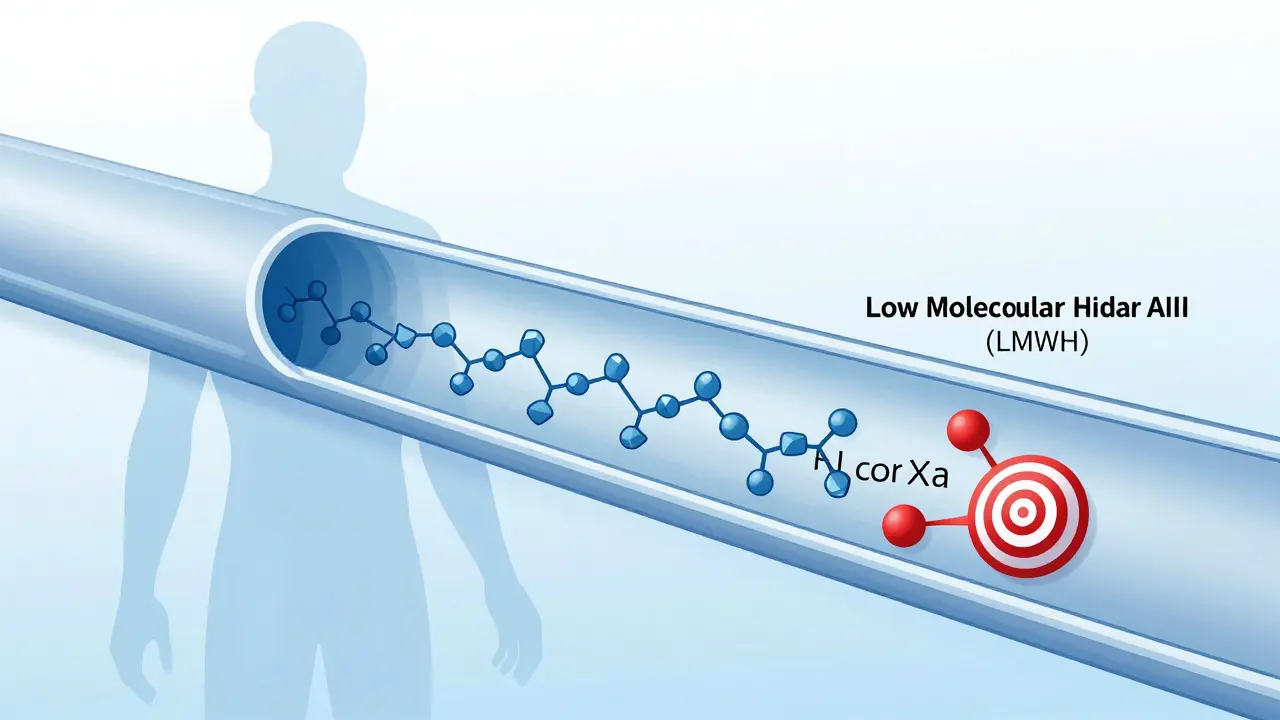
To understand the test, you first need to understand the drug. LMWH is a class of injectable anticoagulants derived from unfractionated heparin but with a shorter chain structure. Because these chains are shorter, they bind more selectively to Antithrombin III, which then neutralizes Factor Xa. This process slows down the formation of clots without completely stopping the body’s ability to heal wounds.
In most healthy adults, the relationship between the dose injected and the effect on the blood is consistent. You get 40 mg, you get a certain level of protection. That is why doctors don’t usually monitor levels like they do with warfarin (which requires INR testing) or unfractionated heparin (which requires aPTT testing). However, biology is rarely uniform. Factors like kidney function, body weight, and pregnancy can drastically change how your body processes LMWH. The Anti-Xa assay quantifies the concentration of the drug in your plasma, giving clinicians a precise number to guide adjustments.
When Do Side Effects Prompt Testing?
You generally do not ask for this test yourself; your healthcare provider orders it based on clinical red flags. The American College of Chest Physicians (ACCP) guidelines state that routine monitoring is unnecessary. Instead, testing is triggered by specific adverse events or risk factors. Here are the primary scenarios where side effects prompt an Anti-Xa test:
- Unexpected Bleeding: If you develop major bleeding (such as gastrointestinal hemorrhage, hematuria, or excessive bruising) while on a standard dose, your doctor needs to know if the drug levels are supratherapeutic (too high). A study from Vanderbilt University Medical Center found that appropriate monitoring in these cases can reduce bleeding complications by up to 37%.
- Recurrent Clotting: Conversely, if you form a new clot (like a DVT or PE) despite being on therapeutic doses, the test checks for subtherapeutic levels. This could indicate under-dosing due to rapid metabolism or poor absorption.
- Severe Renal Impairment: LMWH is cleared by the kidneys. If your creatinine clearance drops below 30 mL/min, the drug stays in your system much longer. The half-life extends from 4-5 hours to potentially 12-24 hours. Without monitoring, you risk accumulation and bleeding.
- Extreme Body Weight: Standard dosing may fail in patients with a BMI over 40 or weight exceeding 150 kg. While some experts argue total body weight dosing is sufficient, others use Anti-Xa levels to ensure adequate coverage in bariatric patients.
- Pregnancy: Physiological changes during pregnancy alter drug distribution. Guidelines often recommend maintaining peak Anti-Xa levels between 0.2-0.6 IU/mL for prophylaxis and 0.6-1.0 IU/mL for treatment to balance maternal safety and fetal health.
How the Test Works: Timing and Targets
Getting an Anti-Xa result is tricky because timing is everything. Unlike a cholesterol test, which reflects long-term habits, Anti-Xa levels fluctuate rapidly after an injection. Drawing blood at the wrong time gives useless data.
For therapeutic dosing, the sample must be drawn at peak concentration, which occurs 4 to 6 hours after the subcutaneous injection. Trough levels (drawn right before the next dose) are rarely used for LMWH because they don’t correlate well with efficacy or safety risks. The test requires specialized coagulation analyzers, such as the STA-R Evolution or ACL TOP 750, and typically takes 2-4 hours to process in a hospital lab.
| Indication | Target Range (IU/mL) | Timing |
|---|---|---|
| VTE Prophylaxis (Prevention) | 0.2 - 0.5 | 4-6 hours post-dose |
| VTE Treatment (Therapeutic) | 0.6 - 1.0 | 4-6 hours post-dose |
| Pregnancy (Prophylaxis) | 0.2 - 0.6 | 4-6 hours post-dose |
| Pregnancy (Treatment) | 0.6 - 1.0 | 4-6 hours post-dose |
Note that ranges can vary slightly between laboratories. Always refer to the reference range provided on your specific lab report. There is also significant inter-laboratory variability (8-15% coefficient of variation), meaning a level of 0.9 in one hospital might read as 0.8 in another. This is why trends matter more than single data points.

LMWH vs. Unfractionated Heparin: Why Different Tests?
If you’ve ever been hospitalized for a clot, you might have heard of Unfractionated Heparin (UFH). UFH is given intravenously and monitored using the activated partial thromboplastin time (aPTT) test. Why doesn’t LMWH use aPTT?
The chemistry is different. UFH affects multiple clotting factors, including Factor IIa (thrombin) and Factor Xa. aPTT is sensitive to these broad changes. LMWH, however, has a higher ratio of anti-Xa activity to anti-IIa activity. It hits Factor Xa hard but barely touches Factor IIa. As a result, aPTT remains largely normal even when LMWH is present in high concentrations. Using aPTT to monitor LMWH leads to false reassurance. A 2017 study showed only 58% concordance between aPTT results and actual clinical outcomes for LMWH, compared to 72% concordance with Anti-Xa testing.
Risks of Over-Monitoring
While Anti-Xa testing is vital in specific scenarios, it is dangerous to misuse. Dr. Adam Cuker of the University of Pennsylvania warned that inappropriate monitoring leads to unnecessary dose adjustments in 72% of cases. Why is this bad?
Because adjusting doses based on a single, potentially misinterpreted number can cause harm. If a patient has a slightly high Anti-Xa level but no clinical bleeding, reducing the dose might leave them vulnerable to clots. Conversely, increasing the dose because of a low level in a patient who is actually metabolizing the drug quickly could lead to hemorrhage. An audit at Ventura County Medical Center found that 8% of inappropriate dose adjustments resulted in bleeding complications.
The goal is not to chase a perfect number. The goal is to treat the patient. If you are bleeding, we check the level. If you are clotting, we check the level. If you are fine, we leave you alone.

Practical Steps for Patients
If your doctor orders an Anti-Xa test, here is what you need to do to ensure accurate results:
- Confirm the Timing: Ask your nurse or doctor exactly when to take your next shot relative to the blood draw. Usually, you will give the injection, wait 4-6 hours, and then have blood drawn. Do not skip the dose unless instructed.
- Inform the Lab: Tell the phlebotomist you are on LMWH. Some labs handle samples differently to prevent pre-analytical errors.
- Report Symptoms: Don’t just look at the number. Report any gum bleeding, nosebleeds, dark stools, or shortness of breath to your care team immediately. The number supports the clinical picture; it doesn’t replace it.
- Understand Your Kidney Function: If you have chronic kidney disease, your doctor may adjust your baseline dose rather than relying solely on Anti-Xa levels. Regular creatinine checks are part of the package.
Future Directions and Cost Considerations
The cost of an Anti-Xa test ranges from $45 to $75 per test. In the US Medicare population, inappropriate ordering costs millions annually. However, for those who need it, the benefit outweighs the cost. Future developments include point-of-care testing devices, like the Diagnostica Stago STA-R Max 3, which aim to bring lab-quality results to the bedside within minutes. This could revolutionize management for home-care patients, allowing quicker dose adjustments without hospital visits.
Until then, Anti-Xa monitoring remains a targeted tool. It is not for everyone, but for those with renal failure, extreme obesity, or unexpected side effects, it is a critical safeguard.
Do I need Anti-Xa monitoring if I am taking Enoxaparin (Lovenox)?
For most healthy adults, no. Routine monitoring is not recommended by major guidelines like ACCP. You only need it if you have severe kidney disease, are pregnant, have extreme body weight, or are experiencing unexpected bleeding or clotting.
What is the difference between Anti-Xa and INR?
INR monitors warfarin, an oral blood thinner that affects Vitamin K-dependent factors. Anti-Xa monitors LMWH and unfractionated heparin, which work through Antithrombin III. They measure different drugs and different parts of the clotting cascade. You cannot use INR to check LMWH levels.
Why does my Anti-Xa level vary between hospitals?
There is no universal standard for Anti-Xa calibration. Different labs use different reagents and instruments, leading to an 8-15% variability. A level of 0.8 in one lab might be 0.7 in another. Doctors interpret these results based on the specific lab's reference range and your clinical symptoms.
Can Anti-Xa testing detect if I took my dose?
Yes, indirectly. If a patient claims to be compliant but has undetectable Anti-Xa levels, it may suggest non-adherence. However, it can also indicate rapid metabolism or absorption issues. It is one piece of evidence in assessing compliance, not a definitive lie detector.
Is Anti-Xa monitoring safe for pregnant women?
Yes, it is considered the gold standard for monitoring LMWH in pregnancy. Because physiological changes affect drug clearance, target ranges (typically 0.6-1.0 IU/mL for treatment) help ensure the mother is protected from clots without exposing the fetus to excessive bleeding risk.