
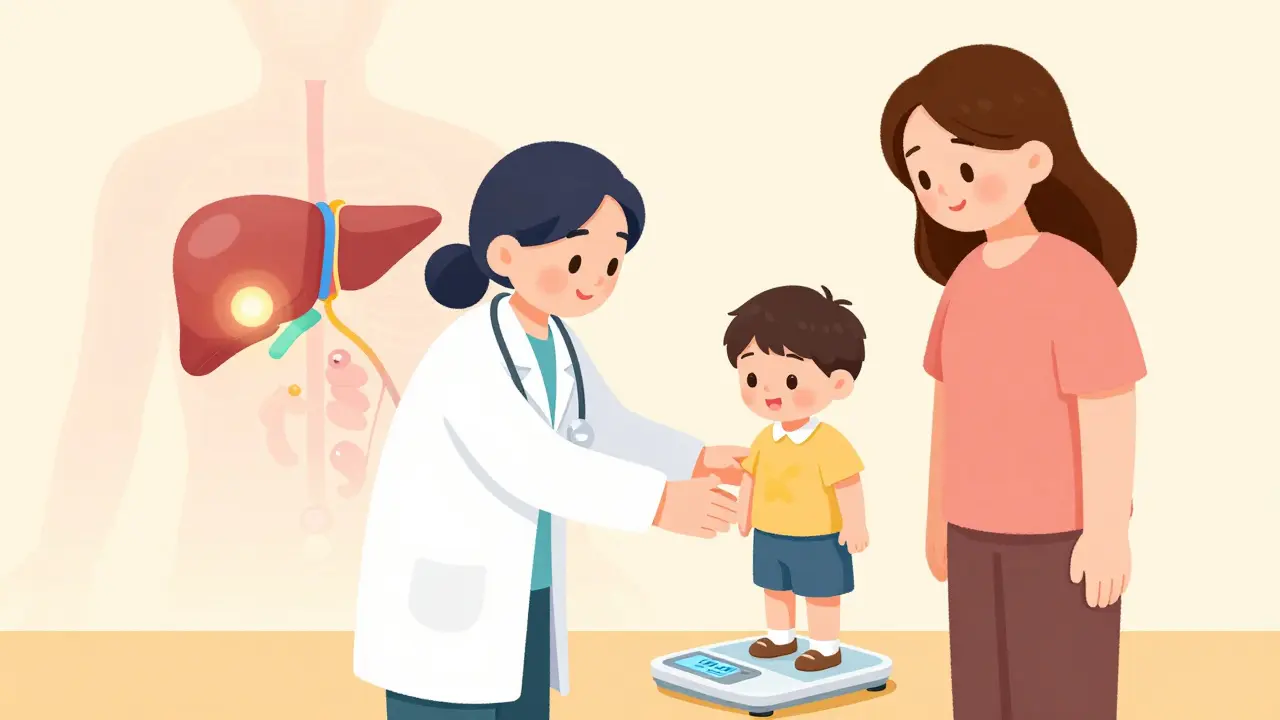
Children are not just small adults. Their bodies process drugs differently because their liver and kidney functions are still developing. Giving a child an adult dose or the wrong formulation can lead to serious health issues, including hospitalization. In fact, inappropriate medication use contributes to about 4% of all pediatric hospital admissions. Understanding age-appropriate medications is the single most important step parents and caregivers can take to keep kids safe.
This guide breaks down how to choose the right medicines for common childhood conditions, explains why weight matters more than age, and highlights the critical safety updates from the 2025 KIDs List. You will learn which drugs to avoid, how to measure doses accurately, and what new formulations are making treatment easier.
Why Age and Weight Matter More Than You Think
The idea that children are "small adults" has been debunked by decades of research. A baby’s body metabolizes drugs much slower than an adult’s. For example, neonates (newborns) often need concentrations 10 to 100 times lower than adults for certain medications because their kidneys and liver are immature. As children grow into toddlers, preschoolers, and adolescents, their ability to break down and eliminate drugs changes rapidly.
This is why precise dosing is non-negotiable. Clinicians calculate doses based on weight (mg/kg), not just age. A 3-year-old weighing 14 kg might need a different dose than another 3-year-old weighing 18 kg. The World Health Organization’s 9th Essential Medicines List for Children (EMLc) 2023 recognizes this by establishing core sets for children aged 1 month to 5 years and 5 to 12 years separately. These guidelines ensure that the medicine matches the child’s developmental stage.
Formulation also plays a huge role. Younger children cannot swallow pills. They need liquid suspensions, chewable tablets, or orally disintegrating tablets. The FDA mandates that drug sponsors provide these age-appropriate forms to support safety and effectiveness. Without them, parents might try to crush adult tablets, which can destroy the drug’s coating or make it impossible to measure accurately.
The 2025 KIDs List: Drugs to Avoid or Use with Caution
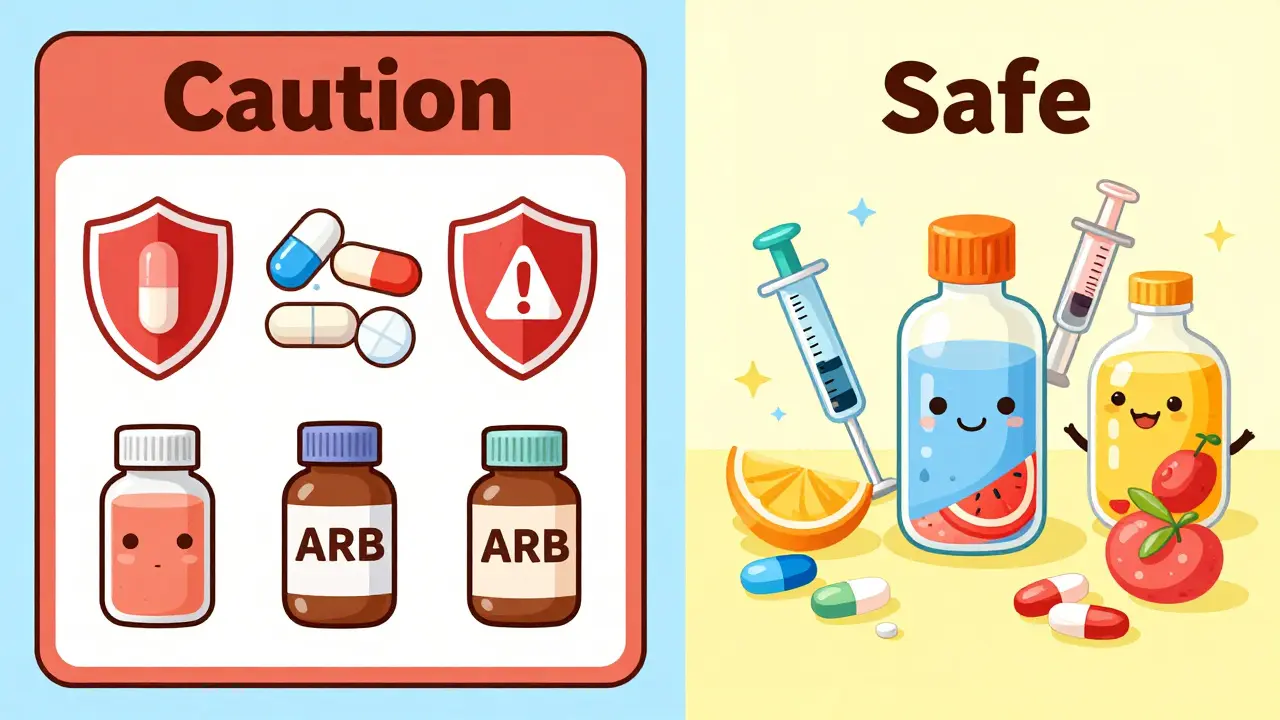
One of the most valuable tools for pediatric safety is the Key Potentially Inappropriate Drugs in Pediatrics (KIDs) List. Updated annually by the Pediatric Pharmacy Association, the 2025 edition identifies specific medications that pose high risks to children. This list is crucial because many of these drugs are commonly prescribed off-label.
| Medication Class | Recommendation | Reason for Restriction |
|---|---|---|
| Codeine & Tramadol | Avoid | High risk of respiratory failure due to unpredictable metabolism in children. |
| Angiotensin Receptor Blockers (ARBs) | Caution (<1 month) | Risk of renal tubular dysgenesis in infants under one month old. |
| Montelukast | Caution (≤18 years) | Associated with sleep disturbances and neuropsychiatric events. |
| Fluoroquinolones | Avoid (<18 years) | Potential cartilage toxicity concerns, though effective in adults. |
| Aspirin | Avoid (<18 years) | Risk of Reye’s syndrome, a rare but life-threatening condition. |
Note that the 2025 update added mirabegron (caution for children under 3) and molnupiravir (caution for those 18 and younger). It removed ivermectin due to emerging safety data in specific disease states. Always check with your pediatrician before giving any medication listed here.
Dosing Basics for Common Conditions
Getting the dose right is critical. Here are some standard protocols for common pediatric treatments, but remember: always follow your doctor’s specific instructions.
- Pain and Fever: Acetaminophen is typically dosed at 10-15 mg/kg every 4-6 hours. Ibuprofen is used for children over 6 months at 5-10 mg/kg every 6-8 hours. Never give aspirin to children due to the risk of Reye’s syndrome.
- Ear Infections: Amoxicillin remains the first-line antibiotic for otitis media. The standard dose is 80-90 mg/kg/day divided into two doses for severe infections. Treatment usually lasts 7-10 days.
- Dental Pain: For children over 3 months up to 40 kg, amoxicillin-clavulanate may be prescribed at 25-45 mg/kg/day in divided doses. The maximum single dose is strictly defined to prevent overdose.
- Antivirals: Infants ≥3 months may receive oseltamivir at 30 mg/kg/day twice daily for 5 days. Immunocompromised children might need extended treatment for 10-14 days.
These numbers look complex, but they exist to protect your child. Overdosing can cause liver damage (with acetaminophen) or kidney stress (with ibuprofen). Underdosing means the infection won’t clear, leading to resistance or relapse.
Formulations That Make Medicine Easier
If you’ve ever tried to get a toddler to take bitter liquid antibiotics, you know the struggle. Formulation issues are a major reason for medication non-adherence. About 35% of non-adherence in children stems from taste aversion or difficulty administering the drug.
Fortunately, pharmaceutical companies are improving this. The FDA’s 2024 draft guidance emphasizes patient-centered design, requiring palatability testing. For example, fruit-flavored oseltamivir suspension increased adherence by 58% in children aged 2-7 during the 2022-2023 flu season. Chewable tablets and orally disintegrating tablets are also becoming more common for older children who refuse liquids.
For parents, choosing the right device is key. Using kitchen spoons leads to errors. A study showed that 42% of caregivers made dosing errors using non-standard measuring devices. Always use the oral syringe or dosing cup provided with the medication. If you don’t have one, ask your pharmacist for one.
Safety Tips for Parents and Caregivers
Even with the best intentions, mistakes happen. Here’s how to minimize risks:
- Weigh Your Child Regularly: Kids grow fast. A dose calculated six months ago might be too low now. Bring a scale to well-child visits.
- Use One Concentration: Try to stick with the same strength of liquid medicine (e.g., 100 mg/5 mL) for each illness. Switching concentrations increases the chance of calculation errors.
- Check Expiration Dates: Liquid antibiotics lose potency quickly. Do not save leftover medicine for next time unless explicitly told by your doctor.
- Read the Label Twice: Confirm the drug name, dose, and frequency. Look out for similar-sounding names like amoxicillin vs. azithromycin.
- Ask About Off-Label Use: About 50-90% of pediatric prescriptions are off-label. Ask your doctor if there is evidence supporting the use for your child’s age group.
Technology can help too. Electronic health records with pediatric safety modules have decreased inappropriate dosing by 61% in hospitals. At home, consider using apps like the FDA’s Pediatric Dosing Calculator, which is used by 63% of pediatric pharmacists.
Looking Ahead: New Developments in Pediatric Pharma
The landscape of pediatric medicine is evolving. The global pediatric pharmaceuticals market was valued at $94.7 billion in 2023 and is growing. Regulatory pressures like the Pediatric Research Equity Act (PREA) have increased pediatric studies for new drugs from 12% to 89% since its implementation.
Innovations include 3D-printed personalized dosage forms, currently in Phase II trials at Cincinnati Children's Hospital. These could allow for exact milligram precision tailored to a child’s weight. Nanoparticle delivery systems are also being developed to improve bioavailability in neonates. The WHO aims for 90% availability of essential pediatric formulations in low-resource settings by 2030, addressing current disparities where only 34% are available in low-income countries.
While challenges remain-40% of pediatric drug development programs fail due to formulation issues-the trend is toward safer, more effective, and child-friendly medicines. As Dr. Janet Woodcock noted, "Children deserve medicines that work for them, not just scaled-down versions of adult drugs."
Is it safe to give my child half an adult pill?
Generally, no. Adult pills are designed for adult body weights and metabolism. Splitting them can lead to inaccurate dosing, and some coatings are meant to dissolve slowly in the stomach. Crushing them can expose your child to concentrated bursts of the drug or make it unpalatable. Always use age-appropriate formulations like liquids or chewables.
What should I do if my child spits out part of their medicine?
If you’re unsure how much was swallowed, do not give another full dose. Contact your pharmacist or pediatrician for advice. They may recommend giving a partial make-up dose or waiting until the next scheduled dose. Doubling up can lead to an overdose.
Why is aspirin banned for children?
Aspirin is linked to Reye’s syndrome, a rare but serious condition that causes swelling in the liver and brain. It mostly affects children recovering from viral infections like chickenpox or flu. Safer alternatives like acetaminophen and ibuprofen are available.
How accurate does the dose need to be?
Very accurate. Small differences in weight can change the required dose significantly. Using a proper oral syringe marked in milliliters (mL) is essential. Kitchen teaspoons vary widely in size and can lead to under- or overdosing by 20-50%.
What is the KIDs List?
The KIDs List (Key Potentially Inappropriate Drugs in Pediatrics) is a clinical decision support tool updated annually. It identifies medications that should be avoided or used with caution in children due to safety risks. The 2025 edition includes 27 such medications.