
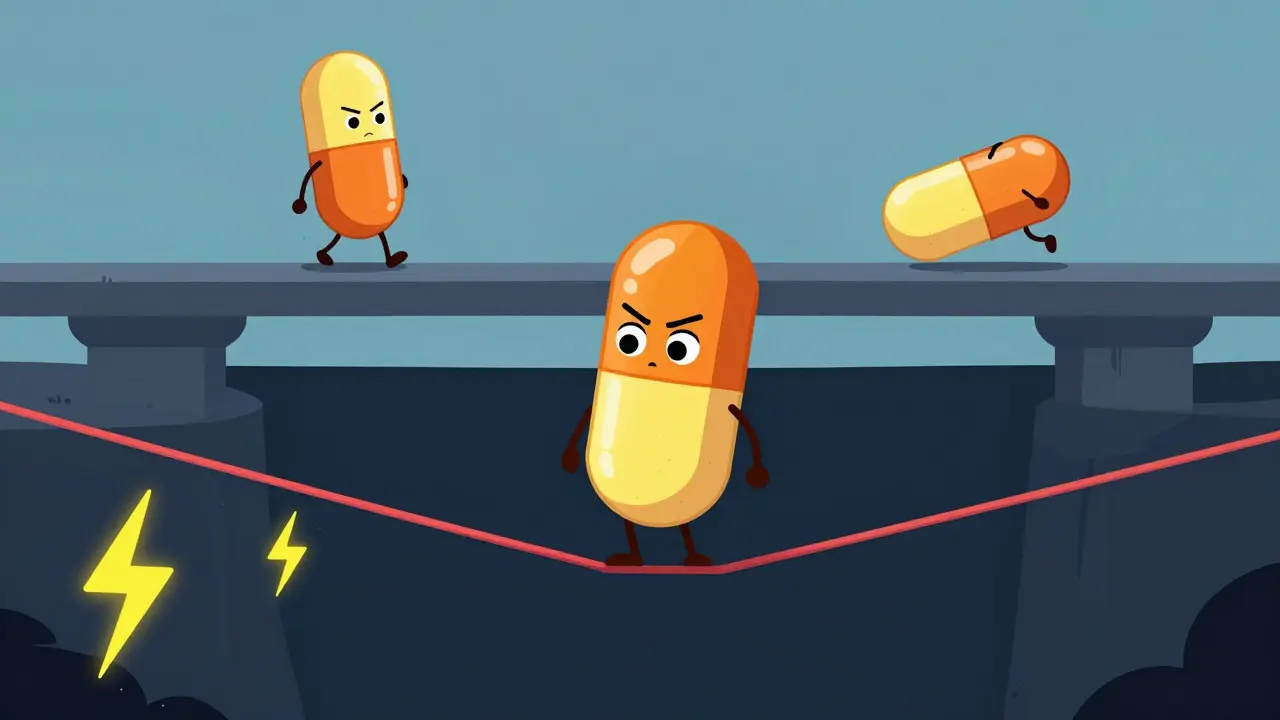
Imagine taking a medication that keeps your heart rhythm steady or prevents blood clots. Now imagine that a tiny change in how much of the drug enters your bloodstream could mean the difference between staying healthy and ending up in the hospital. For millions of patients on Narrow Therapeutic Index (NTI) drugs is a class of medications where the gap between a helpful dose and a toxic one is extremely small., this isn't a hypothetical fear-it's a daily reality. The core issue with generic switching for these specific medicines lies in the math: standard regulations allow generics to vary by up to 20% in absorption compared to the brand-name version, but for NTI drugs, even that small margin can push a patient out of their safe zone.
The Math Behind the Risk: What Makes NTI Drugs Different
To understand why pharmacists and doctors hesitate to auto-substitute these prescriptions, you have to look at the definition. An NTI drug is defined as having a ratio of less than or equal to two between the minimum toxic concentration and the minimum effective concentration in the blood. In simpler terms, if 10 units of a drug make it work, 20 units might start causing harm. There is no "buffer" zone. This is starkly different from common pain relievers or antibiotics, where you can miss a dose or take a slightly stronger version without immediate danger.
The U.S. Food and Drug Administration (FDA) requires all generic drugs to demonstrate Bioequivalence (BE) is a regulatory standard ensuring that a generic drug releases its active ingredient into the bloodstream at a similar rate and extent as the reference brand-name drug. However, the current standard allows the generic's performance to fall within an 80-125% range of the brand-name drug's Area Under the Curve (AUC) and Maximum Concentration (Cmax). For most drugs, being 20% off is negligible. But for a drug like warfarin, where the International Normalized Ratio (INR) must stay between 2.0 and 3.0, a 20% swing in absorption can drop the INR below 2.0 (risking a clot) or spike it above 3.0 (risking bleeding).
Real-World Consequences: From Seizures to Bleeding
This isn't just theoretical. History is filled with documented cases where generic substitution led to adverse events. One of the most well-known examples involves phenytoin, an antiepileptic drug used to prevent seizures. Its therapeutic range is narrow, typically between 10-20 mcg/mL. If levels go above 20 mcg/mL, patients experience toxicity symptoms like nystagmus (involuntary eye movement), ataxia (loss of coordination), and drowsiness. Conversely, if levels drop below 10 mcg/mL, breakthrough seizures can occur. Reports from the 1980s through today have linked switches from brand-name Dilantin to various generic versions with both toxicity and seizure recurrence, forcing many neurologists to specify "dispense brand only" on their scripts.
Warfarin presents a similar, albeit slower-moving, danger. A 2007 study by Milligan et al. suggested that substituting one specific generic for Coumadin didn't significantly affect INR control in a health maintenance organization population. However, other studies contradicted this, documenting subtherapeutic INR values after switching from brand-name Coumadin to generic warfarin while keeping all other variables constant. For a patient with a mechanical heart valve or atrial fibrillation, a few days of subtherapeutic INR can be catastrophic. This contradiction highlights the problem: what works for the average person in a controlled study might not hold true for an individual with unique metabolic quirks.
The Opioid Dilemma: Pain vs. Respiration
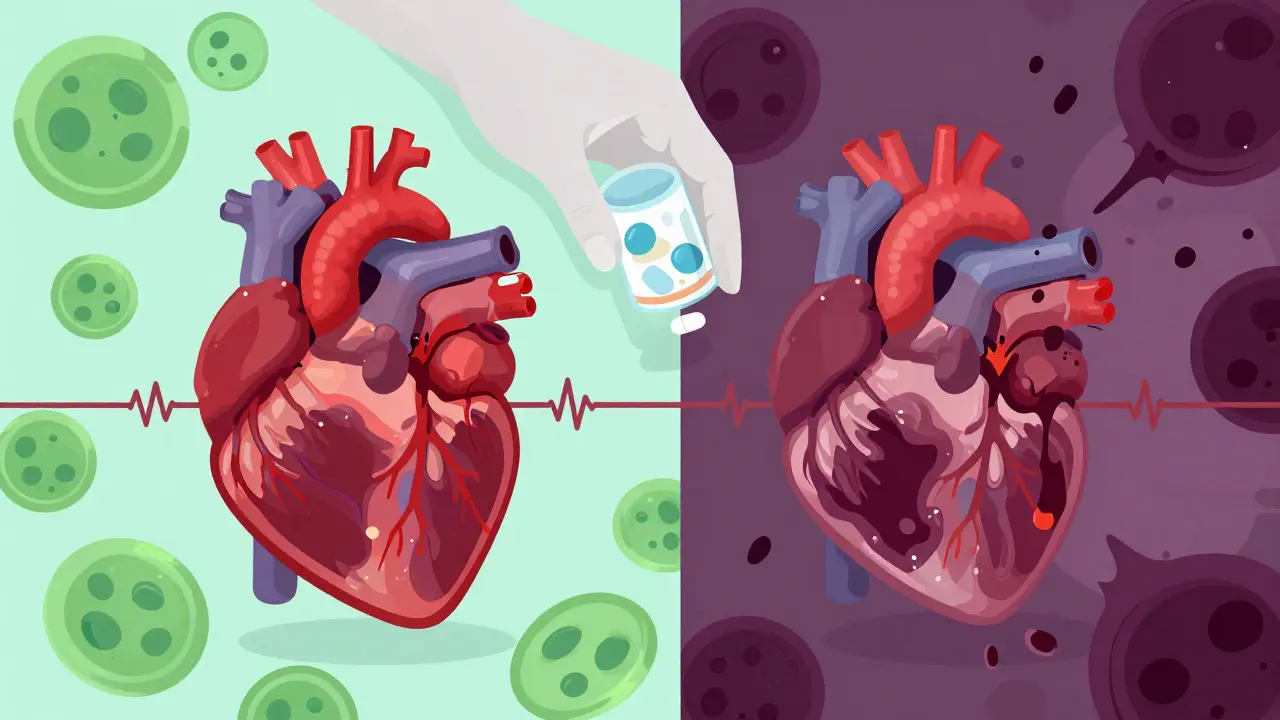
Perhaps no group faces higher stakes than patients on chronic opioid therapy, particularly those taking methadone. Methadone has a uniquely long half-life and a narrow window between effective analgesia and respiratory depression. In opioid-naïve patients, the ratio between the dose that relieves pain and the dose that suppresses breathing can be as low as 2:1. Chronic use complicates this further; as tolerance develops, the therapeutic index narrows even more because the body becomes more sensitive to the side effects relative to the benefit.
If a pharmacy substitutes a generic methadone formulation that has slightly higher bioavailability, the patient might absorb more of the drug than intended. This can lead to serious adverse events, including respiratory depression, which is fatal in extreme situations. On the flip side, if the generic has lower bioavailability, the patient suffers from inadequate pain relief, leading to increased stress, sleep disruption, and potentially dangerous attempts to self-adjust dosages. Opioid specialists emphasize that bioavailability issues with these generics create a double-edged sword: insufficient pain relief on one hand, and increased risk of life-threatening side effects on the other.
Regulatory Standards and the Debate Over Tighter Limits
You might wonder: if the risk is so high, why hasn't the FDA changed the rules? In 2010, the FDA Advisory Committee for Pharmaceutical Science concluded that the current bioequivalence standards were adequate for NTI drugs. They argued that the existing 80-125% range was sufficient when combined with good manufacturing practices. However, this decision remains controversial among clinicians and patient advocacy groups.
The FDA currently recommends "tighter quality and bioequivalence limits" for NTI drugs, but specific, universally applied numerical standards are still debated. Some experts argue that the therapeutic index is not static. For instance, lithium, another classic NTI drug used for bipolar disorder, requires regular blood monitoring because its levels fluctuate based on hydration, salt intake, and kidney function. A generic switch might introduce subtle changes in formulation excipients (inactive ingredients) that alter how quickly the drug dissolves, triggering these fluctuations. The American Society for Clinical Pharmacology and Therapeutics has called for more empirical evidence of risk penalties to inform policy, suggesting that the current "one size fits all" approach may be too lenient for this category of drugs.

Who Decides? The Role of Physicians and Pharmacists
In the absence of a universal ban on generic substitution for NTI drugs, the decision often falls to the healthcare team. The American Medical Association (AMA) maintains that the prescribing physician should ultimately decide whether to allow generic substitution for an individual patient. This policy recognizes that a doctor knows the patient's history, comorbidities, and sensitivity to the drug better than any algorithm or pharmacist can.
However, surveys show mixed feelings among pharmacists. A 2019 national survey revealed widespread confidence in the safety of generic NTI drugs, but also noted skepticism, particularly among pharmacists in non-chain settings and female pharmacists. This split opinion means that your experience may vary depending on who fills your prescription. Some pharmacies will automatically substitute unless the script says otherwise, while others will call the doctor to confirm. To navigate this, many experts recommend that patients maintain a consistent source for their NTI medications whenever possible.
| Drug Class | Example Medication | Therapeutic Window Characteristic | Potential Adverse Event from Switch |
|---|---|---|---|
| Anticoagulants | Warfarin | INR must remain 2.0-3.0 | Thrombosis (clots) or Hemorrhage (bleeding) |
| Anticonvulsants | Phenytoin | Serum levels 10-20 mcg/mL | Breakthrough seizures or Neurotoxicity (ataxia, nystagmus) |
| Opioids | Methadone | Ratio of analgesic to depressant dose ~2:1 | Respiratory depression or Inadequate pain relief |
| Cardiac Glycosides | Digoxin | Narrow serum concentration range | Arrhythmias or Loss of cardiac control |
Practical Steps for Patients on NTI Medications
If you are prescribed an NTI drug, you don't need to panic, but you do need to be proactive. First, ask your doctor if they prefer brand-name or generic. Many specialists will write "Dispense Brand Only" (DBO) on the prescription to prevent automatic substitution. If your insurance requires a generic, ensure your pharmacy stocks a single manufacturer's version consistently. Switching between two different generic manufacturers can be just as risky as switching from brand to generic, due to variations in excipients and dissolution rates.
Second, monitor your levels. For drugs like warfarin, digoxin, lithium, and phenytoin, regular blood tests are non-negotiable. After any change in medication source, request additional testing sooner rather than later. Finally, keep a detailed medication list and share it with every provider you see. Small interactions with food or other drugs can compound the risks associated with generic variability. By understanding that these drugs require precision, you become an active partner in your own safety, ensuring that the convenience of generics doesn't come at the cost of your health.
What is the main difference between an NTI drug and a regular medication?
The main difference is the therapeutic window. Regular medications have a wide gap between the dose that helps and the dose that harms. NTI drugs have a very narrow gap, often defined as a ratio of 2:1 or less, meaning small changes in blood concentration can lead to significant side effects or treatment failure.
Are generic NTI drugs unsafe?
Not necessarily. Most generic NTI drugs are safe and effective. However, the standard bioequivalence allowance of 80-125% may be too wide for some individuals. The risk depends on the specific drug, the patient's metabolism, and the consistency of the generic source. Consistency is key to minimizing risk.
Should I ask my doctor to prescribe brand-name only?
It is worth discussing. If you have experienced instability in your condition (like INR swings or seizure breakthroughs) after previous generic switches, asking for brand-only dispensing is a reasonable request. Your doctor can weigh the cost against the clinical risk for your specific situation.
How does bioequivalence relate to generic switching?
Bioequivalence is the scientific proof that a generic drug works similarly to the brand name. For NTI drugs, the current standard allows a 20% variation in absorption. While acceptable for most drugs, this variation can push NTI drug levels outside the safe therapeutic range in susceptible patients.
What should I do if my pharmacy runs out of my usual generic NTI drug?
Call your doctor before accepting a substitute from a different manufacturer. Ask if they can provide a temporary supply of your preferred version or approve a specific alternative. Avoid switching between multiple generic brands frequently, as this increases the chance of encountering a formulation that affects your levels differently.